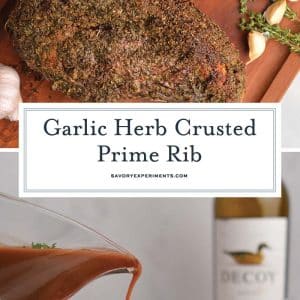
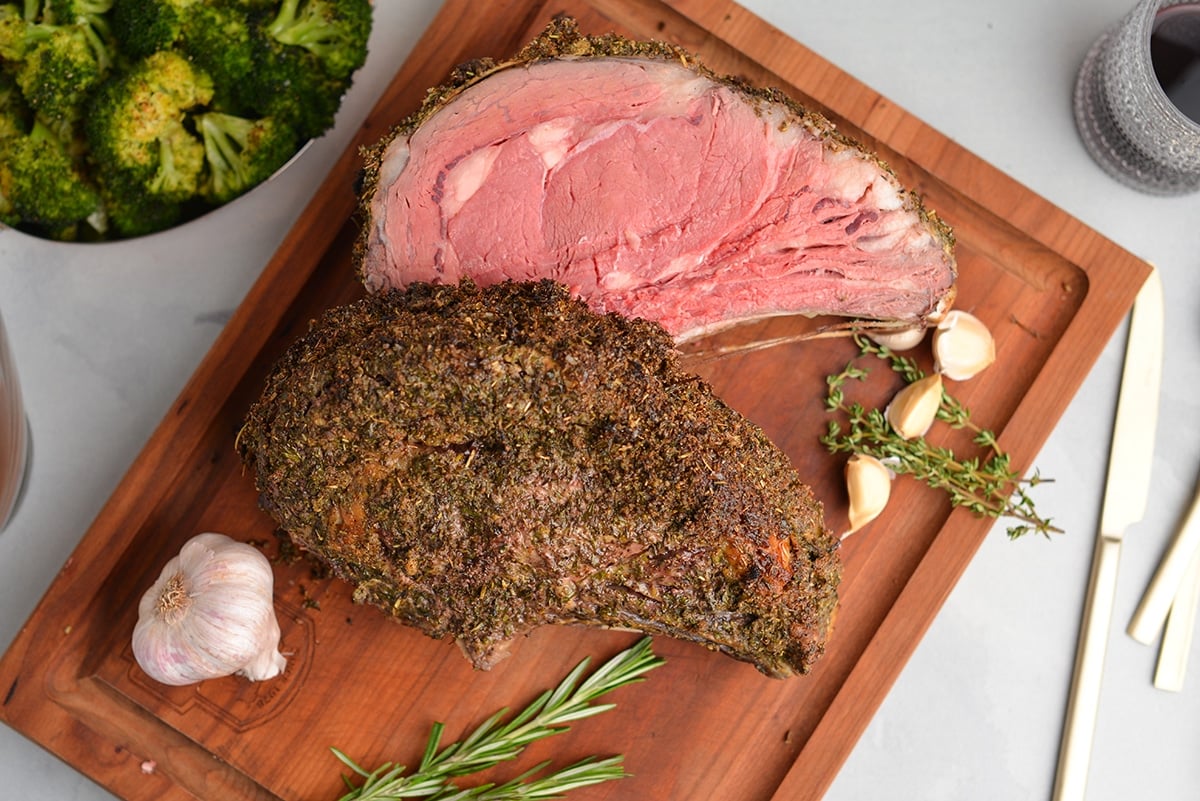
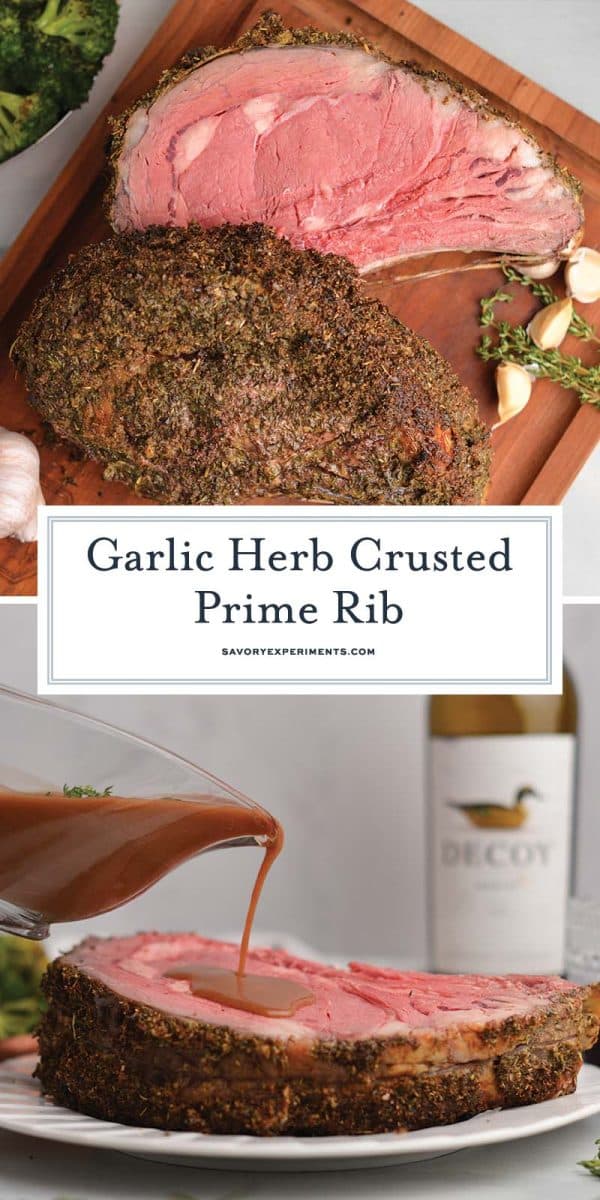
If you’re about to drop serious cash on a prime rib, you need two things: a foolproof prime rib recipe and the best prime rib rub to give you that salty, garlicky, herb-crusted bark everyone fights over.
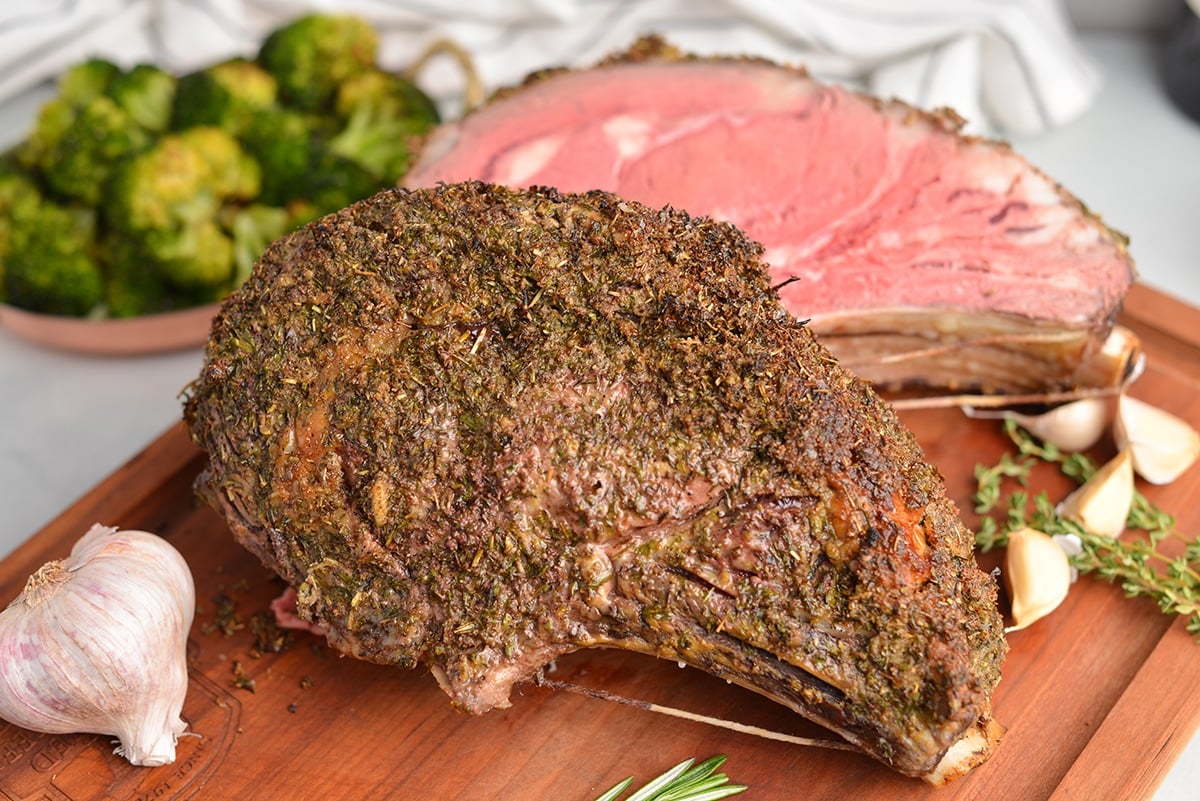
This is my go-to garlic herb prime rib rub and roasting method I’ve used for years on both bone-in and boneless roasts, tested on everything from small family dinners to full-blown holiday chaos.
You’ll get a rosy, tender center, a crispy, flavorful crust, and step-by-step cook times so you’re not hovering by the oven wondering if you just overcooked your mortgage payment.
Why You’ll Love This Prime Rib Rub
Big garlic and herb flavor without overpowering the beef.
Works on standing rib roast, boneless rib roast, smoked prime rib, and ribeye roast.
Simple pantry spices you can mix ahead as a dry rub. No fussy or expensive ingredients (except the actual roast!)
Detailed cook times and internal temps so you don’t guess. Don’t take chances on a holiday or with such a prime cut of meat.
- I literally wrote a book about beef and have cooked more prime rib roasts than I can count, so consider this your hand-holding, “don’t ruin the expensive roast” guide.
Bone-In Prime Rib Versus Boneless Prime Rib
Bone-In Prime Rib– Many chefs will tell you that the bones make it richer, and while this is true, boneless will taste nearly the same. It is a flavorful piece of meat in general. The downside to bone-in is that you still have to pay per pound… for the bones you won’t be eating.
On the up side, they make a beautiful centerpieces. You can get them without being trimmed or trimmed, also known as a French Cut, which means the meat in the middle is carved away leaving a handle, of sorts. The bones also make an excellent beef broth.
Boneless Prime Rib– Just means that the handles have been butchered off and you won’t have to mess with any bones while carving. You might miss a small tad of richness, but nothing you’d notice unless doing a side-by-side tasting. The upside is that it will cost less, or you can buy more, because you aren’t paying for the bones.
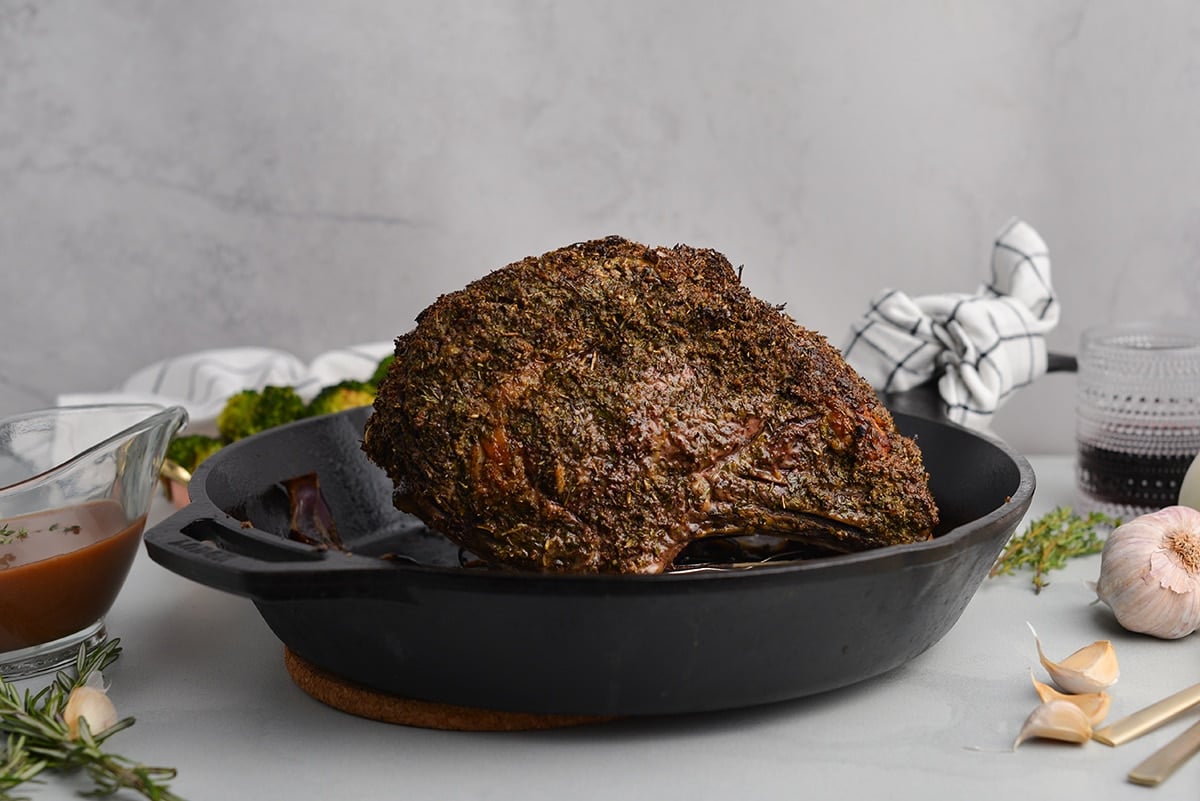
What Cut is Best for YOU!
The perfect prime rib is actually really simple to make as long as you are willing to invest in a pricey cut of meat. I think that the price of the cut sometimes intimidates folks; fear of failing with such a delicacy. Knowledge breeds confidence, so let’s get to know this glorious cut of beef.
A standing rib roast, also known as prime rib, is a cut of beef from the primal rib and can come boneless (bones are removed by the butcher) or with ribs. It is one of the nine primal cuts of beef. The entire rib section comprises ribs six through 12, a standing rib roast may contain anywhere from two to seven ribs.
Even if you purchase a boneless rib roast, the packaging will likely tell you how many “rib bones” it is to measure the amount per person.
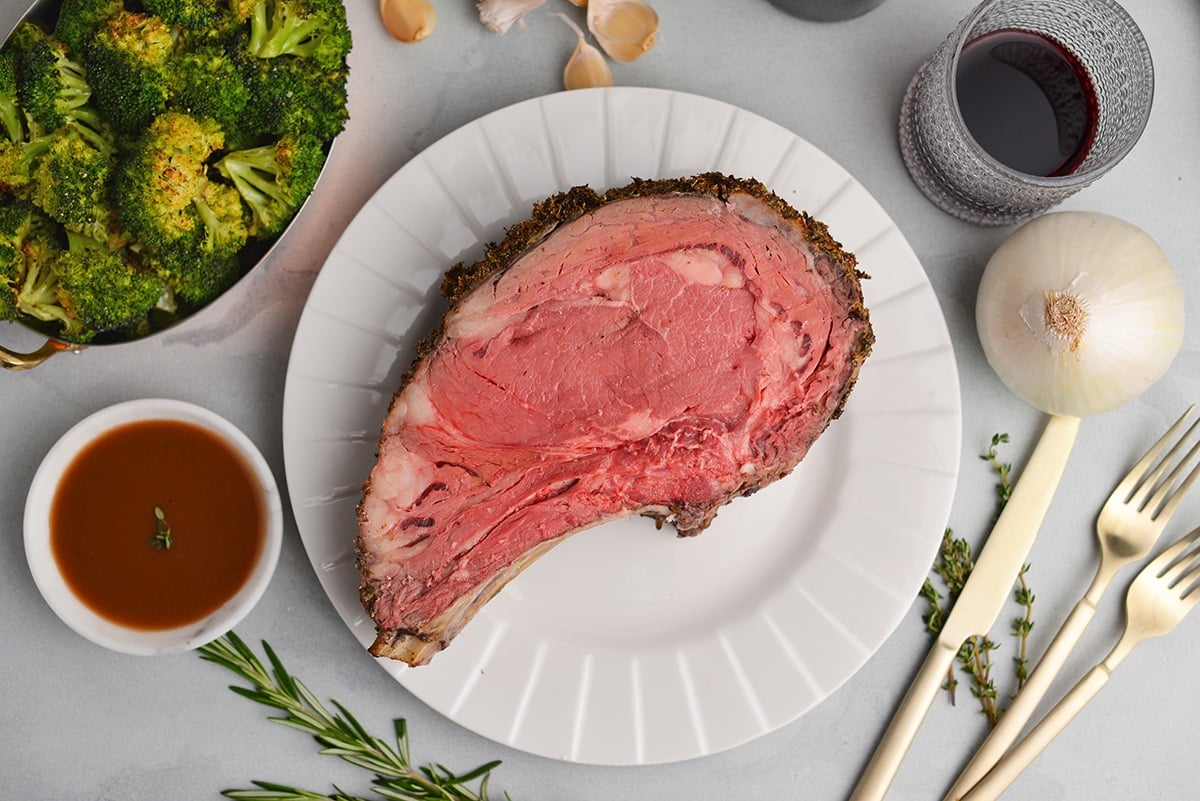
How Much Prime Rib Do I Need Per Person?
Generally speaking, one rib will feed 2-3 people. For normal people this slice will weigh close to 1 pound and can be carved into individual servings.
However, if you are seeking the Instagram worthy “king cut”, a slab of meat with the Fred Flintstone bone attached that is literally too big for the plate- you’ll need one rib per person.
What is a king cut of prime rib? Basically just a large, bone-in slice that is left whole and not carved into smaller portions. A queen cut of prime rib is the same thing, but from a boneless roast.
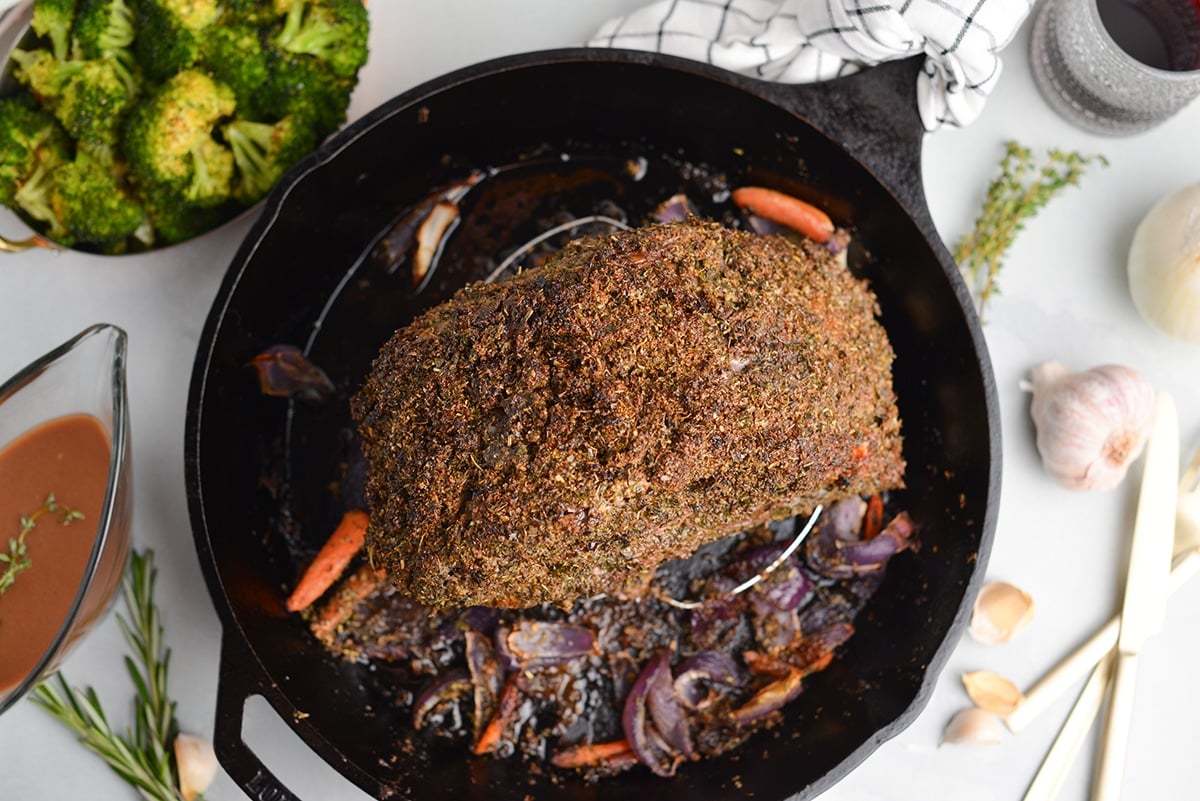
Best Prime Rib Recipe Ingredients
These are simple ingredients meant to complement the beef. Feel free to adjust the actual spices or volumes used in the bark. A good cut of beef doesn’t need much to make it taste better. You will easily find them all at your local grocery store.
- Prime Rib Roast– Weights and grades will vary. The average if 3-4 ribs or 5 pounds. Dab dry with paper towel. I like to look for a well-marbled prime rib.
- Bark (seasoning)
- Kosher salt & freshly ground black pepper – the base of every good prime rib rub.
- Dried parsley, oregano, rosemary, thyme – classic garlic herb profile that loves rich beef.
- Celery seed, onion powder, garlic powder & fresh garlic – layers of savory flavor in every bite.
- Olive oil & Dijon mustard – the “glue” that helps the rub stick and form a crust.
- Olive oil & Dijon Mustard– Essentially the glues that holds the herb crust together. You can use other forms of mustard, but I prefer Dijon.
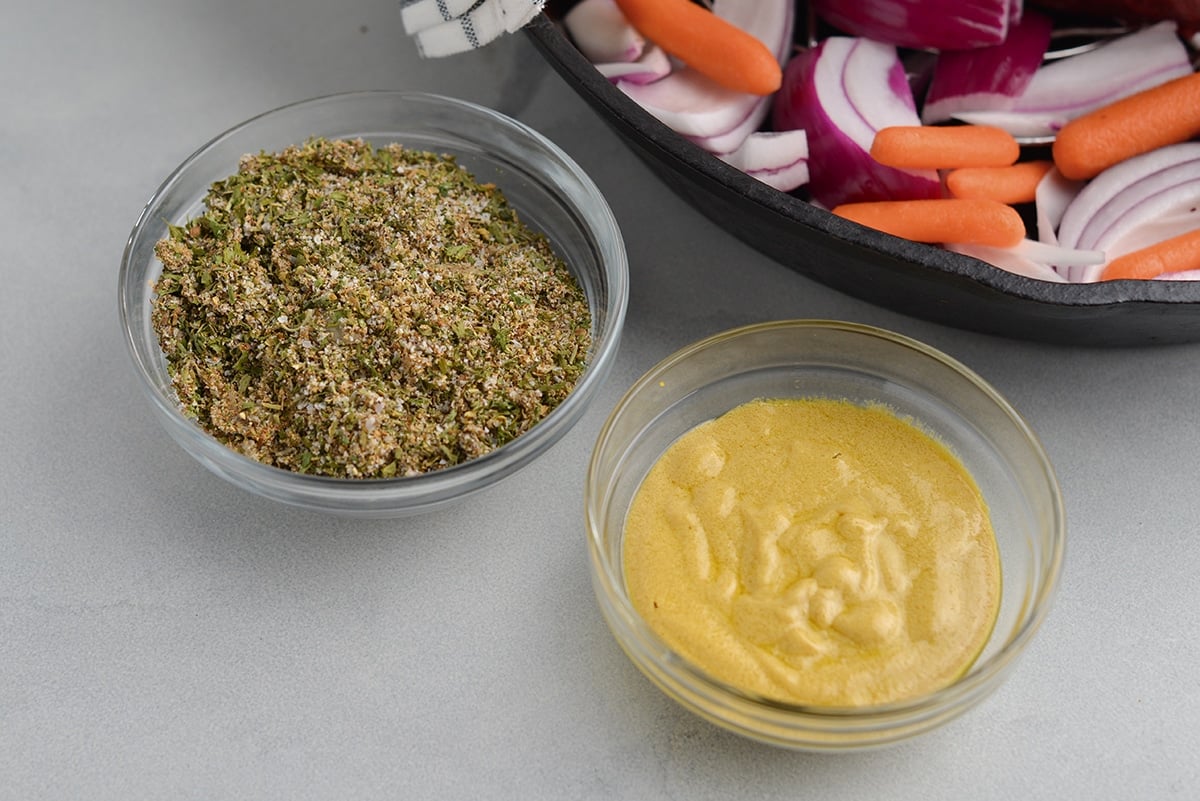
Tips for How to Use This Prime Rib Rub
- Apply the wet and dry ingredients when the roast is already on the cooking tray to avoid losing some in transfer.
Use about 1 tablespoon of rub per pound of prime rib.
Press the rub into all sides (don’t forget the ends) for an even bark.
For extra flavor, rub the roast and chill it uncovered in the fridge for 12–24 hours (if time allows).
Bring the roast out about an hour before cooking so it isn’t ice-cold in the center.
How to Cook the Perfect Prime Rib Roast
Make sure to plan enough time- while this isn’t an advanced cooking process, nor a super hands-on recipe, it is a time consuming recipe. All-in, plan for at least 3 1/2-4 hours.
- Let the Meat Come to Temp: People say this, but it will takes several hours for a prime rib roast to be “room temperature”, I do however, suggest taking it out for about 1 hour so it isn’t as cold.
- Make the Herb Rub: Blend together the dry herbs and spices with the fresh garlic in a small bowl.
- Season the Roast: Blot the outside of the roast dry, which will aid in the herb crust being able to stick, then rub with olive oil and Dijon mustard. Using your hands, pat the dry herb rub into the oil and mustard. Let is sit for about 15 minutes on sheet pan so the flavorful crust has time to cure before cooking. If you have enough time, do this about 12-24 hours in advance, cover the roast and allow it to chill with the bark applied for max flavor.
- Arrange: Do this before or after crusting, but place the roast on a rack. This can be a wire rack (like for cooling) on a rimmed baking sheet, roasting rack or roasting pan or a broiler pan (for larger roasts). The point is to let hot air circulate around the roast and for the juices to drip off and not make the crust soggy. Set it fat side up. I like to line the bottom pan with aluminum foil for easy clean up. If you want to season the drippings while roasting, arrange a whole onion, carrots and celery in the bottom around the roast. This is optional.
- Roast: The roast will start at a super high temperature to seal the bark and get it going. Then it will reduce to a lower temperature, the roast temp, which is 325°F. Use the chart included in this post and a meat thermometer to get an internal temperature from the center of the roast to determine doneness and correct cooking time.
- Resting: Letting roast rest is imperative to all of those lovely juices staying inside the roast! The fibers will reabsorb the juices and instead of them ending up on your counter and cutting board, they will stay put where they belong. A larger piece of meat will require a longer resting period. The a 5 pound roast, this would be 30 minutes. Beef is very good at maintaining heat and quick frankly, this cut isn’t supposed to be served piping hot, but if you want to prevent it from cooling, tent or wrap the roast with aluminum foil.
- Make an Au Jus: You can make an easy au jus sauce from pan drippings or from beef broth, if you want, but certainly not required. It’s the easiest way to make the sauce. The resting period is a great time to do this!
- Carving: Use a carving knife or very large, sharp cutting knife and cut into slices (about 1-2 inches thick) between the bones.
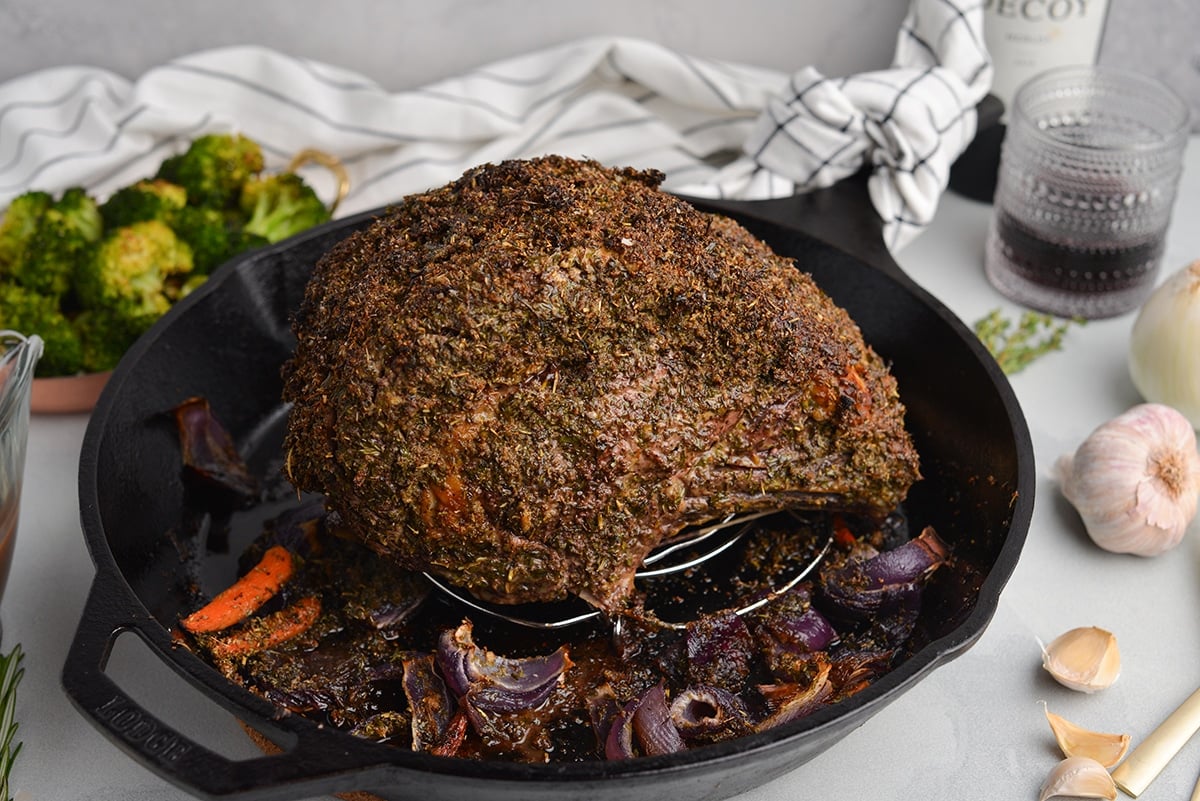
Best Prime Rib Roast Recipe Tips
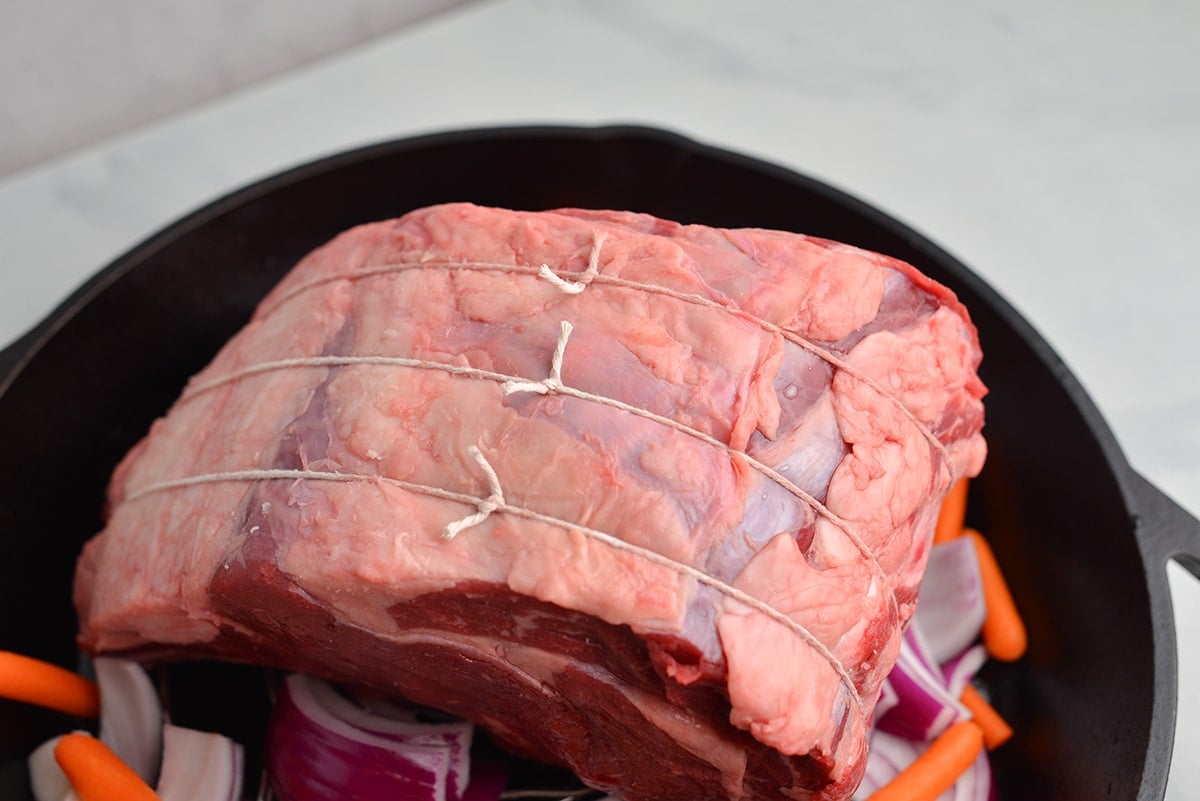
The Importance of Tying a Roast
Don’t underestimate the importance of tying your roast. If left untied, the outer layer of meat will pull away from the rib-eye muscle and overcook, it also keeps the fibers of your meat close together, resulting in an evenly cooked roast.
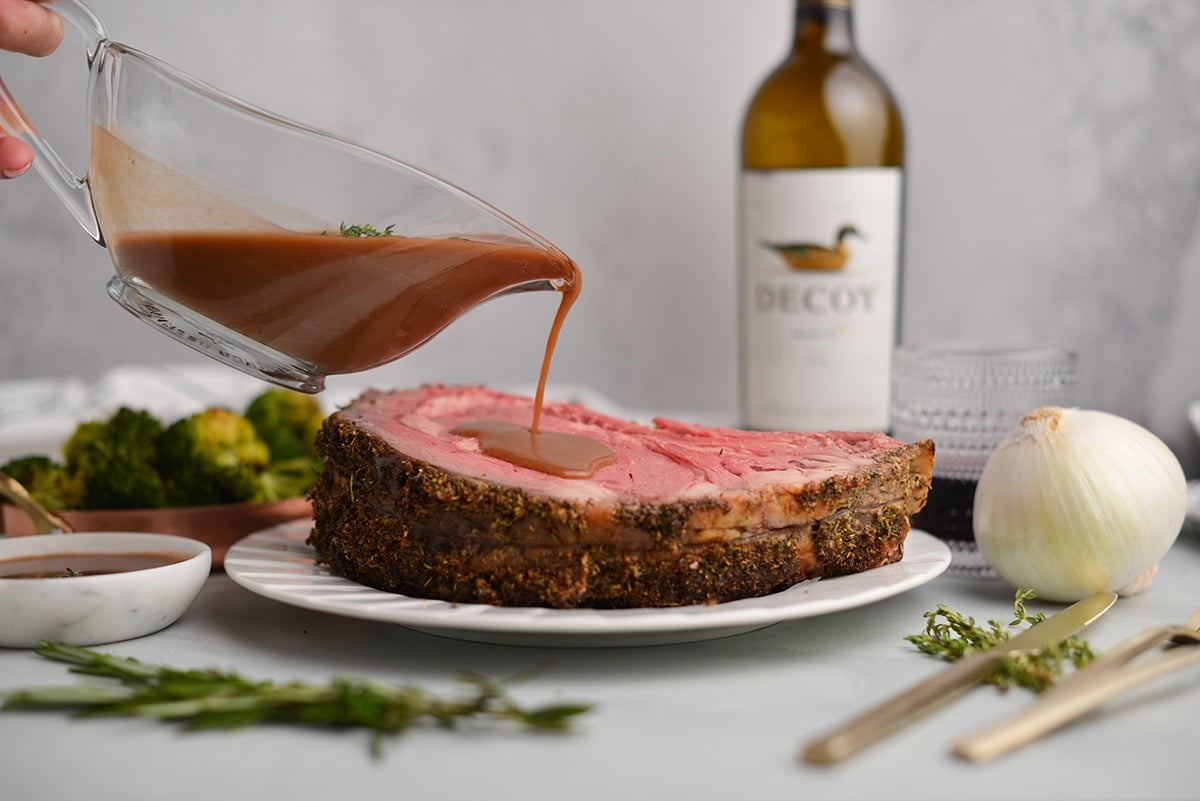
Tie your roast in 2-inch sections very tightly. You can also ask your butcher they will generally do it for you, but it is super easy to do on your own. Don’t forget to snip the twine or kitchen string after cooking and before serving.
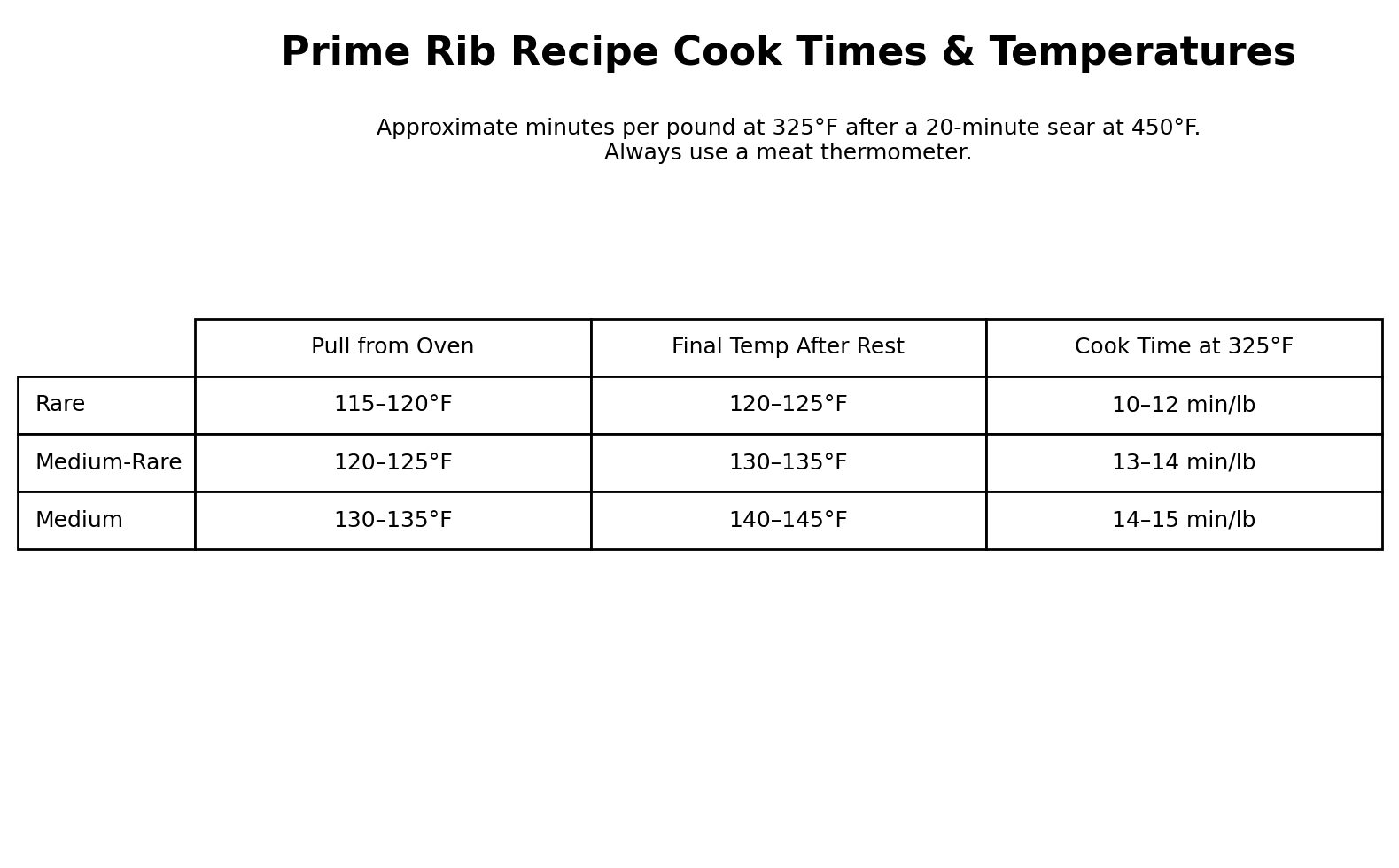
Rib Roast Recipe Cook Times & Temperatures
The cook time depends on the size of the roast and your desired degree of doneness. Prime rib loses flavor and the coveted texture if cooked past medium rare. If your guests insist on a medium to well done slice, place that slice back in the oven after you finish carving the medium rare boneless rib roast.
After the initial sear, you’ll want to roast it at 325°F and cook for:
- 10-12 min per pound for rare prime rib
- 13-14 min per pound for medium rare prime rib
- 14-15 min per pound for medium well prime rib
Remove the roast from the oven to rest when it is 5-10°F below the target temperature. Carryover cooking will continue to cook the meat during the resting period, so if you remove it when it hits the target temp, it will likely be a little over cooked by the time you serve.
Here is an easy chart to know the degrees of doneness. Use a digital thermometer to get the most accurate read. Do not guess!
What to Serve with this Standing Rib Roast Recipe
Dipping Sauce for Prime Rib
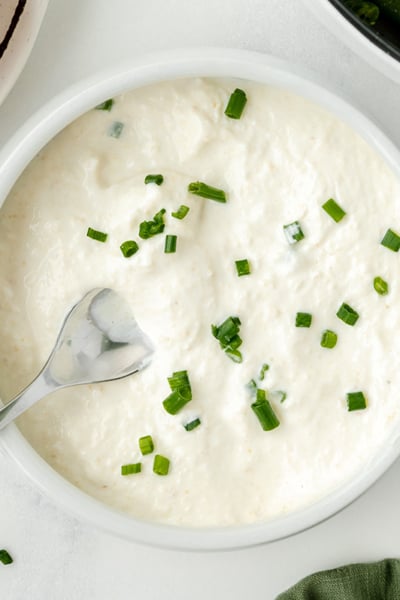
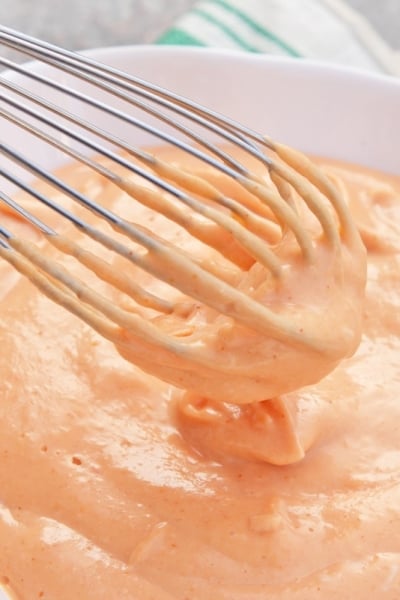
I like to serve my prime rib with Horseradish Cream Sauce or a horseradish aioli. The soft, fluffy texture doesn’t overwhelm the meat. After making such a glorious roast, why would you want to weigh it down with a heavy sauce?
I also make my homemade steak sauce, Copycat Peter Luger Sauce. You can also serve it with an au jus or cup of natural juices. Red wine gravy is also a good option, as are blue cheese crumbles.
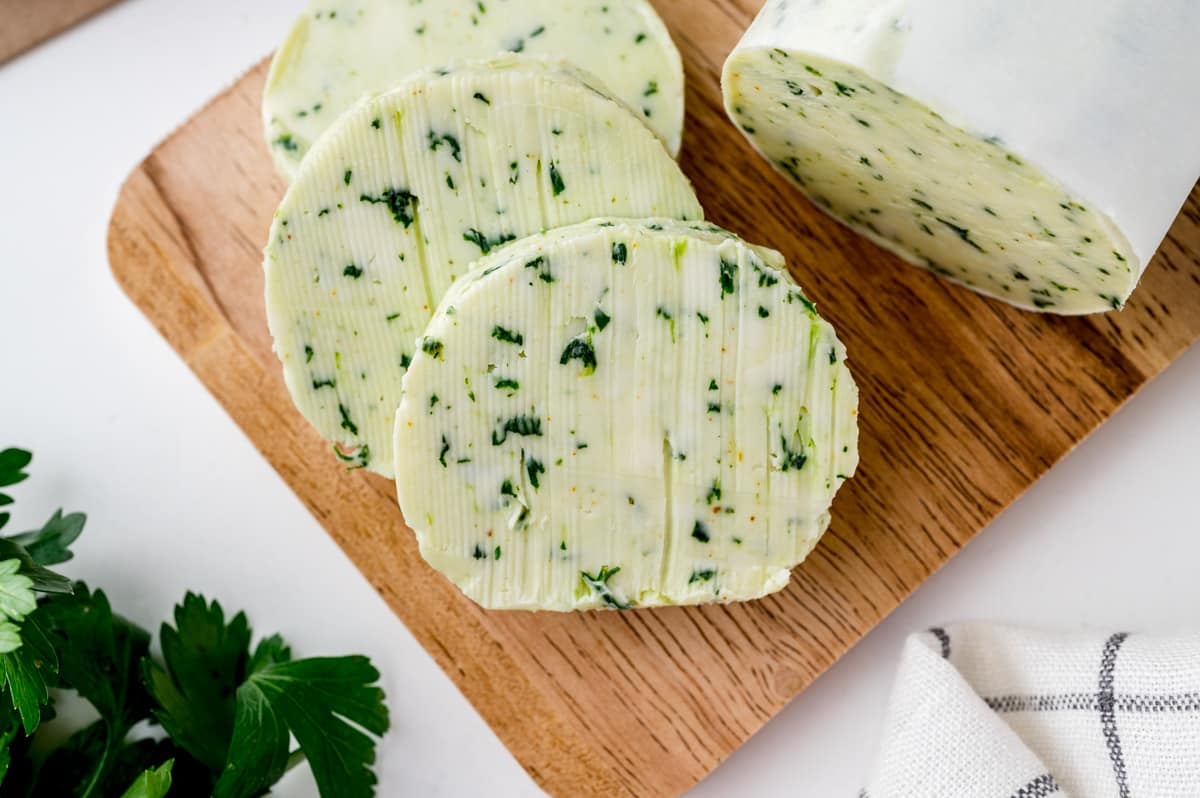
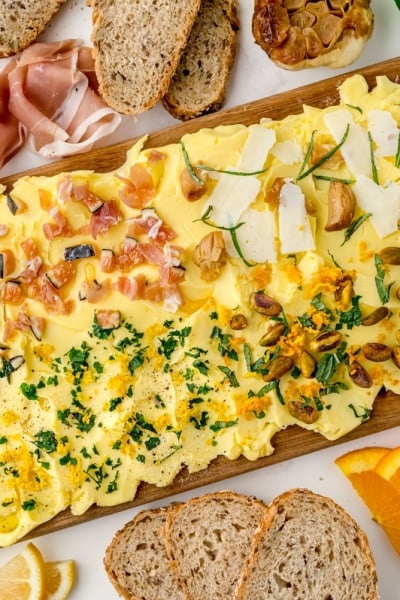
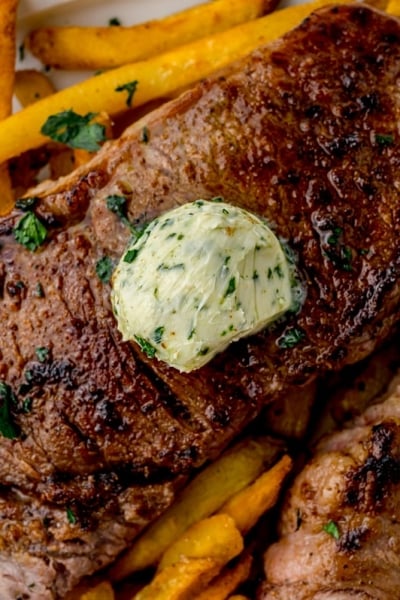
You can also top each slice with a compound butter, much like French steak frites. Foodies love a good maitre d’hotel butter or truffle butter.
Veggies: This hefty piece of meat begs to be paired with some veggies. A leafy green salad is nice, but here are some of our other favorites.
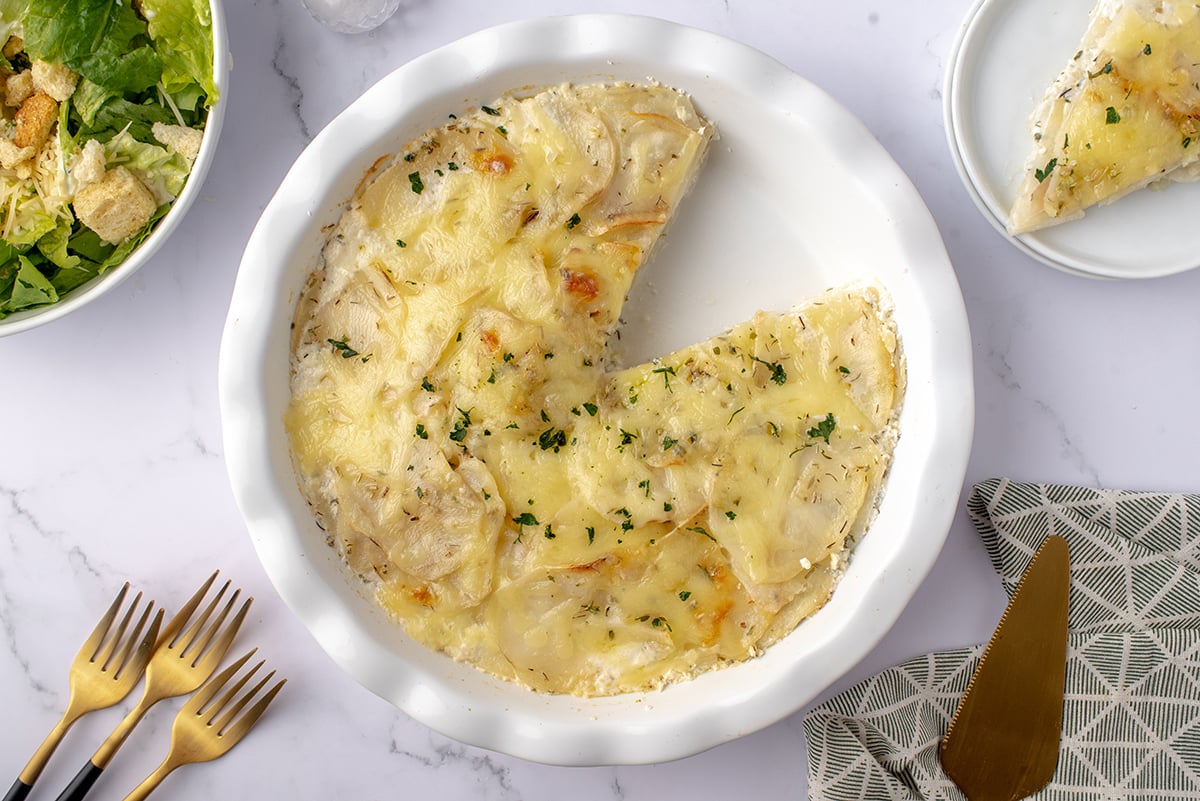
Potatoes: Steak and potatoes, duh.
Storage and Reheating
Store leftover prime rib in an airtight container in the refrigerator for up to a week. Reheat covered in the oven at 300°F for about 5-7 minutes. It shouldn’t be piping hot, just barely warm.
Cooked prime rib can be frozen in slices or cubes. Place into a freezer bag after wrapped in plastic wrap, pushing out as much air as possible. Freeze for 3 months. Thaw at in the fridge and then reheat using instructions above.
Reheating any type of beef usually ensure that it will be cooked to one degree higher of doneness than initially cooked. It is always best enjoyed freshly roasted. Just like leftovers, reheat covered in a 300 degree oven for about 5-7 minutes. It shouldn’t be piping hot, just barely warm.
Prime Roast Recipe FAQs
Prime rib is special due to its exceptional flavor and tenderness, primarily attributed to the generous marbling of fat throughout the meat. This marbling creates a juicy, rich, and savory flavor profile, making prime rib a highly sought-after and indulgent cut of beef for special occasions.
The cost will vary greatly based on three factors:
Geographic location– markets like New York and Los Angeles are more expensive in general than a small midwest town.
Time of Year– The cost of a prime rib roast skyrockets during the holiday season because it is in-demand. My store has a sale right after New Year’s and I was able to get 3 roasts at 50% off. They were already shrink wrapped, so I threw them in the deep freezer for next year.
Grade of Beef– Beef is graded as a whole during processing, so the grader may not have a clear look at each cut. The label is a good starting point, but don’t make your choice purely cased on select, choice or prime. This cut, as a whole, is very fatty, which imparts flavor and makes it tender. Even a select cut will be succulent if cooked correctly.
With all of those things to consider, a prime rib roast will cost between $13-$22 per pound.
Classic prime rib is well-seasoned on the exterior (bark) using a prime rib rub and initially seared at a high heat to create a spice crust that seals in all of the juices. The oven temperature is then reduced considerably while the roast continues to…. well, roast.
In this case we use a Dijon mustard to hold the garlic and herb seasoning to the roast.
They are often used interchangeably and people mean the same thing, but technically speaking they are not. “Prime rib” to a specific cut of beef that comes from the primal rib section of the animal, while “prime roast” may refer to a roast made from prime-grade beef, which is the highest quality designation given by the USDA.
Prime rib can also be labeled a standing rib roast, ribeye roast (boneless prime rib), rib roast or bone-in ribeye roast.
This largely depends on how large the roast is, what temperature you are cooking it at and the method of cooking. At 325°F, you’ll cook it for 15-20 minutes per pound, 15 minutes for a rare roast. Always use a meat thermometer to see the internal temp.
Yes! Mix the dry spices for this prime rib rub and store them in an airtight jar for up to 6 months. For the best flavor, add the fresh garlic and olive oil/Dijon just before you rub it on the roast so the mixture doesn’t clump or lose its punch.
Plan on about 1 tablespoon of prime rib rub per pound of meat. So a 5-pound roast will use roughly 5 tablespoons. You want a visible, even layer of seasoning on all sides—that’s what creates the bark.
If you have time, yes. Rub the roast with the garlic herb prime rib rub, set it on a rack, and refrigerate it uncovered for 12–24 hours. This acts like a dry brine, helping the seasoning penetrate and drying the surface slightly so you get a better crust.
You can use either, but I like olive oil and Dijon mustard. They help the rub stick and brown, and the mustard’s acidity brightens the rich beef. Butter tends to burn more quickly at high heat.
Absolutely. This garlic herb prime rib rub is fantastic on ribeye steaks, beef tenderloin, strip roast, and even pork loin. Just adjust the cook time based on the cut.
More Beefy Recipes
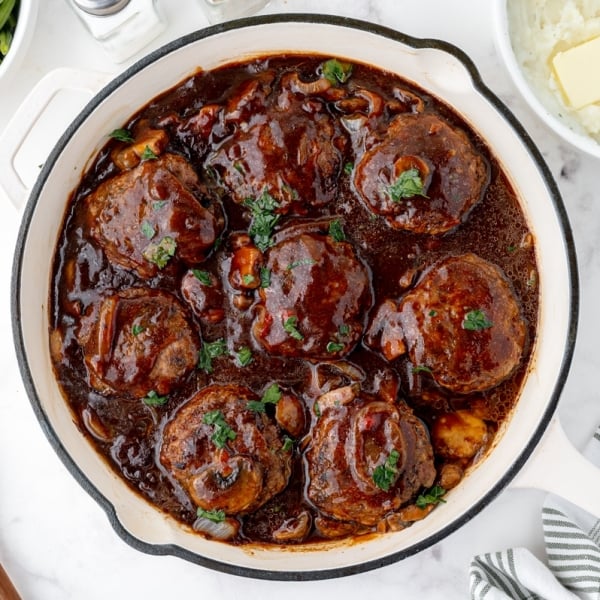
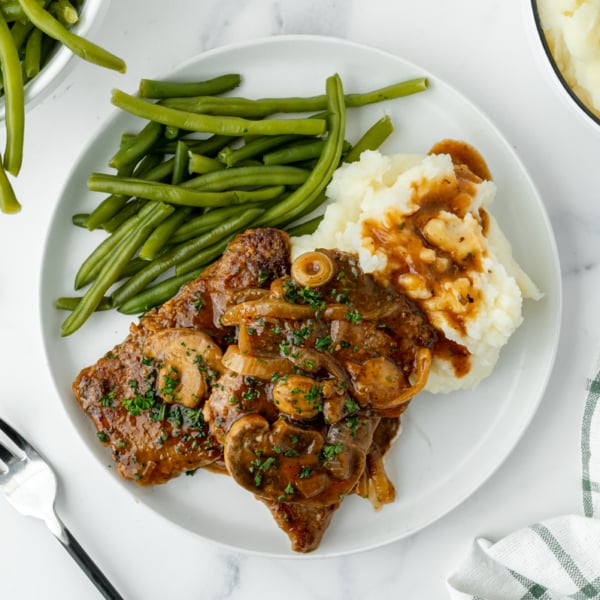
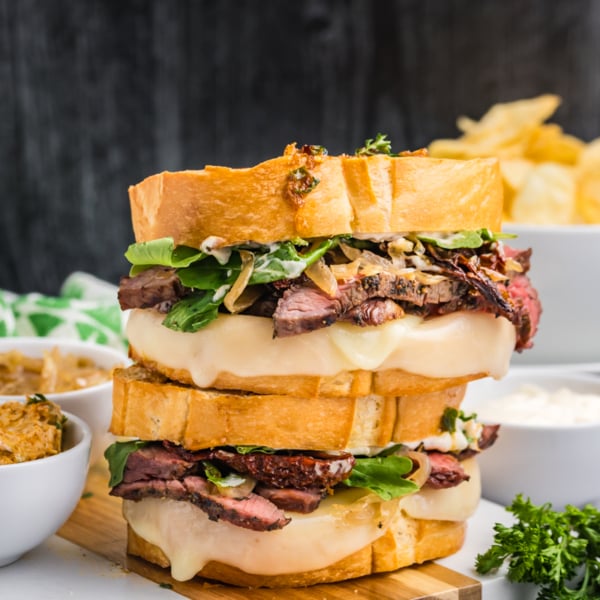
In addition to this standing beef rib roast, we have lots of other delicious beef recipes. Here are some of our favorites.
Best Prime Rib Rub and Classic Prime Rib Recipe
Equipment
Ingredients
- 4-6 pound bone-in or boneless rib roast , dabbed dry with paper towels
- 4 garlic cloves , minced or grated
- 1 tablespoon dried parsley
- 1 tablespoon dried oregano
- 1 tablespoon black pepper , freshly ground
- 1 tablespoon coarse Kosher salt
- 2 teaspoons dried rosemary
- 2 teaspoons dried thyme
- 1 teaspoon onion powder
- 1 teaspoon garlic powder
- 1/2 teaspoon celery seed
- 2 tablespoons Dijon mustard
- 1 tablespoons extra virgin olive oil
- onion, carrots or celery , optional and coarsely chopped
- Horseradish Cream Sauce
Instructions
- Tie the 4-6 pound bone-in or boneless rib roast with cooking twine at 2 inch increments. Preheat the oven to 475°F. Prepare a wire rack or broiler pan for the roast.
- In a small bowl, stir together the minced or grated 4 garlic cloves, 1 tablespoon dried parsley, 1 tablespoon dried oregano, 1 tablespoon black pepper 1 tablespoon coarse Kosher salt, 2 teaspoons dried rosemary , 2 teaspoons dried thyme , 1 teaspoon onion powder, 1 teaspoon garlic powder and 1/2 teaspoon celery seed. Set aside.
- In another small bowl, whisk together the 2 tablespoons Dijon mustard and 1 tablespoons extra virgin olive oil. Using a spatula or clean hands, smother this mixture onto the roast. Pat the dry herb mixture into the wet mixture so it sticks. Set aside for 15 minutes.
- If you want to season the drippings for an au jus, adding coarsely chopped onion, carrots or celery , to the bottom of the roasting pan will help give it flavor while it cooks. This is optional and only needed if you plan to make an au jus sauce.
- Sear the roast at 475°F for 15 minutes. Then lower the oven temperature to 325°F and cook for 10-12 min per pound for rare prime rib, or 13-14 min per pound for medium rare prime rib, or 14-15 min per pound for medium well prime rib. Check the temperature using a digital thermometer.
- Remove the roast, tent with aluminum foil and allow to rest for 30 minutes.
- Place the roast on a cutting board and slice into 2-inch slices. Serve with your favorite sauce or compound butter (listed in the post!).
- If you've tried this recipe, come back and let us know how it was in the comments or star ratings.
Notes
- Rare- 120-130°F
- Medium rare- 130-135°F
- Medium- 135-145°F
- Medium Well- 145-155°F
- Well Done- 155°+F
Nutrition







Can I cook a rib eye roast using same methods & seasonings
Sure can!
This was fantastic. Made it for Christmas everyone loved it. Will make again