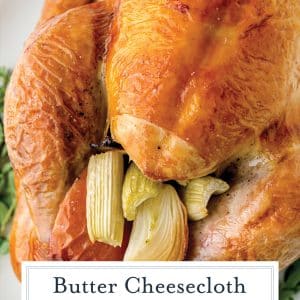
If you’ve ever pulled a dry, bland turkey out of the oven and wanted to apologize to the whole table, this cheesecloth turkey recipe is your comeback bird.
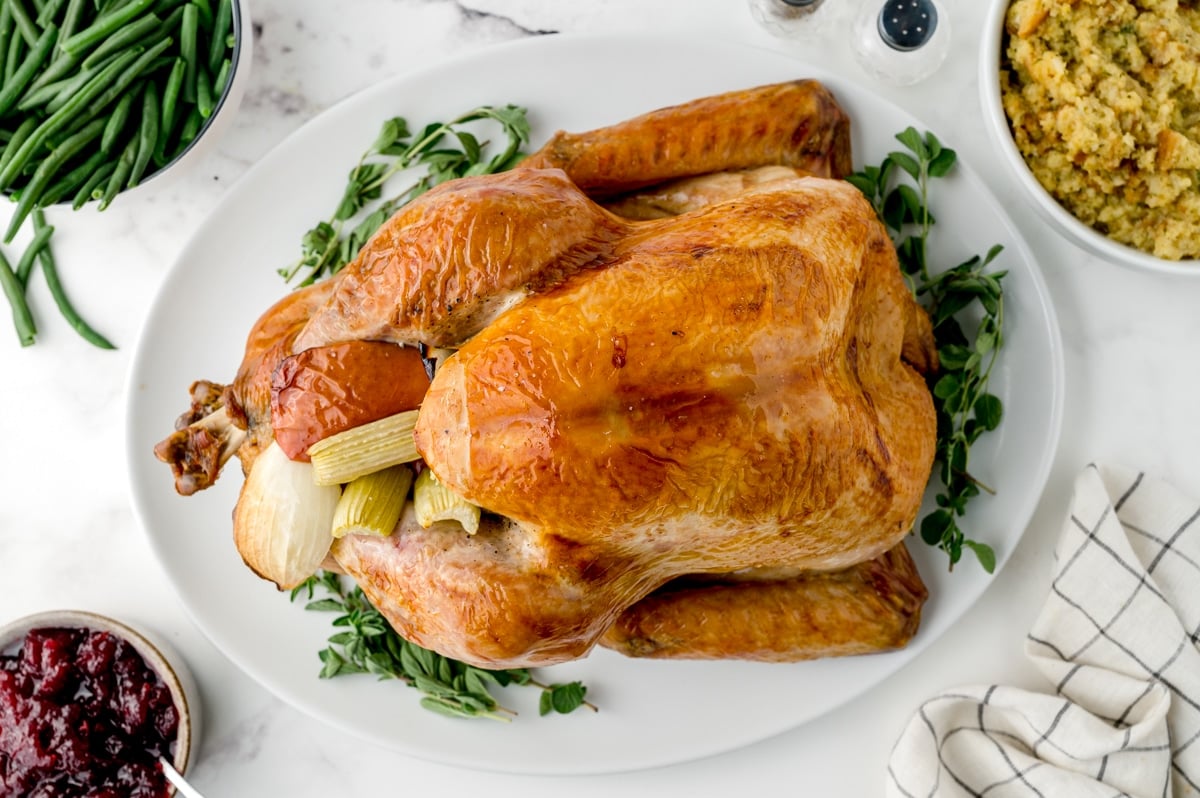
Inspired by the classic Martha Stewart cheesecloth turkey method, this version soaks a big sheet of cheesecloth in butter and wine, then tucks your turkey in like a cozy little butter burrito. The cloth keeps the meat juicy, bastes it as it cooks, and gives you that deep golden skin everyone fights over.
I’ll walk you through exactly how to brine (or not), how many layers of cheesecloth to use, when to take it off, and how to know your turkey is safely cooked—so you can carve with confidence instead of crossing your fingers.
What is a Martha Stewart Turkey?
There is nothing sadder than a pale, dry turkey. Not only from a visual standpoint but from a flavor and texture standpoint as well.
That’s where butter, wine, and cheesecloth come into the mix. I like to think of this as the warm blanket method, also known as the mummy method.
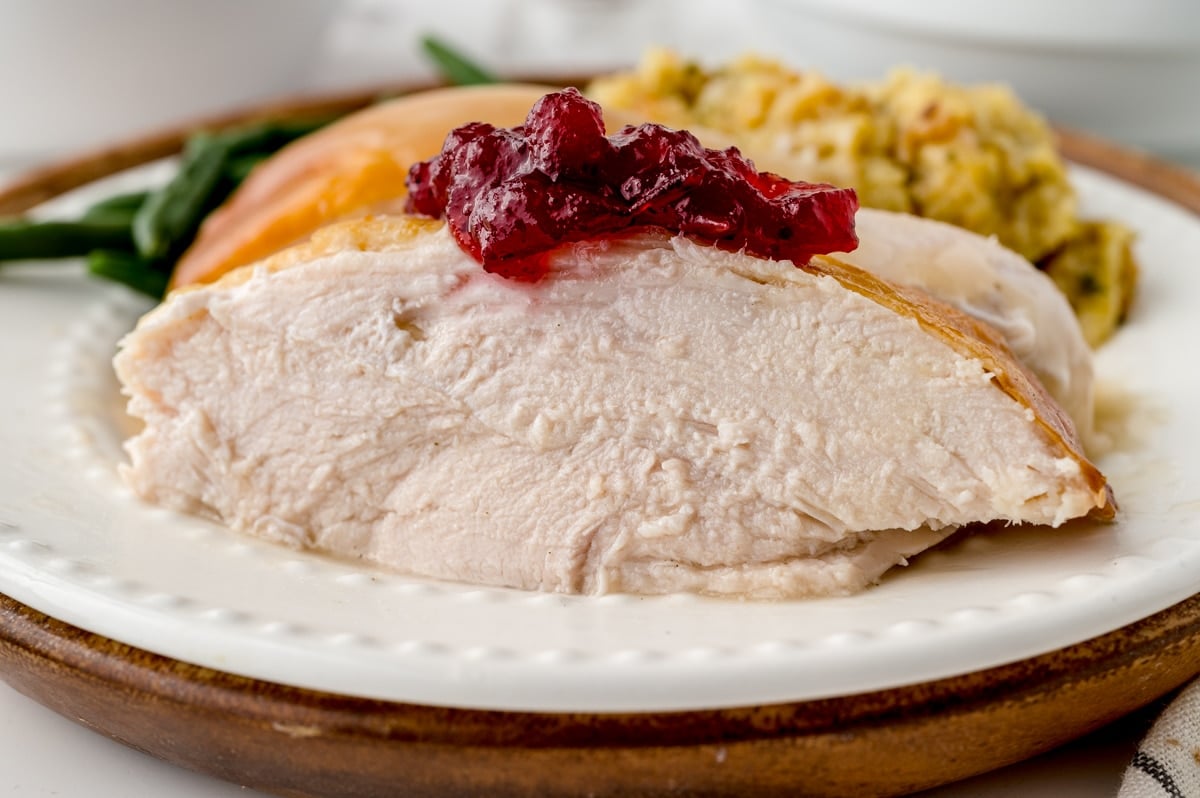
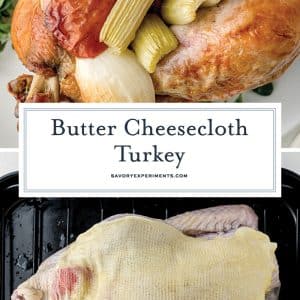
By dunking and soaking the cheesecloth in fat and flavor and draping it over your bird, you are essentially tucking it in all snug for the oven. The cheesecloth ensures that every inch of skin is protected and, more importantly, that every inch of skin has contact with moisture and fat.
Essentially, it is basting when you aren’t there to baste and the butter won’t just melt off into the bottom of the pan. A true self-basting turkey. Butter has milk solids, which promote browning and flavor, liked brown butter. Double win!
Ingredients for Juicy Roast Turkey
The ingredient list is fairly short, but keep in mind, you can combine the cheesecloth turkey method with your desired stuffing too, so feel free to get that on in there.
- Turkey– Small to medium turkeys (10-12 pounds) are the best size for roasting to maintain flavor and juiciness. If using a frozen turkey, allow it to fully thaw.
- Coarse Kosher Salt & Freshly Ground Black Pepper– Coarse salt brings out natural flavors, aids in the crisping of skin and keeps the meat moist. Kosher salt provides all of this without being overwhelmingly salty or having a metallic aftertaste.
- Unsalted Butter– Please a good quality, unsalted butter. European butters have a deep yellow hue and good percentage of butter fat without water. Great flavor and less water means more golden brown turkey skin! Also feel free to use an herb butter.
- White Wine– Grab a bottle from the grocery store versus using a store bought cooking wine, which can often be laced with additional sodium to keep it shelf stable. if you aren’t willing to take a swig, then it isn’t good enough for your turkey either. Although not my preference to drink with dinner, a sweet wine is the best flavor affinity for turkey. Champange and Moscato are great for this. With that said, a dry white is also perfectly fine, as is an oaky Chardonnay. Low-sodium chicken stock can be substituted for the wine.
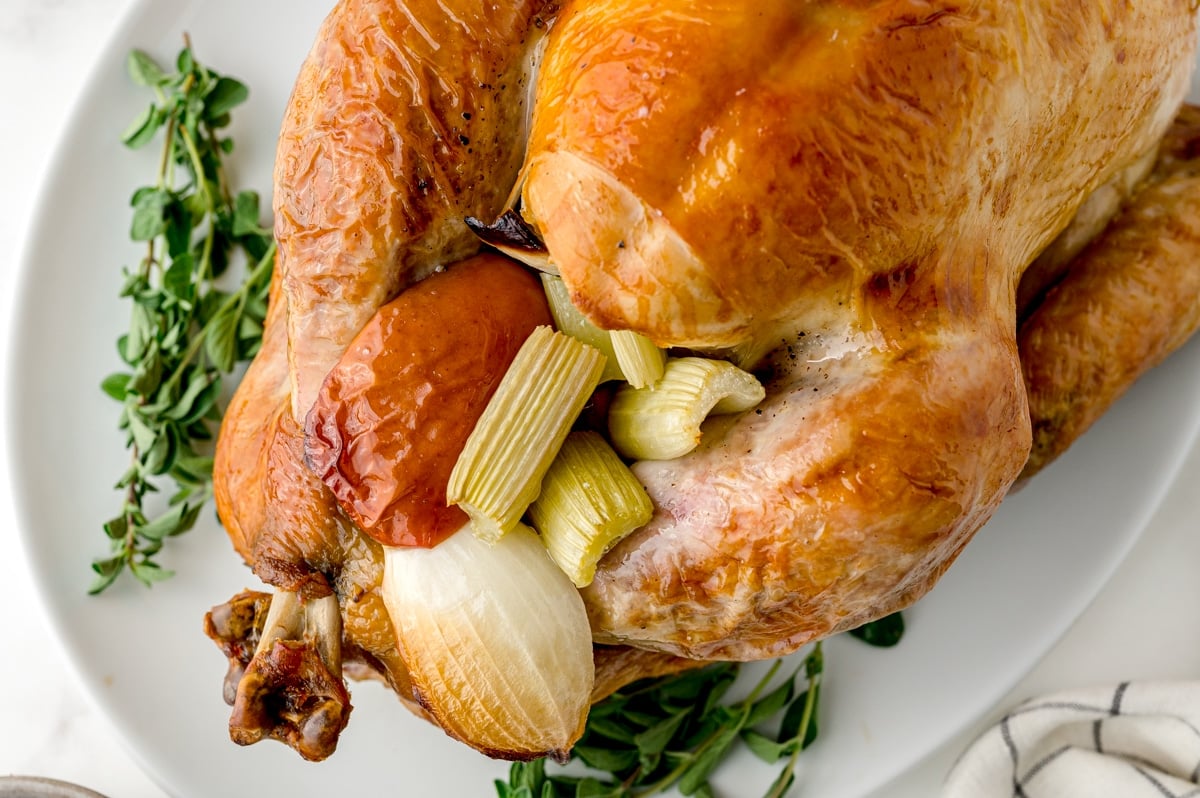
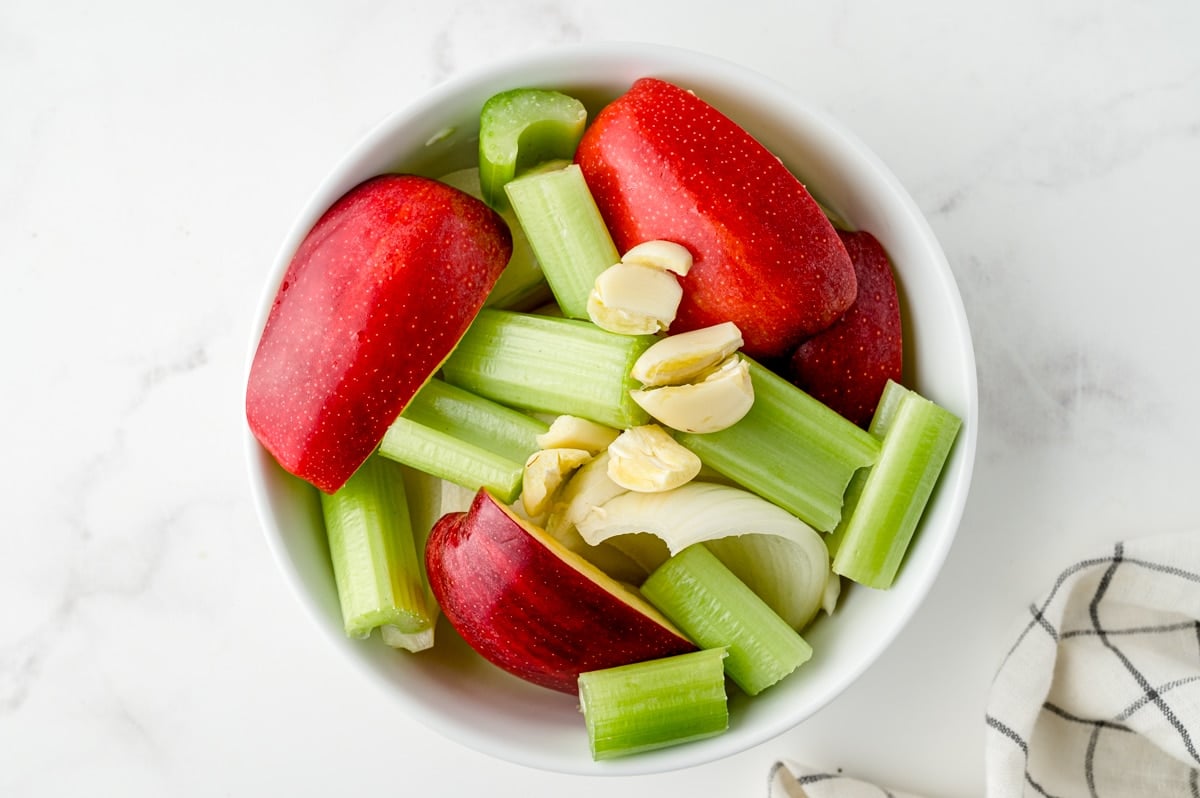
- Stuffing- I use a combo of white onion, celery, apples for sweetness and garlic, because well, I love garlic.
- Cheesecloth – Find cheesecloth in the cooking aisle at the grocery store or order it online.
If your are using your own stuffing, omit the onion, celery, apple and garlic. If you are using a more robust turkey rub, omit the salt and pepper, yours will likely have these items in it and adding more will be overpowering.
If you feel like adding fresh herbs or to your wine and butter mix or using a compound butter, by all means! Sage, thyme, rosemary, thyme, and garlic are all good choices or you can mimic what is being used in your stuffing recipe if you are going that route.
How to Make a Martha Stewart Cheesecloth Turkey
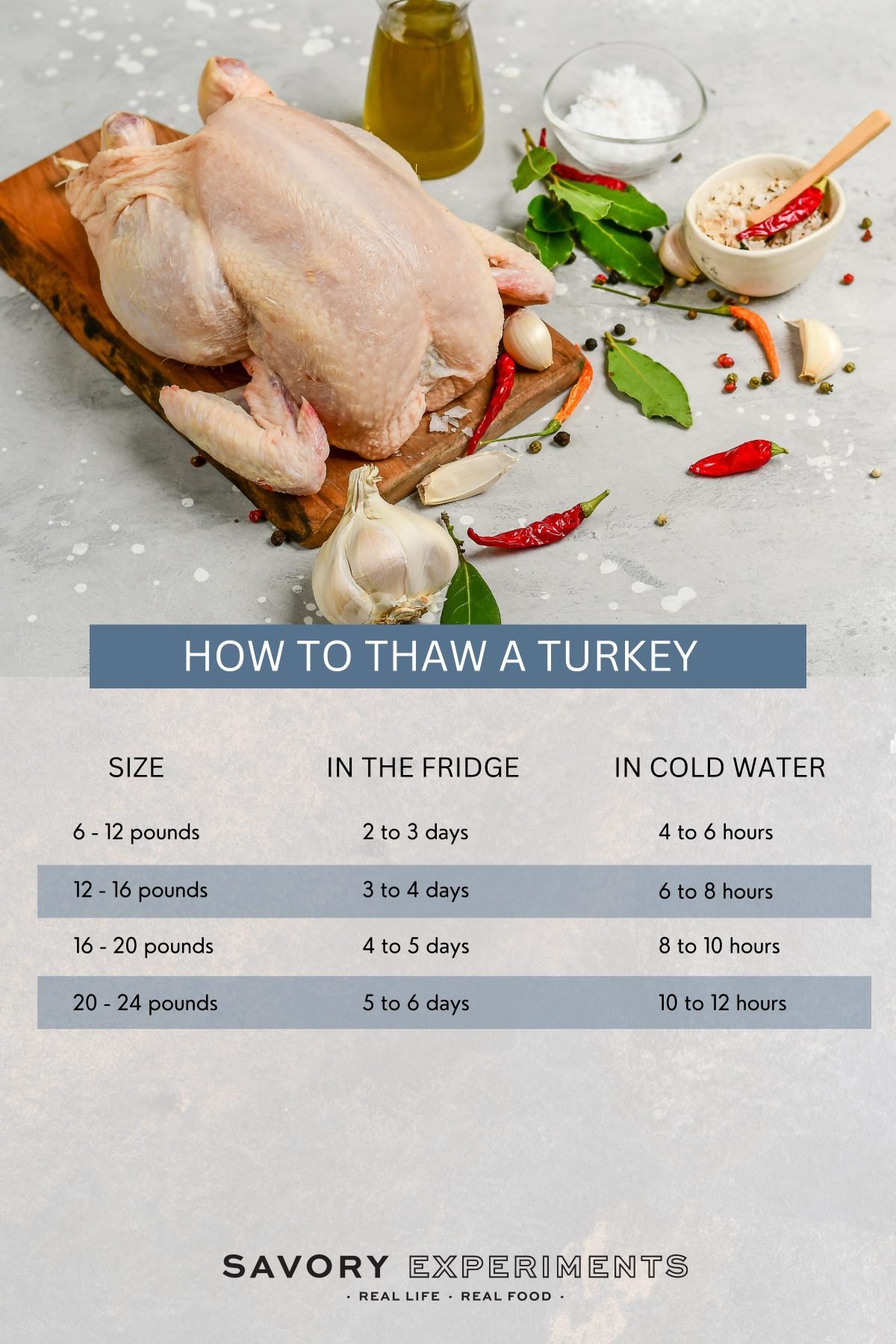
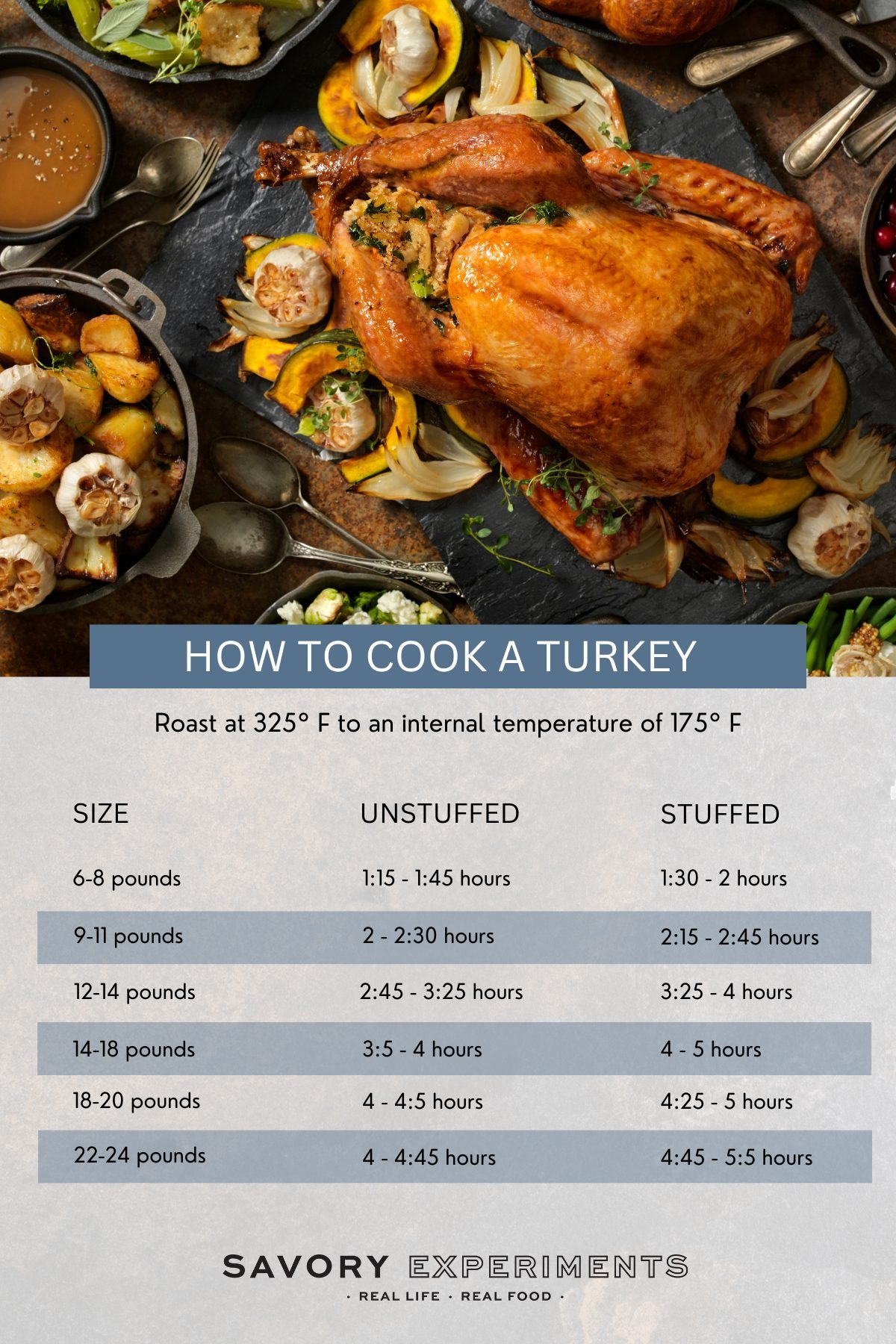
- Thaw the turkey. Use this chart to figure out the best way to do this. DO NOT run under hot water. They can result in a rubbery texture.
- Allow the turkey to sit at room temperature for 1 hour so it isn’t super cold. Make sure it is unpackaged and rinsed so the air can help it take the chill off from the inside out as well.
- Preheat the oven to a higher temp with the rack in lowest position so the turkey will fit nicely into the oven. Prepare a large roasting pan with a rack to keep the bird elevated and set it aside.
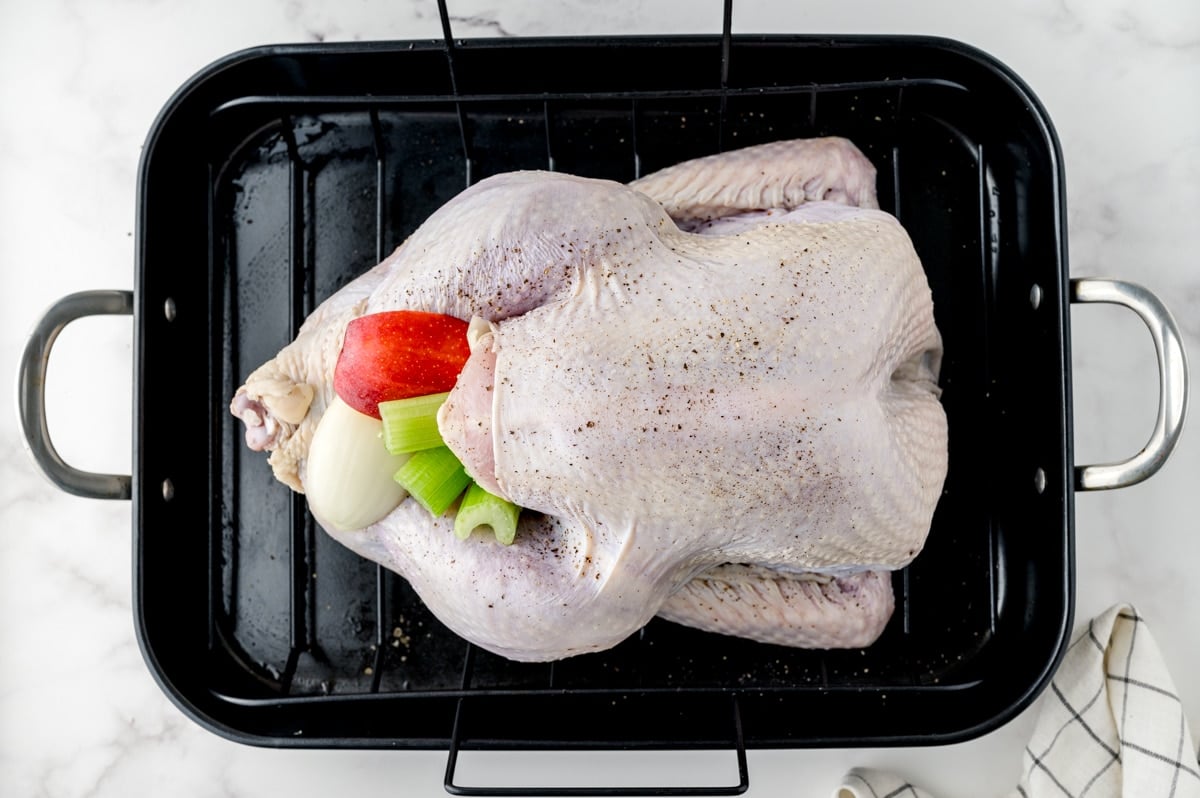
- Combine the salt and pepper in a small bowl, rub the inside and outside of the bird with the seasoning, getting under the skin when possible. Use your own rub, if desired, but then omit the salt and pepper.
- Stuff the cavity with the prepared onion, celery, apple and garlic cloves. Truss the legs shut with cooking twine. Fold wing tips under and fold neck flap under. If using your using your own stuffing, omit the onion, celery, apple and garlic.
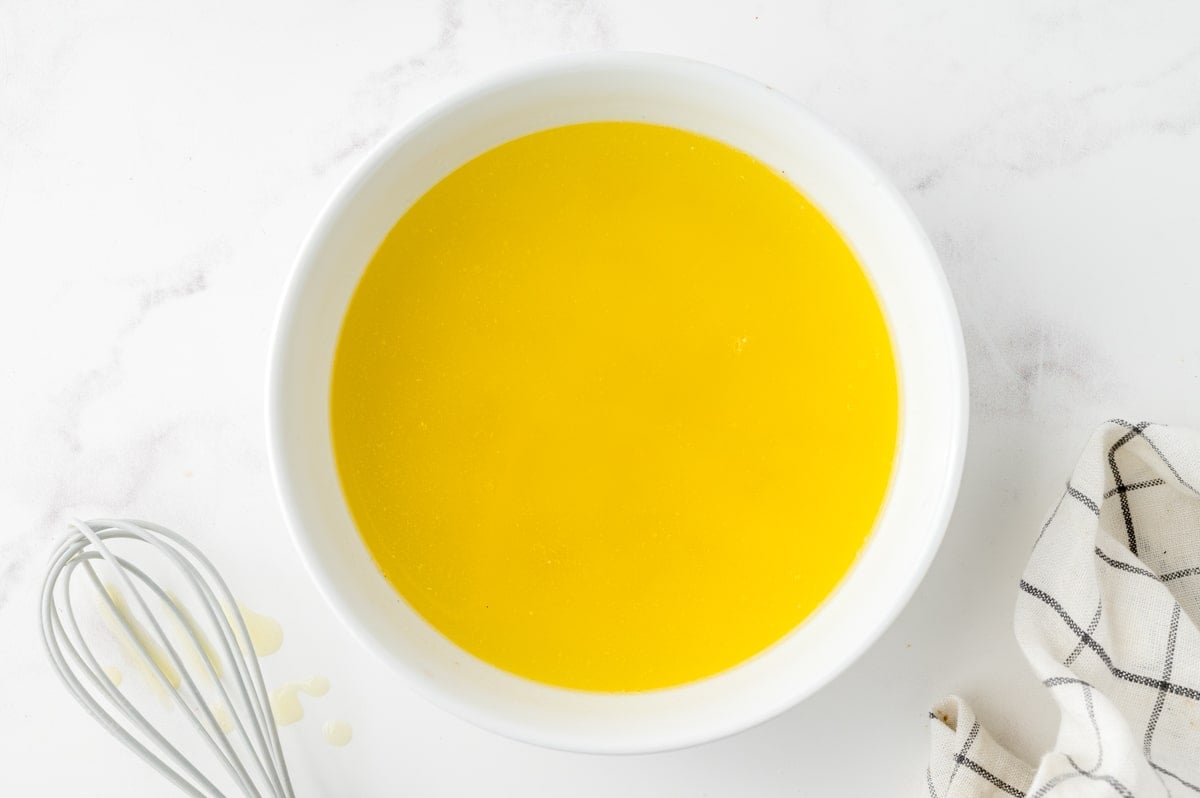
- In a small saucepan or in a microwave safe bowl, melt the butter and then whisk with the wine. Allow to cool a little. When melted, remove from heat and whisk with the white wine.
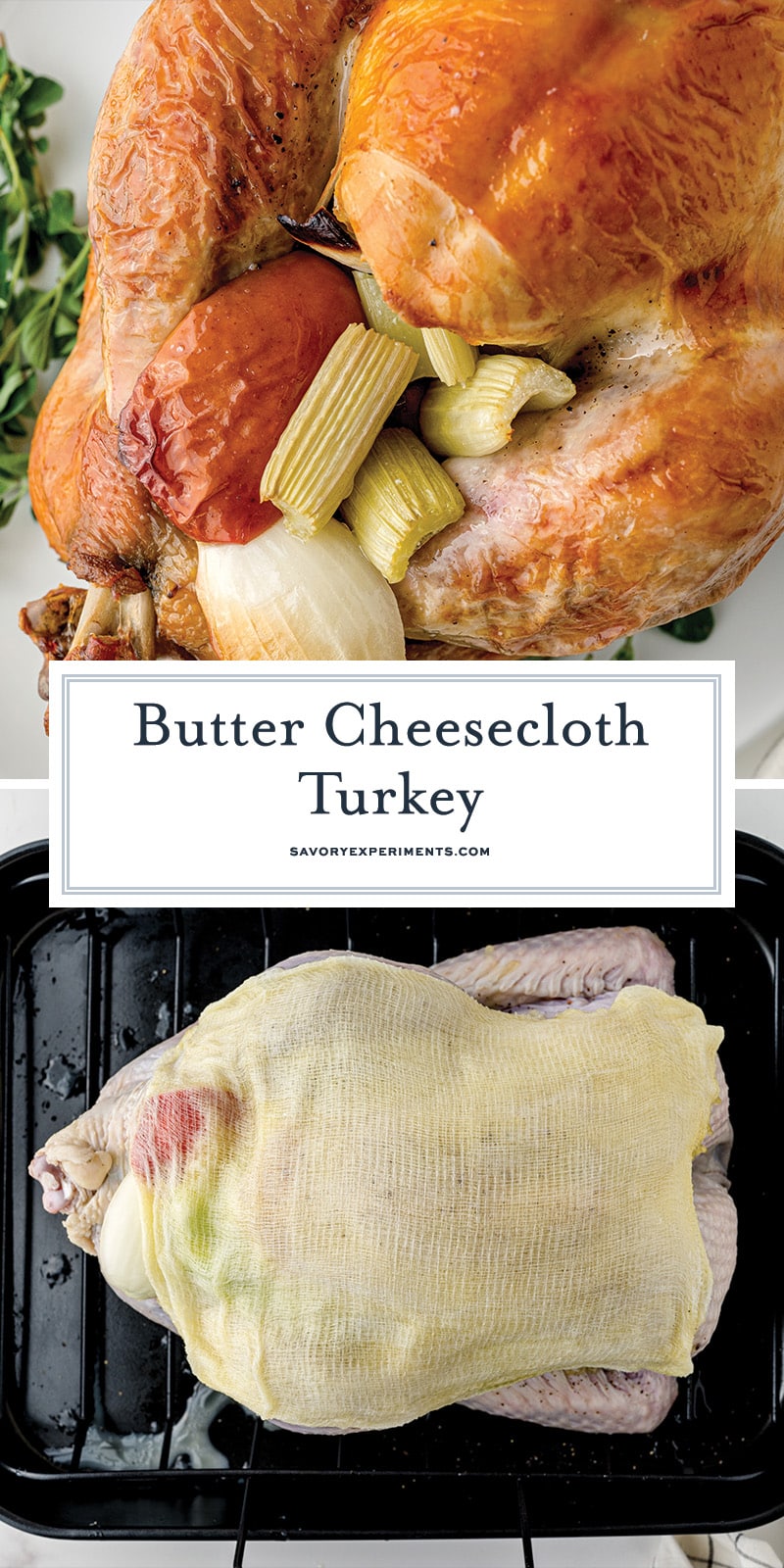
- Fold the cheesecloth into fourths (should be 4 layers). Carefully, immerse the cloth in the butter mixture; let soak for 2-3 minutes. It is hot, so be careful. I highly recommend using gloves to protect yourself.
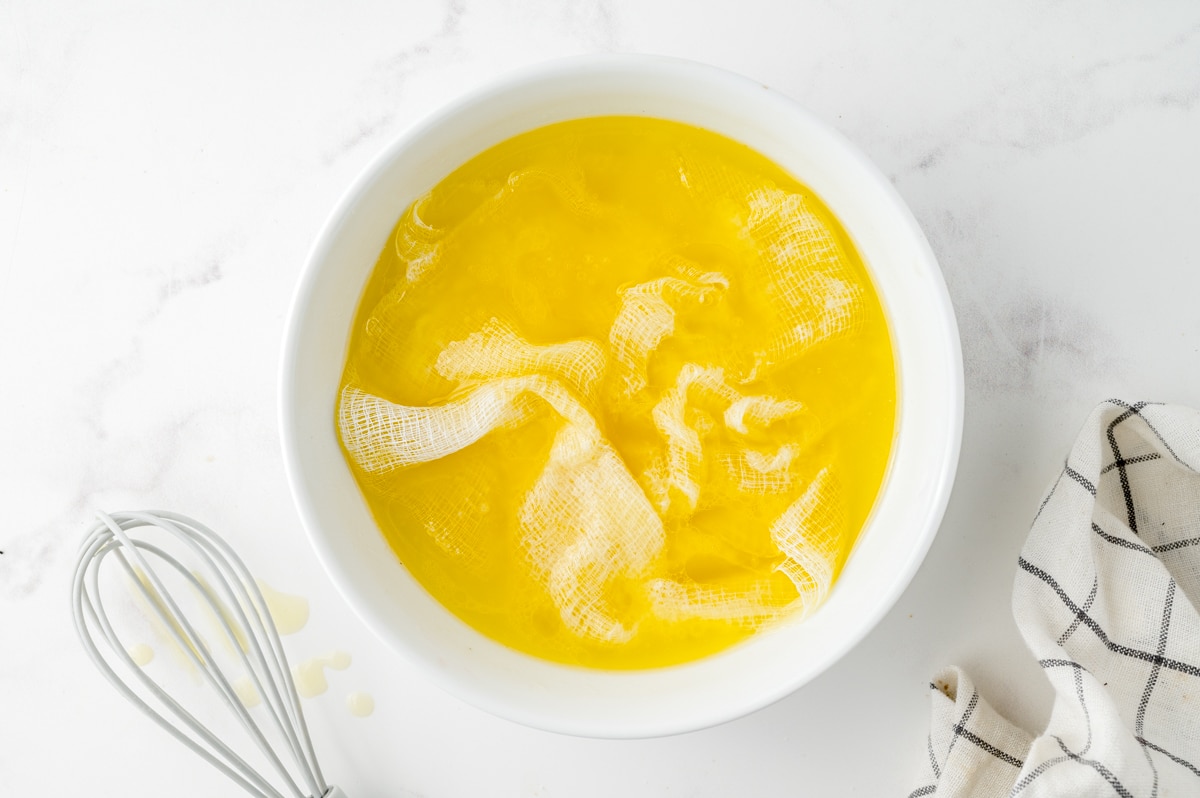
- Place the turkey, breast side up, on the roasting rack. Remove the butter-soaked cheesecloth from butter mixture, letting the excess drip into the bowl. Reserve the butter mixture for basting.
- Drape the cheesecloth over turkey, arranging so that as much turkey as possible is covered. Roast for 30 minutes to get it going and expedite the browning process.
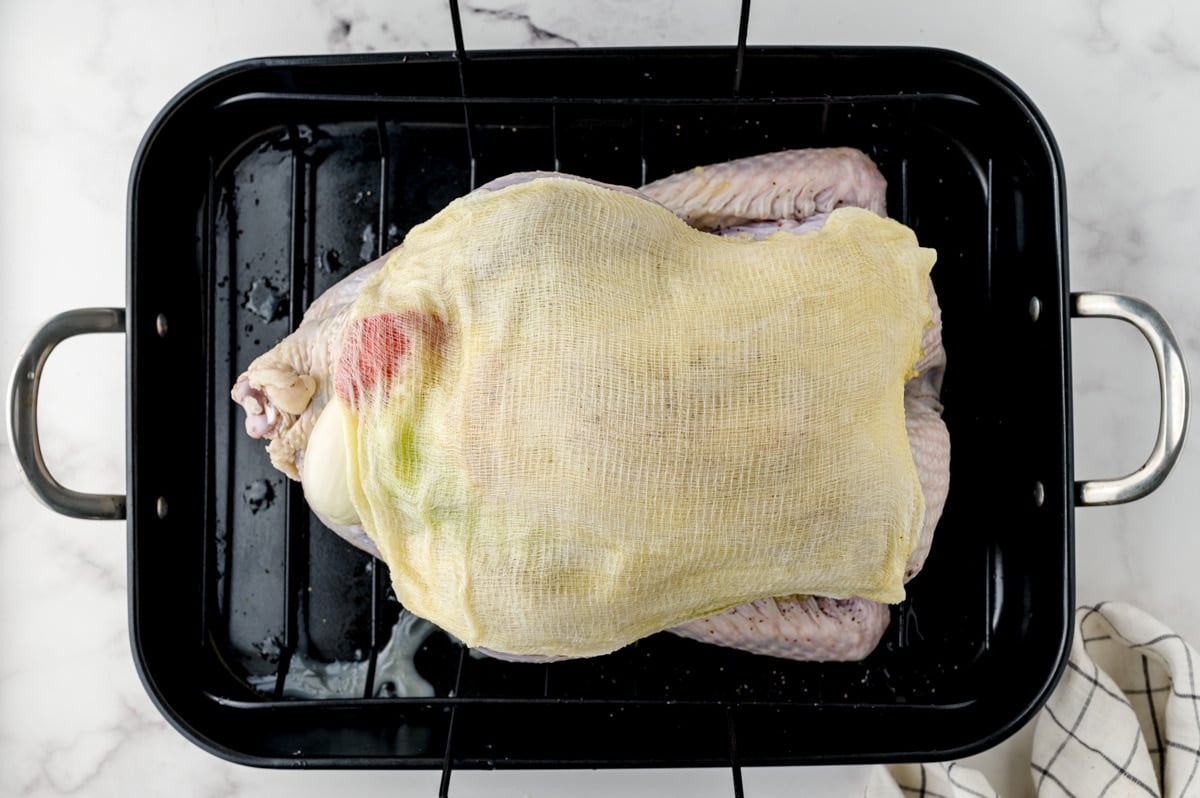
- Baste or spoon the butter over the cheesecloth and exposed turkey with butter mixture. Reduce the oven temperature for the remainder of roasting.
- Roast, basting and rotating the roasting pan 180° every 30-45 minutes until the turkey is done. If the top starts to brown, loosely cover with a leaf of aluminum foil. Total roast time is about 2 ½ to 3 ½ hours or 10-12 minute per pound. Exact cooking time will vary. Make sure to rotate for the best even golden skin.
- Remove the roast turkey and discard the cheesecloth. Baste the turkey with pan juices and remaining butter. Reserve some pan drippings if you plan to make gravy.
- Check turkey for doneness using an instant-read thermometer. Turkey should register at 160°F for the breast meat, 180°F in the thickest part of the thigh (away from the bone) and 165°F in stuffing (if using stuffing).
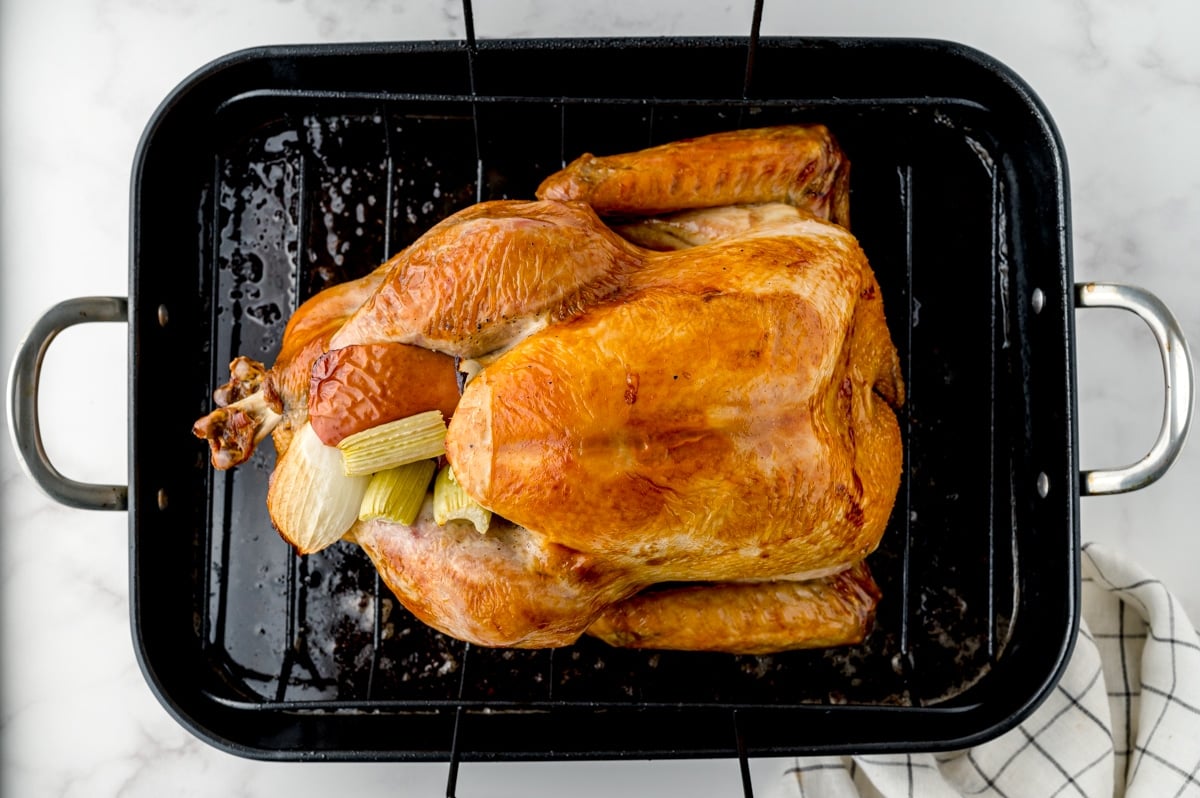
- Tent it loosely with aluminum foil and let the turkey rest for 30 minutes before slicing. I know this seems like a long time, but I promise you some folks would even allow it to rest longer! If you carve the turkey and don’t feel like it adequately held its heat, place sliced pieces covered in aluminum foil back into a warm for 5 minutes.
- Stock– Don’t throw away the carcass! This is a great time to make homemade turkey stock which can be used in any recipe calling for vegetable or chicken stock and freezes well. You won’t have time to make it that day, but you can freeze the bones and carcass until you do have the time.
Tips for Making Cheesecloth Turkey
- To Brine or Not to Brine– This method will keep your turkey very moist, but if you want to make it even more succulent, you can brine it. Wet brining or dry brining are both options, but require the process to start 1-2 days before you plan to roast.
- Butter– Use a good quality butter, like a grass-fed European butter. They have full flavor but also a good amount of fat for browning.
- Basting– Many cheesecloth methods tout that you don’t need to baste, but the cheesecloth will dry out. The cheesecloth helps to keep the moisture in place without just melting to the bottom of the pan, but you DO need to baste.
- Rotate the Bird– Even the best of ovens have hot spots. For even browning on the turkey, rotate the turkey pan when you pull it open to baste.
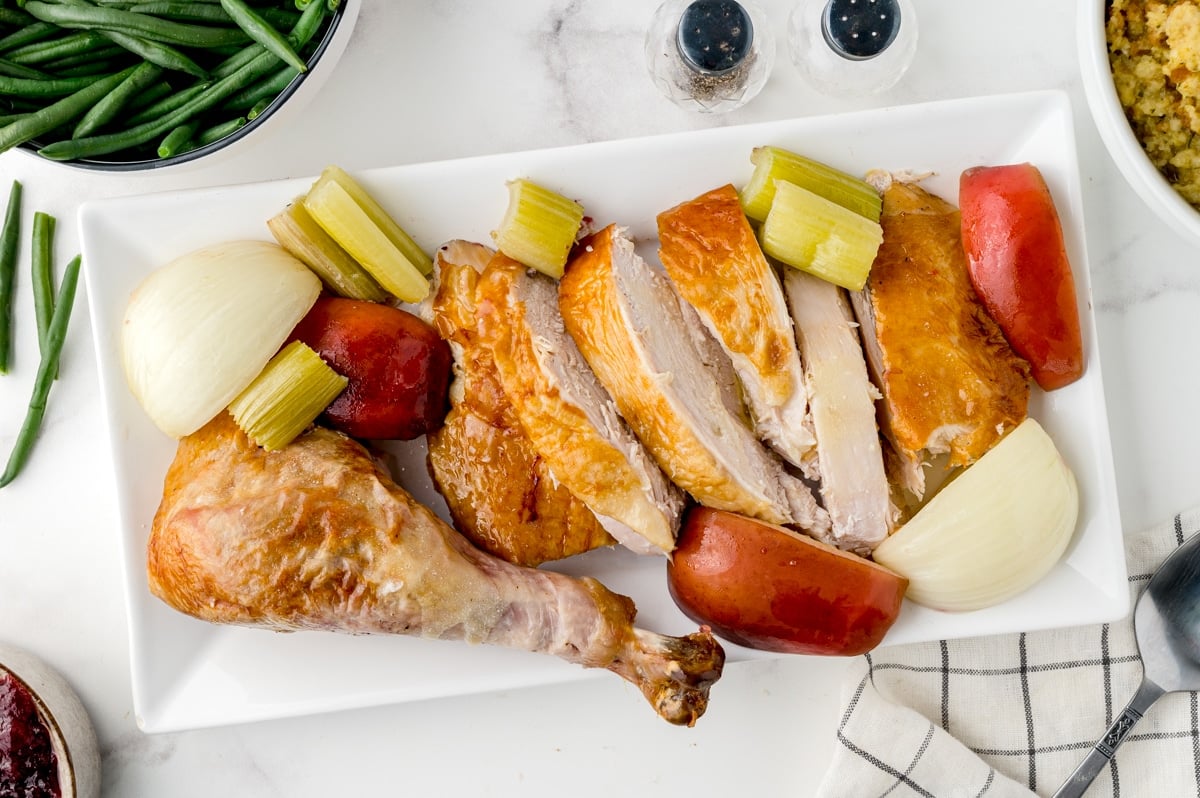
Make it a Meal
Now that you have a delicious bird, pair it with our favorite Thanksgiving side ideas and check out a few easy dinner ideas for those night leading up to Thanksgiving to keep you less stressed. We also love these flavors with this Christmas Punch Recipe.
Other classics include a green bean casserole using soup, creamed onions, sweet potato stacks or creamed corn casserole. In recent years, I’ve been making a potato galette instead of mashed potatoes.
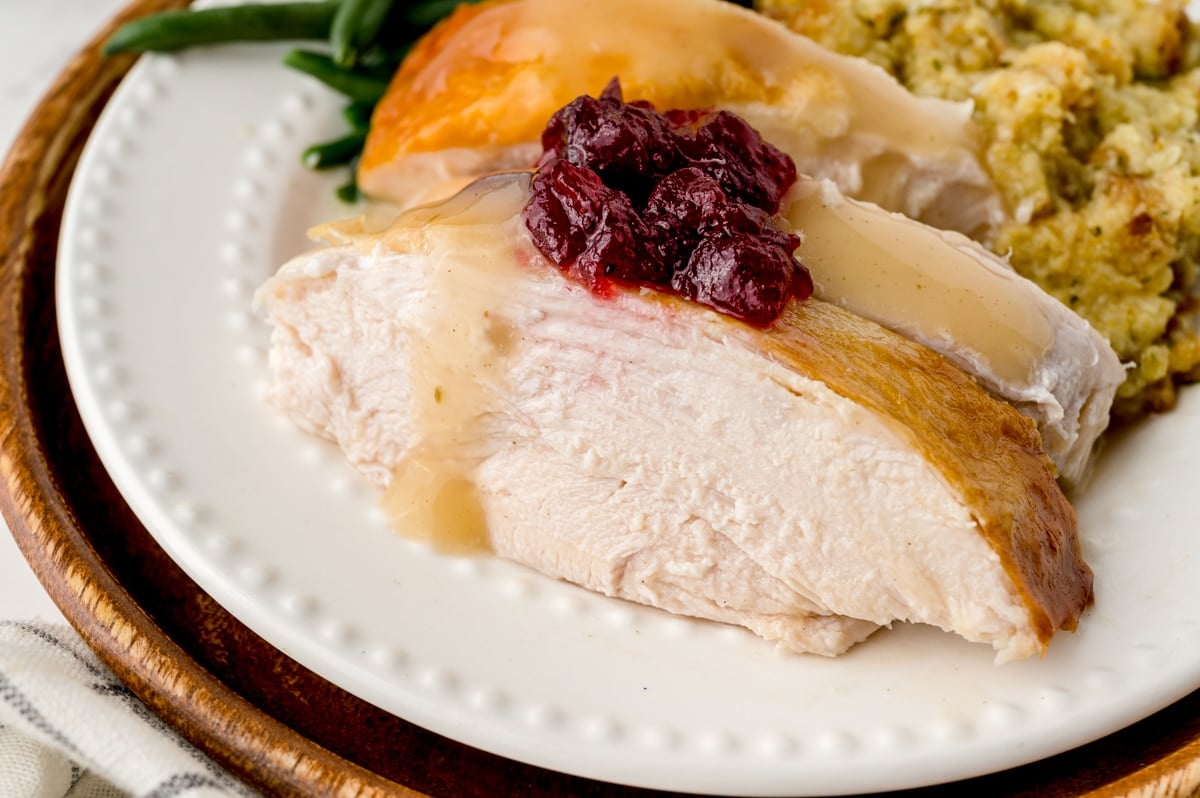
Pair Your Turkey with Gravy
You can use these drippings to make gravy or make a turkey gravy without drippings. Red wine gravy is another family favorite. And no one will fault you if you grab a jar from the store or make one from a little packet.
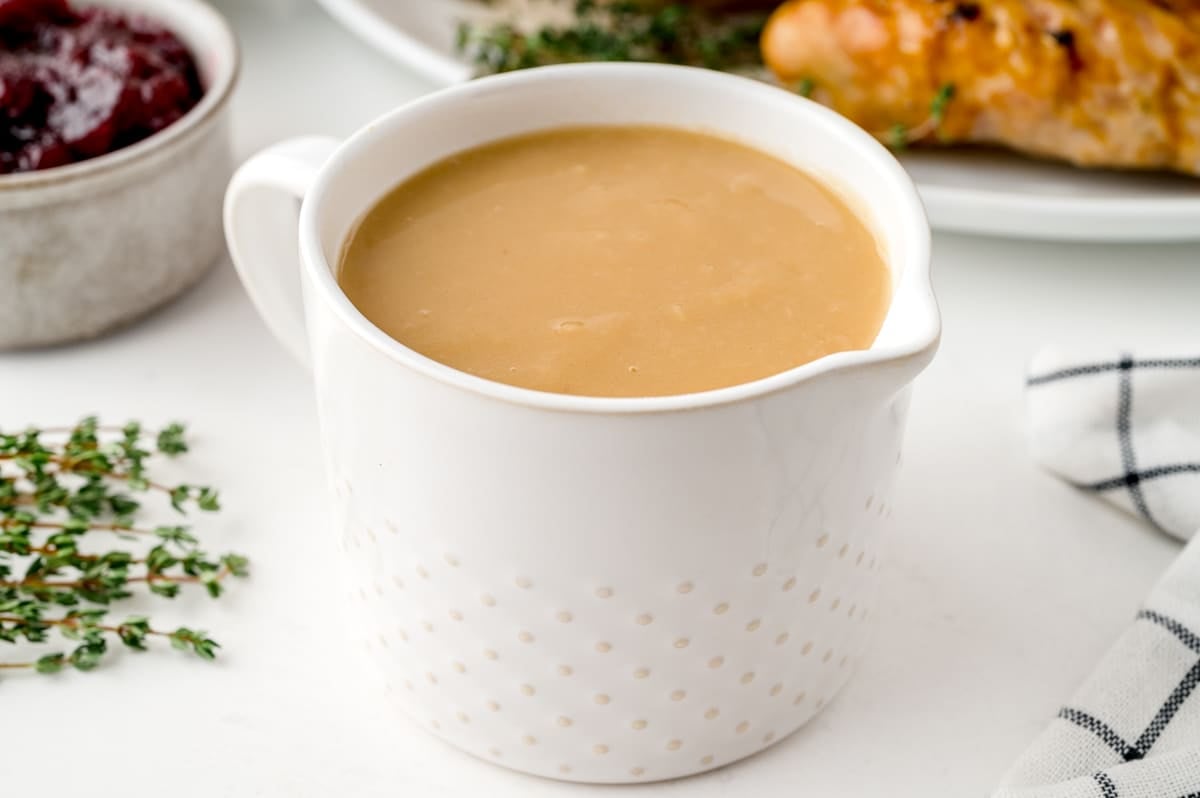
Storage
To store leftover turkey, place it in an airtight container or wrap it tightly in plastic wrap, and refrigerate it within 2 hours of cooking. Leftover turkey can be safely stored in the refrigerator for up to 3-4 days.
Turkey can also be frozen in airtight plastic bags, getting all of the air out to prevent freezer burn. Freeze for up to 6 months. Thaw in the fridge overnight and then follow the same ways to reheat the turkey.
The Best Way to Reheat Turkey
- Reheat the turkey in the oven at 325°F in a high-sided dish covered with aluminum foil. This prevents it from drying out and evenly heats without further cooking.
- Add a small amount of liquid to the dish. This can be water, wine, sparkling wine or broth, even gravy!
- Check the temperature only cook to an internal temperature of 165°F to prevent overcooking.
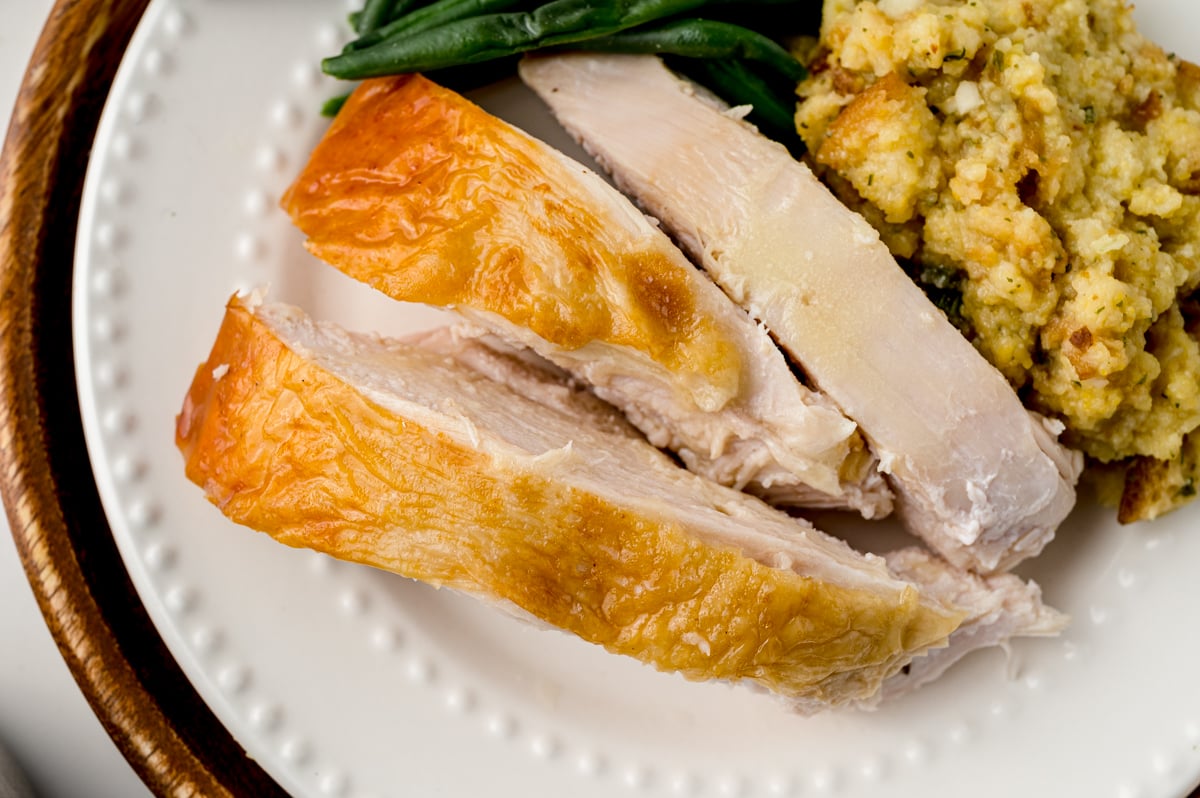
Commonly Asked Questions
The cheesecloth works like a little butter blanket. When you soak it in melted butter and wine (or broth) and drape it over the bird, it holds the liquid against the skin instead of letting it run straight into the pan. That means the turkey self-bastes as it roasts, staying juicier with a more even golden color.
This recipe is inspired by the Martha Stewart cheesecloth turkey method, but it isn’t a copy. I walk you through optional wet brining, how to adjust for different turkey sizes, when to rotate the pan, and how to swap the wine for broth. Think of it as a friendlier, step-by-step version with lots of troubleshooting built in
You don’t have to, but brining is my favorite insurance policy against dry turkey. A wet brine seasons the bird all the way through and gives you a little extra moisture, which pairs perfectly with the cheesecloth method. If you skip the brine, just salt the turkey generously and let it sit uncovered in the fridge for 12–24 hours before roasting
Fold the cheesecloth so you have four layers. That’s thick enough to hold onto the butter and wine, but thin enough to let heat and air circulate so the skin can brown. If your cheesecloth is very thin, you can go up to six layers over the breast.
More Turkey Recipes
Gobble. Gobble.
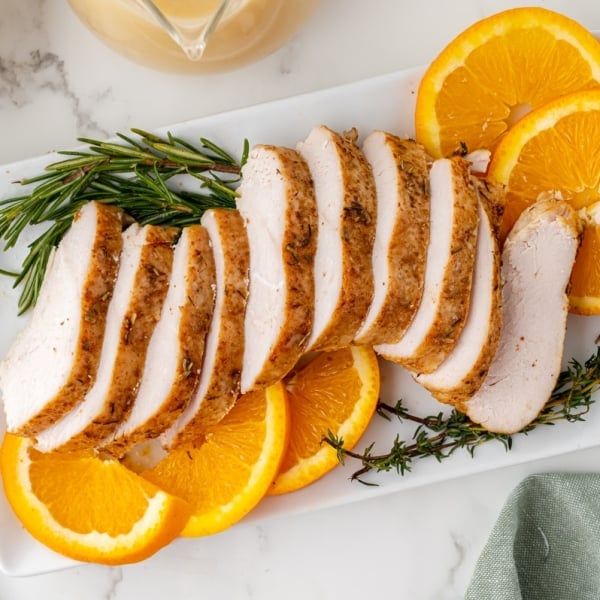
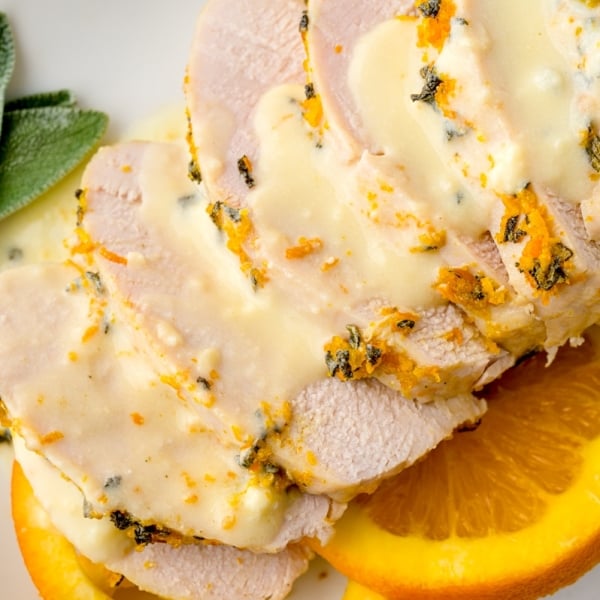
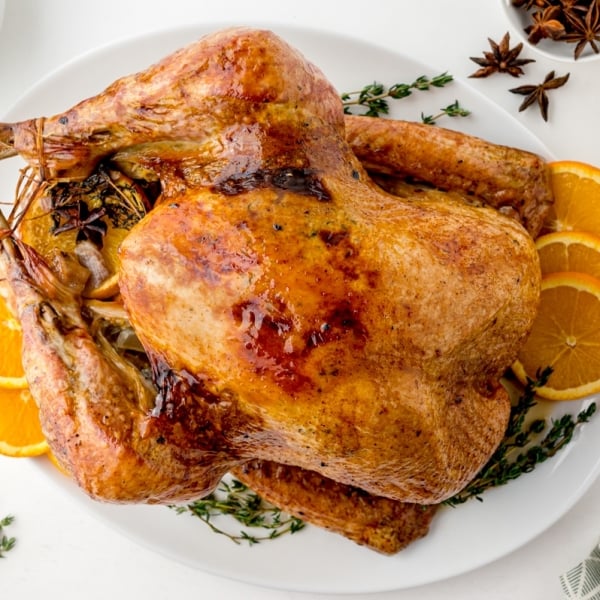
Butter Cheesecloth Turkey (Martha Stewart–Inspired)
Equipment
Ingredients
- 12-14 pound turkey
- 2 teaspoons coarse Kosher salt*
- 2 teaspoons freshly ground black pepper
- 1 white onion , quartered
- 1 rib celery , cut into 1 inch pieces
- 1 red apple , cored and cut into wedges
- 4 cloves garlic , lightly smashed
- 1 cup unsalted butter
- ½ cup white wine
- 20-30 inches of cheesecloth
Instructions
- Allow the thawed 12-14 pound turkey to sit at room temperature for 1 hour.
- Preheat the oven to 425°F with rack in lowest position so the turkey will fit nicely into the oven. Prepare a roasting pan for turkey. Set aside.
- Combine the 2 teaspoons coarse Kosher salt* and 2 teaspoons freshly ground black pepper in a small bowl, rub the inside and outside of the bird with the seasoning, getting under the skin when possible. Use your own rub, if desired.
- Stuff the cavity with the prepared 1 white onion, 1 rib celery, 1 red apple and 4 cloves garlic . Truss the legs shut with cooking twine. Fold the wing tips under and fold neck flap under.
- In a small saucepan or in a microwave safe bowl, melt the 1 cup unsalted butter
- When melted, remove from heat and whisk with the ½ cup white wine.
- Fold the cheesecloth into fourths (should be 4 layers). Carefully, immerse the cloth in the butter mixture; let soak for 2-3 minutes. It is hot, so be careful. I highly recommend using gloves to protect yourself.
- Place the turkey, breast side up, in the roasting pan.
- Remove the cheesecloth from butter mixture, letting the excess drip into the bowl. Reserve the butter mixture for basting. It shouldn’t solidify since it has wine in it, but if it starts to seperate or get waxy, reheat.
- Lay the cheesecloth over the body of the turkey, arranging so that as much turkey as possible is covered. Roast for 30 minutes.
- Baste or spoon the butter over the cheesecloth and exposed turkey with butter mixture. Reduce the oven temperature to 350°F.
- Roast, basting and rotating the roasting pan 180° every 30-45 minutes until the turkey is done. If the top starts to brown, loosely cover with a leaf of aluminum foil. Total roast time is about 2 ½ to 3 ½ hours or 10-12 minute per pound.
- Remove the turkey and discard the cheesecloth. Baste the turkey with pan juices and remaining butter.
- Check the turkey for doneness using an instant digital thermometer. Turkey should register at 160°F for the breast, 180°F in the thigh. and 165°F in stuffing (if using stuffing). It will come up to the correct temp while resting, this is called carry-over cooking.
- Tent the turkey loosely with aluminum foil and let is rest for 30 minutes before slicing.
- If you've tried this method, please come back and let is know how it was in the comments or star ratings.
Notes
• If your turkey was previously frozen, make sure it is fully thawed—use the thawing chart in the post for safe timing.
• For a more “Martha Stewart cheesecloth turkey” feel, you can skip brining and simply salt the turkey generously and let it rest in the fridge before roasting, basically a turkey dry brine.
• If you don’t cook with wine, use low-sodium chicken broth and add a squeeze of lemon for brightness.
• Remove the cheesecloth during the last 30–45 minutes if you want deeper browning—just keep an eye on the skin so it doesn’t get too dark.
• Always rely on an instant-read thermometer: 160°F in the breast, 165°F in the stuffing, 175–180°F in the thigh.
Nutrition







Ive been making this turkey for years….perfection!
Perfect turkey every time. I have used this several times and it’s my go to.
Worked out great the 1st time! Doing it again this year for Thanksgiving! Thanks and I love Martha Stewart
Whoop! Whoop! Happy Thanksgiving!
This turkey looks incredible, and perfectly cooked. I can’t wait to try it.
This is seriously amazing!! It turned out perfectly!! Will definitely do this method everytime!
Something that I have never tried before, SO delicious. Thanks for sharing
Enjoyed this for Thanksgiving this year and it was a hit all around the table! Turned out perfectly tender, juicy and packed with flavor!
Sooo … my turkey is a lot bigger (21.83 lbs to be exact). I am trying to figure out how to adjust the recipe. If you are able to respond within 48 hours, that would be amazing!
And while we are at it, here are my other questions.
1. I want to brine my turkey. From what I read on your page, I do this for about 24 hours before I cook it, is that correct?
2. I want to inject my turkey. From what I read on your page, I do this about 15 minutes before I put it in the over, is that correct.
Wish me luck, I have only cooked a turkey a couple of times before and the last time was about 15 years ago!
Thank you!
Hi, hope I’m not too late- I am also hosting Thanksgiving and have been very busy.
For brining a large bird, you probably need 48-24 hours. For the butter cheesecloth turkey, there is a dropdown/slider at the top that you can adjust the serving to around 14-16 and it will update the recipe. Doesn’t need to be exact, exact.
If you are brining, you do not need to inject too- there literally won’t be space in the fibers for any more liquid.
And good luck!
Totally my new go-to method! Stuffing the cavity is for sure a must for us and I just love how flavorful it is!
I have a turkey in my freezer that I plan on making during the summer. I’m going to use this recipe because we love it so much!