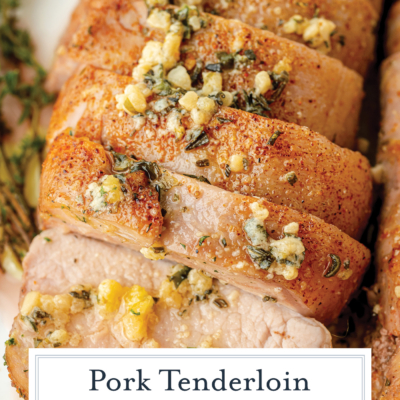

This garlic butter pork tenderloin roasts in the oven and gets smothered in a lemony fresh herb butter sauce. Most recipes have you sear the pork in a skillet first. This one skips the skillet, so you get juicy pork with less mess and hands-on time.

It’s easy enough for a weeknight and pretty enough for company. I’ve made it for meal prep lunches, but also for visiting family.
What Makes This Pork Tenderloin Recipe Different
- No skillet, no sear. The oven does all the work. A hot 450°F start browns the outside, then a lower temperature finishes the inside.
- A real garlic butter sauce. A full cup of butter with fresh garlic, shallot, and four herbs. Some goes on as a baste. The rest gets spooned over every slice.
- Lemon keeps it bright. Fresh lemon zest cuts through the butter so the dish never feels heavy.
- About 5 minutes of hands-on time. Season the pork, slide it into the oven, and let the sauce keep warm on the stove.
- Feeds a crowd. Two pork tenderloins serve 8, which is great for a family dinner or a small party. Otherwise use them for meal prep or for another meal.

Ingredients for Making Pork Tenderloin
This list may seem a little long, but trust us — it’s worth it! And most ingredients are probably in your cabinet or fridge already. A full list of ingredients with measurements is available in the printable recipe card below.
For the Pork Tenderloin
- Pork tenderloin: Lean, mild, and quick to cook. A 2-pound package usually holds 2 small tenderloins. Buy plain tenderloin, not the kind already soaking in marinade.
- Coarse kosher salt: Seasons the meat and helps the outside turn golden.
- Garlic powder: Adds garlic flavor to the rub without burning. Fresh garlic would scorch at 450°F. Fresh garlic still shows up in the butter sauce.
- Onion powder: Builds a savory, slightly sweet base.
- Freshly ground black pepper: Adds gentle warmth.
- Smoked paprika: Gives a smoky flavor and a deep red color. Swap: Sweet paprika works. You’ll lose the smoky note.

For the Garlic Butter Sauce
- Unsalted butter: The base of the sauce. Unsalted butter lets you control the salt. If you only have salted, taste before adding more salt.
- Fresh garlic: The star of the sauce. Mince it fine. Use fresh cloves only, never jarred. Jarred garlic tastes flat and a little sour, and here garlic is the whole point.
- Shallot: Mild and a little sweet, like an onion with better manners. Swap: A little yellow onion works. It’s sharper, so mince it very fine.
- Fresh sage: Earthy and peppery. Sage and pork are a classic pair.
- Fresh thyme leaves: Adds a light, almost lemony note.
- Flat-leaf parsley: Adds freshness and color.
- Fresh rosemary: Brings woodsy, piney flavor. Chop it fine, because whole needles are tough to chew.
- Fresh lemon: The zest adds bright citrus oil to the butter. Use a real lemon, never bottled juice. This is used in the sauce and for a fresh spritz at the end.
- Worcestershire sauce: Adds umami. It makes the sauce taste richer without tasting like Worcestershire.
- Coarse kosher salt: Wakes up every flavor in the butter.
- Ground white pepper: Gentle heat with no black specks. Swap: Black pepper is fine. You’ll just see it.
Herb Swap
No fresh herbs? Dried herbs work in a pinch. Make sure they are fairly fresh, not the jar from three moves ago. They will taste less bright than fresh.

Pork Tenderloin vs. Pork Loin
They sound alike, but they are different cuts. Tenderloin is long, skinny, and very tender. It usually comes two to a pack. Pork loin is wide, flat, and much bigger.
Pork loin will work in this recipe, but it takes longer to cook and won’t be as tender. For the best results, buy tenderloin.

How to Cook Pork Tenderloin in the Oven
Perfectly cooked pork tenderloin medallions and an irresistible garlic butter sauce come together in just a few simple steps.
- Crank the oven hot. Start at 450°F. That first blast of heat browns the outside fast. Browning comes from the Maillard reaction, a fancy name for “the brown bits that taste amazing.”
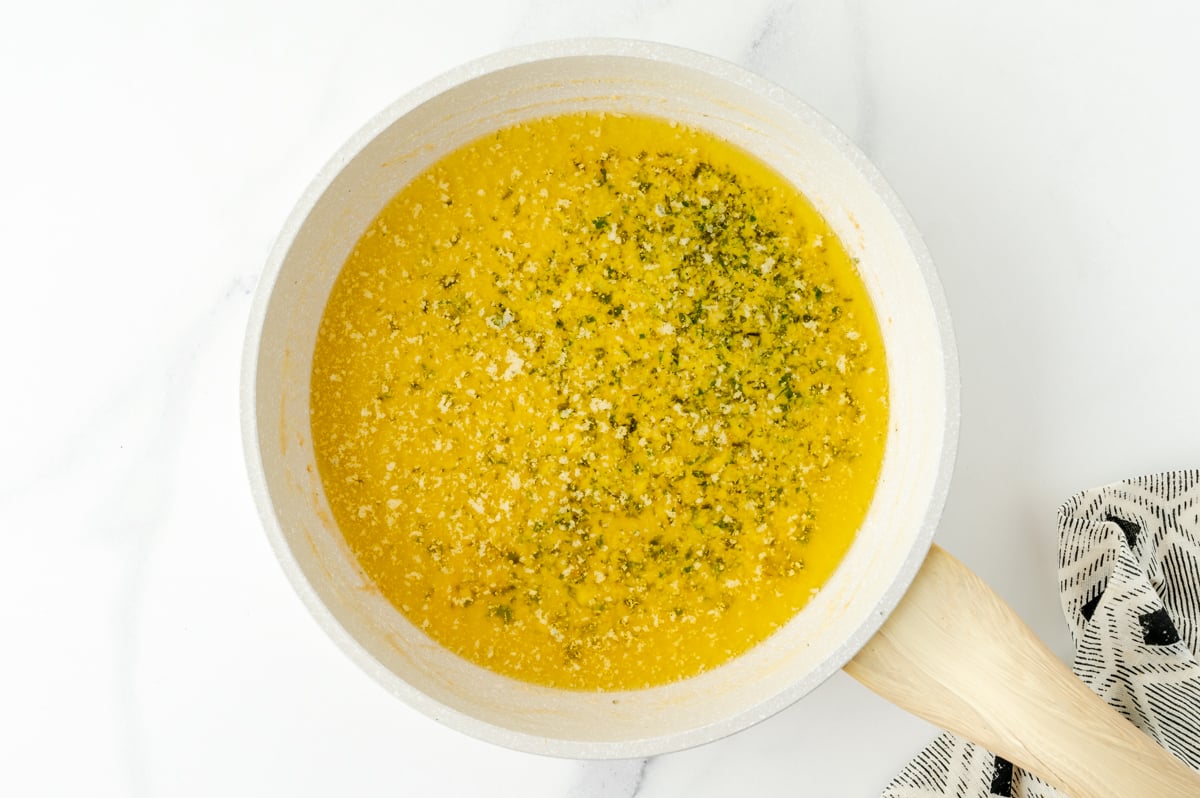
- Make the garlic butter sauce first. Melt the butter low and slow, then stir in the garlic, shallot, herbs, and the rest. Keep it on the lowest heat. You want it melted, not browned, so the garlic stays sweet instead of bitter.
- Trim and pat dry. Cut off any silverskin, the thin, shiny strip on one side. It turns chewy in the oven. Then pat every side dry with paper towels. Wet meat steams, and dry meat browns.
- Season every side. Rub the spice mix over the whole tenderloin, ends included.
- Roast hot, then turn it down. After 5 minutes, drop the oven to 350°F. The gentler heat cooks the center without drying out the thin ends. This timesaver is how we avoid searing in a pan before putting it in the oven.
- Baste near the end. Roast for about 20-25 minutes, depending on size. Brush on the garlic butter for the last few minutes only. Garlic and butter solids can scorch if they’re in the oven the whole time.
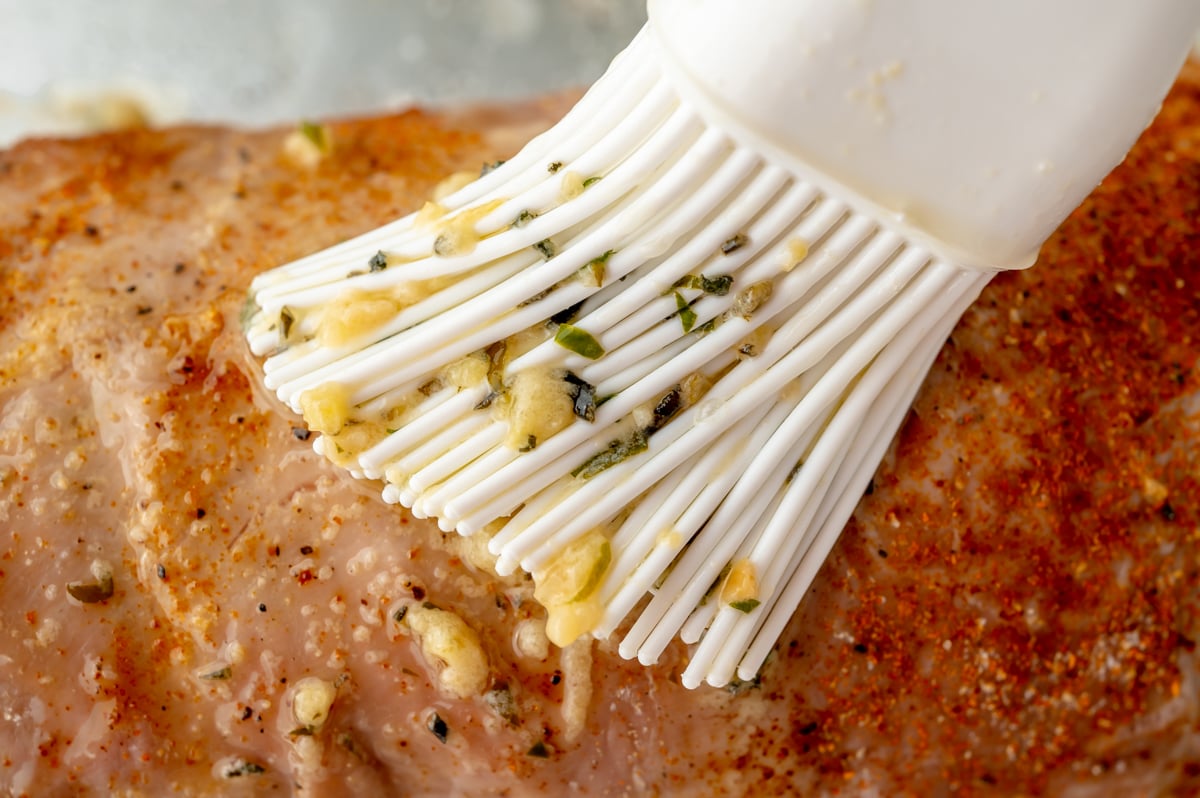
- Check the temperature. Pull the pork at 145°F in the thickest part. A little pink in the middle is fine.
- Let it rest. Give it at least 5 minutes on the board. Resting lets the meat relax and hold onto its juice. If you cut too early, the juice ends up on the cutting board.
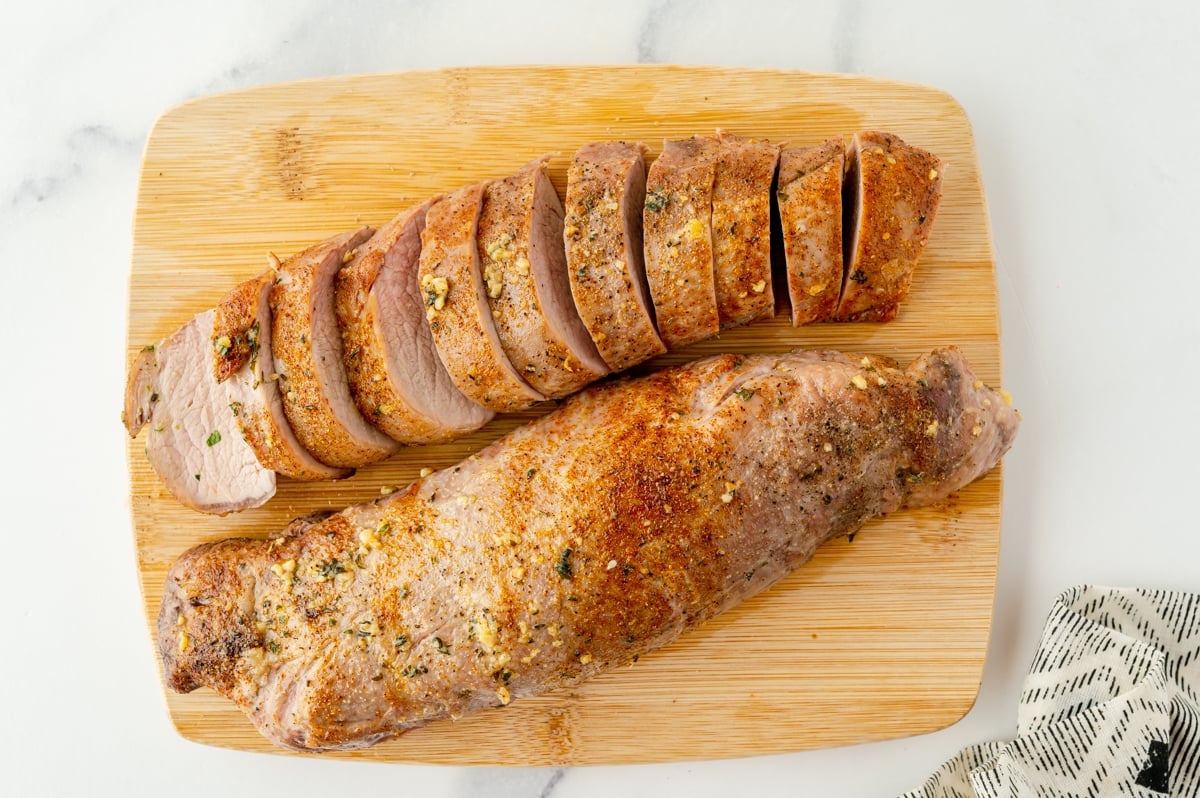
- Slice and smother. Cut 1-inch slices across the tenderloin. Spoon on that warm garlic butter sauce. Be generous. Serve with fresh lemons wedges to add brightness.

How Long To Cook Pork Tenderloin in the Oven
For this recipe, 2 small tenderloins (about 2 pounds total) roast for about 25 minutes. That’s 5 minutes at 450°F, then about 20 minutes at 350°F with a baste near the end. A single pork tenderloin should take the same amount (maybe 2-3 minutes less depending on size) of time since cooking two, they are seperated.
Every tenderloin is a little different, though. Thickness matters more than weight. That’s why the thermometer, not the clock, tells you when it’s done. Start checking a few minutes early, and pull it at 145°F.

What Temperature Does Pork Tenderloin Be?
Cook pork tenderloin to 145°F, then let it rest. That’s the USDA safe temperature for pork. It will look a little pink in the center, and that’s okay.
The old “cook pork until it’s white” rule is why so many of us grew up thinking pork was dry. It was dry. It was also overcooked. If you don’t own an instant-read thermometer, this is the recipe that justifies buying one.
Chef Jessica’s Tips
- Trust the thermometer, not the clock. Tenderloins vary in thickness. Ovens vary in temper. 145°F is the number that matters.
- Don’t skip the rest. Five minutes feels long when everyone is hungry. Slice too soon and the juice runs out.
- Keep the butter sauce on the lowest heat. Low heat keeps the garlic mellow. If your burner runs hot, slide the pan halfway off the flame.
- The thin end cooks faster. It will be more done than the middle. Give it to whoever likes their pork less pink.
- Pat it dry. Really dry. It’s the easiest way to get better color without searing.
- Save leftover butter. Spoon it over steak, toss it with noodles, or slather it on warm bread. Find more ideas in our butter recipes.
- Mince the herbs fine. Big pieces of rosemary feel like eating a pine branch. Fine pieces melt into the sauce.
What to Serve with Garlic Butter Pork Tenderloin
Anything that soaks up garlic butter sauce is the right answer. Homemade mashed potatoes are the classic choice, so spoon the pork and sauce right over the top. Crispy roasted baby potatoes add crunch, and seasoned buttered noodles lean all the way into the butter.
For color, add a vegetable. Balsamic roasted root vegetables can share the oven. Seasoned peas and onions take minutes on the stove. Hosting? Glazed pearl onions or creamed onions make it feel like an occasion.
A bright salad cuts through the richness. Try this kale, radicchio, and currant salad. For a topper, pile on sautéed mushrooms. For a grain, almond rice pilaf or toasted couscous both work well.

Variations
- Spicy garlic butter sauce: Stir a pinch of red pepper flakes and 1 teaspoon of hot sauce into the butter. Add more if you like heat.
- Mushroom-smothered pork tenderloin: Top the slices with sautéed mushrooms, then spoon on the butter.
- Dijon garlic butter: Whisk in 2 teaspoons of smooth Dijon mustard or coarse mustard for a tangy kick.
- Herb swap: Trade the sage for the same amount of fresh tarragon or chives for a lighter, springier sauce with French roots.
- Brown sugar rub: Add 2 teaspoons of brown sugar to the rub for a sweet, caramelized edge. Watch it at 450°F, because sugar browns fast.

Storage and Freezing
Make ahead: Season the pork and make the garlic butter sauce up to the night before. Cover both and keep them in the fridge. The butter will firm up, so rewarm it gently over low heat before basting.
Fridge: Store cooked pork tenderloin in an airtight container for up to 3 days. Keep extra butter sauce in a separate container so the pork doesn’t get soggy.
Reheating: Go low and slow, in the oven or a covered skillet. Add a spoonful of the garlic butter so the pork doesn’t dry out. Warm the butter sauce in the microwave in short bursts, stirring between each one.
Freezing: Freeze sliced pork tenderloin for up to 3 months. The garlic butter also freezes for up to 3 months. Thaw both in the fridge overnight, then warm gently in the oven.
Honest Note
Reheated pork is never quite as juicy as fresh. Leftovers are great cold in sandwiches and salads, where that doesn’t matter.
Your Questions Answered
The best way to check is with a meat thermometer. Pork is safe to eat when it reaches 145° degrees Fahrenheit.
Pork loin works too, but it will take longer to cook and won’t be quite as tender as tenderloin.
Yes. Once it reaches 145°F and rests, a little pink is safe. It also means you didn’t overcook it.
This recipe uses a hot oven start instead. Searing gives a darker crust, but it isn’t needed for juicy pork.
Yes, if there is any. It turns chewy when cooked. Many packages come already trimmed.
It was most likely overcooked or sliced before it rested. A thermometer and a 5-minute rest fix most of it.
More Easy Pork Recipes
If you’re as big a fan of pork as we are, you’ll want to take a look at these other simple recipes and even more pork tenderloin recipes.


Garlic Butter Pork Tenderloin
Ingredients
Pork Tenderloin
- 2 pound pork tenderloin , this generally has 2 small tenderloins
- 1 teaspoon coarse kosher salt
- 1 teaspoon garlic powder
- 1 teaspoon onion powder
- 1/2 teaspoon freshly ground black pepper
- 1/2 teaspoon smoked paprika
Herb Garlic Butter
- 1 cup unsalted butter , 2 sticks
- 4-6 cloves fresh garlic , minced
- 1 shallot , minced
- 1 tablespoons fresh sage
- 1 tablespoon fresh thyme leaves
- 1 tablespoon flat parsley
- 1 tablespoon fresh rosemary
- 2 lemons , zested and cut into wedges
- 2 teaspoons worcestershire sauce
- 1/2 teaspoon coarse kosher salt
- 1/4 teaspoon ground white pepper
Instructions
Pork Tenderloin:
- Preheat the oven to 450°F. Line a rimmed baking sheet with aluminum foil for easy clean up. Prepare the garlic herb butter (below).
- Unwrap the 2 pound pork tenderloin and pat dry with paper towels. Set on the prepared baking sheet and set aside.
- In a small bowl, combine the 1 teaspoon coarse kosher salt, 1 teaspoon garlic powder, 1 teaspoon onion powder, 1/2 teaspoon freshly ground black pepper and 1/2 teaspoon smoked paprika. Rub both tenderloins with the rub mixture.
- Place the pork into the oven, cooking at 450°F for 5 minutes, then reducing the oven temperature to 350°F. Continue to roast for 15 minutes. Baste with a tablespoon of the butter mixture and then return to the oven for 5 minutes.
- Remove from the oven and allow to rest for 5-8 minutes.
- On a cutting board, cut into 1-inch slices. Serve over mashed potatoes, smothering with additional herb garlic butter and fresh lemon wedges.
Herb Garlic Butter:
- In a small saucepan, melt the 1 cup unsalted butter over low heat, being careful to just melt, not brown.
- When melted stir in the minced 4-6 cloves fresh garlic, minced 1 shallot, chopped 1 tablespoons fresh sage, 1 tablespoon fresh thyme leaves, 1 tablespoon flat parsley, 1 tablespoon fresh rosemary, zest and juice from one lemon, 2 teaspoons worcestershire sauce , 1/2 teaspoon coarse kosher salt and 1/4 teaspoon ground white pepper. Continue to cook on the lowest heat possible, stirring every few minutes.
- Keep on low until ready to baste and after basting and using to spoon over the pork when serving.
Nutrition















Can you use dried herbs instead of the fresh for the “garlic butter”?
Sure~! Just make sure they are fairly fresh so you get the flavors.