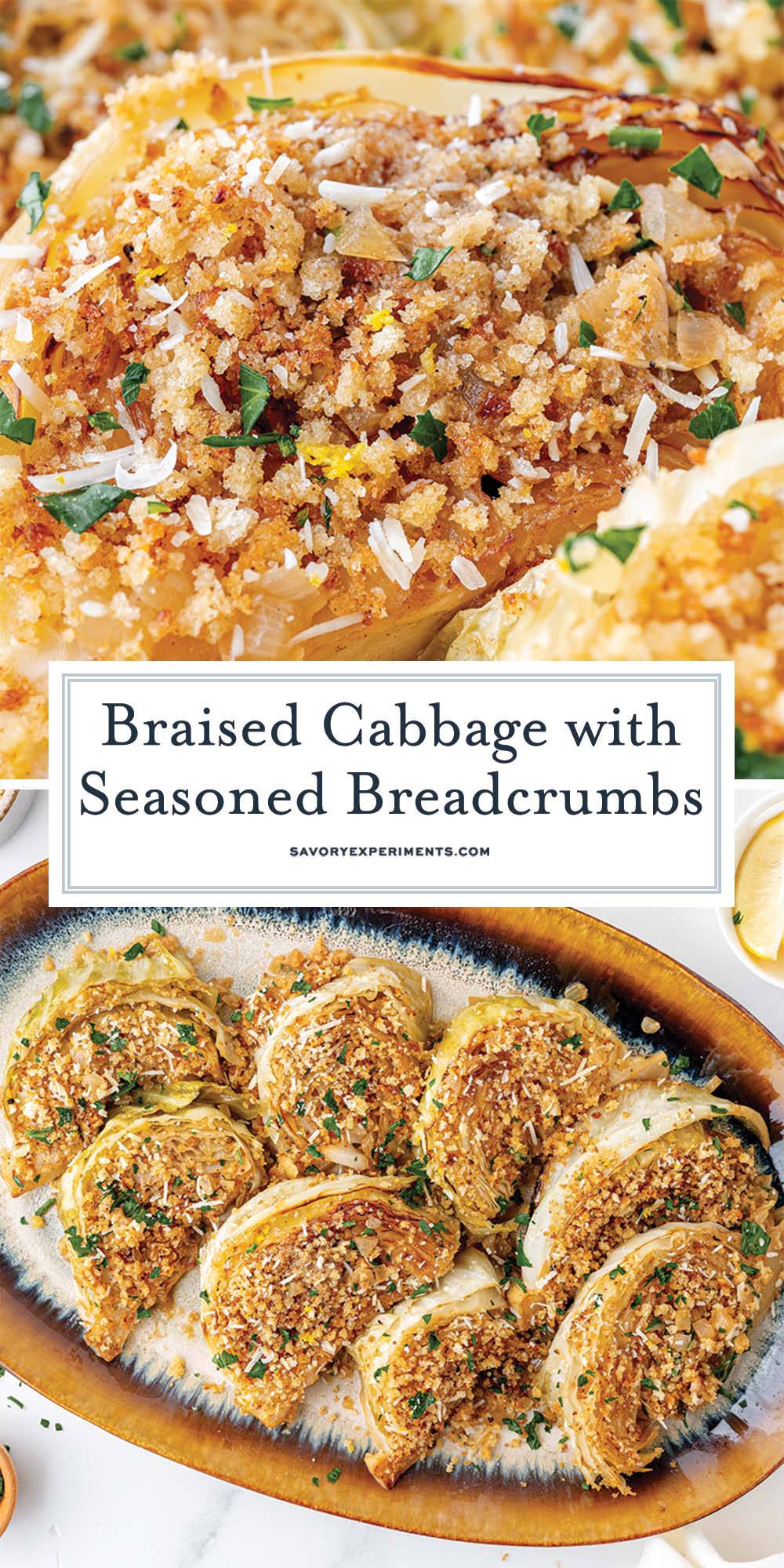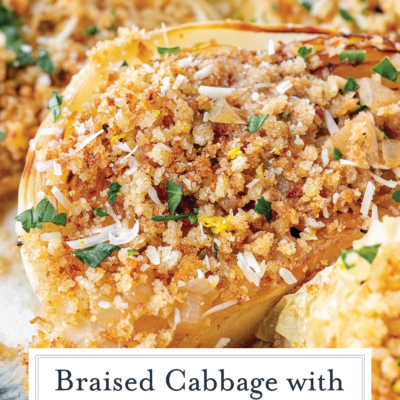
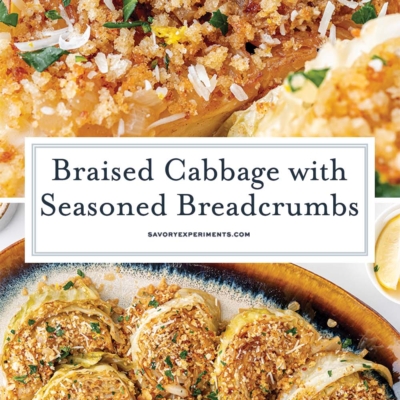
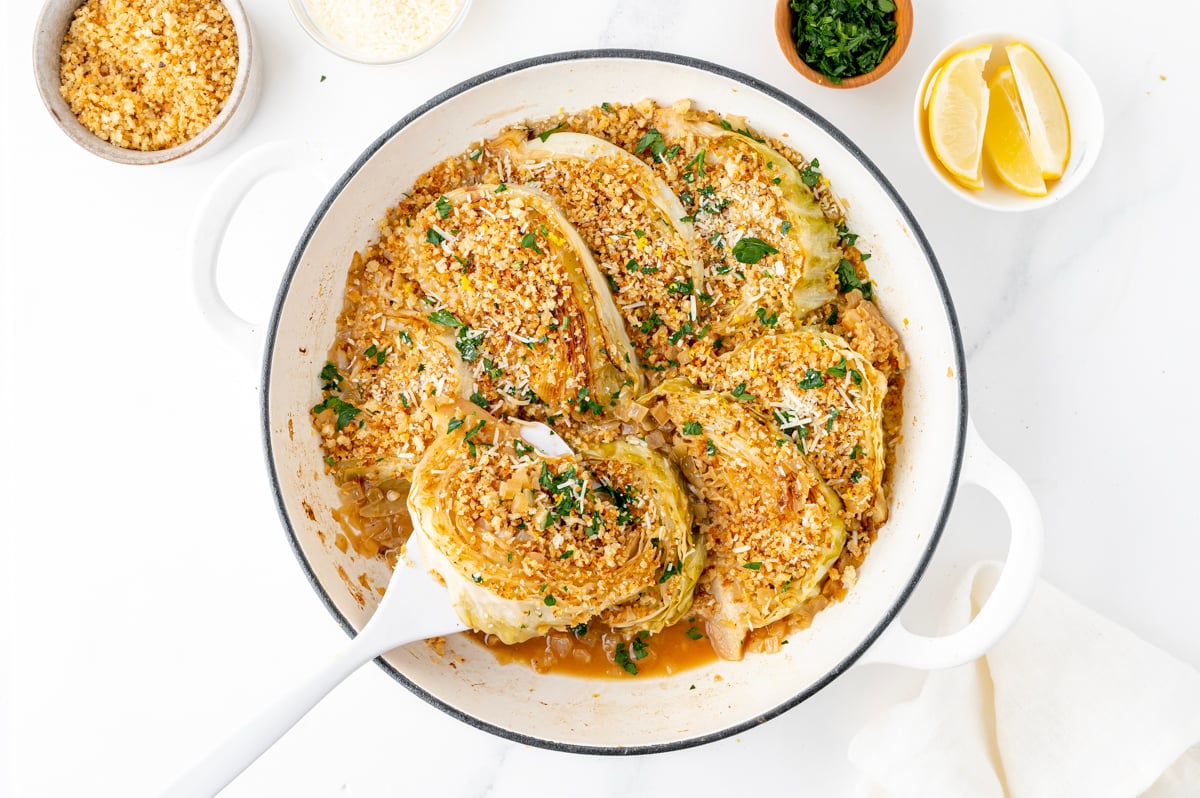
A golden sear, a splash of tangy Dijon broth and a buttery Parmesan breadcrumb topping turn a humble head of cabbage into a side dish worth getting excited about. This braised cabbage cooks right on the stovetop until the leaves are tender, the onions are soft and every bite has a little savory crunch.
Why You’ll Love This Braised Cabbage
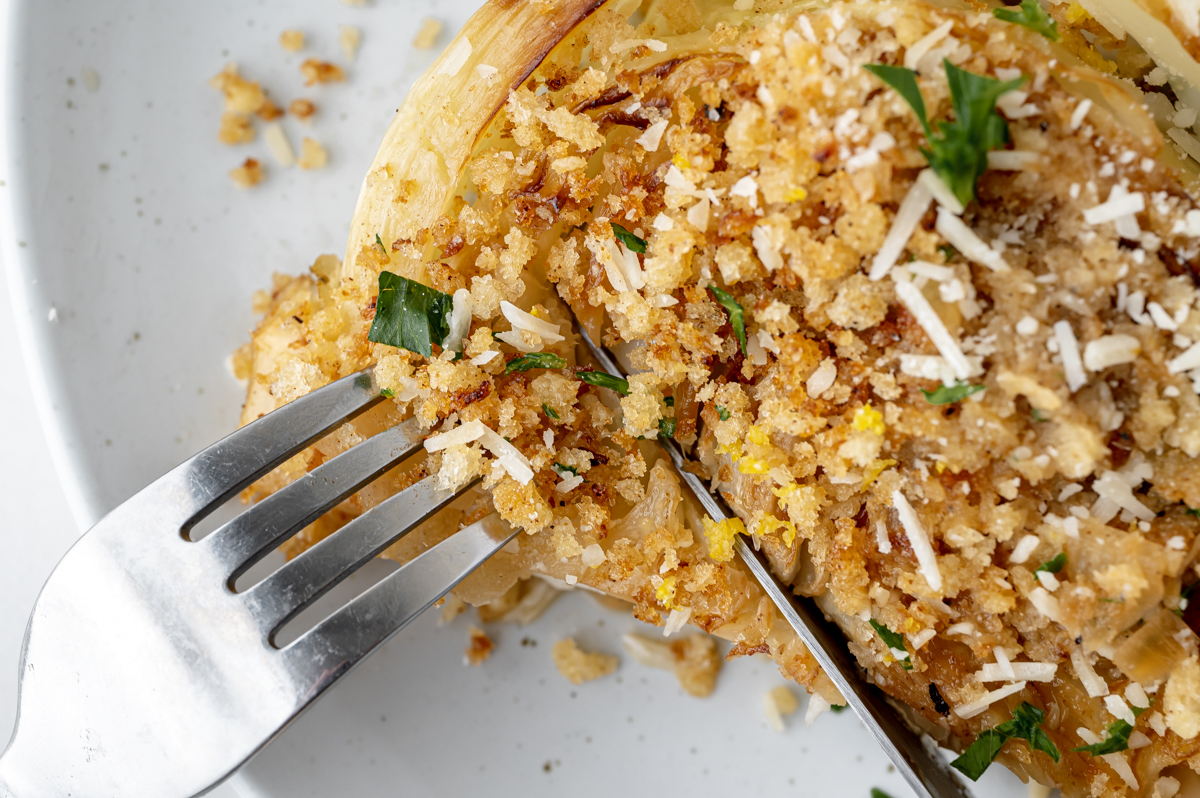
- Tender cabbage with a crispy finish. The cabbage softens in the covered pan, while toasted panko adds a crunchy topping right before serving. You get two very different textures in every forkful.
- Flavor built in layers. Browning the cabbage first gives the dish a savory foundation. Dijon mustard, cider vinegar and a little honey create a tangy, balanced sauce, while smoked paprika adds gentle smokiness.
- A versatile stovetop side. Serve it alongside pork chops, roast chicken or baked ham, or add it to a holiday spread when oven space is already spoken for.
What is Braised Cabbage?
Braised cabbage is cabbage gently cooked in a small amount of liquid, usually in a covered pot or skillet. In this recipe, the cabbage gets browned first, then simmers with onions in a seasoned broth until tender.
The liquid should sit around the cabbage rather than completely cover it. Once the cabbage is cooked, a few minutes uncovered help concentrate the sauce.
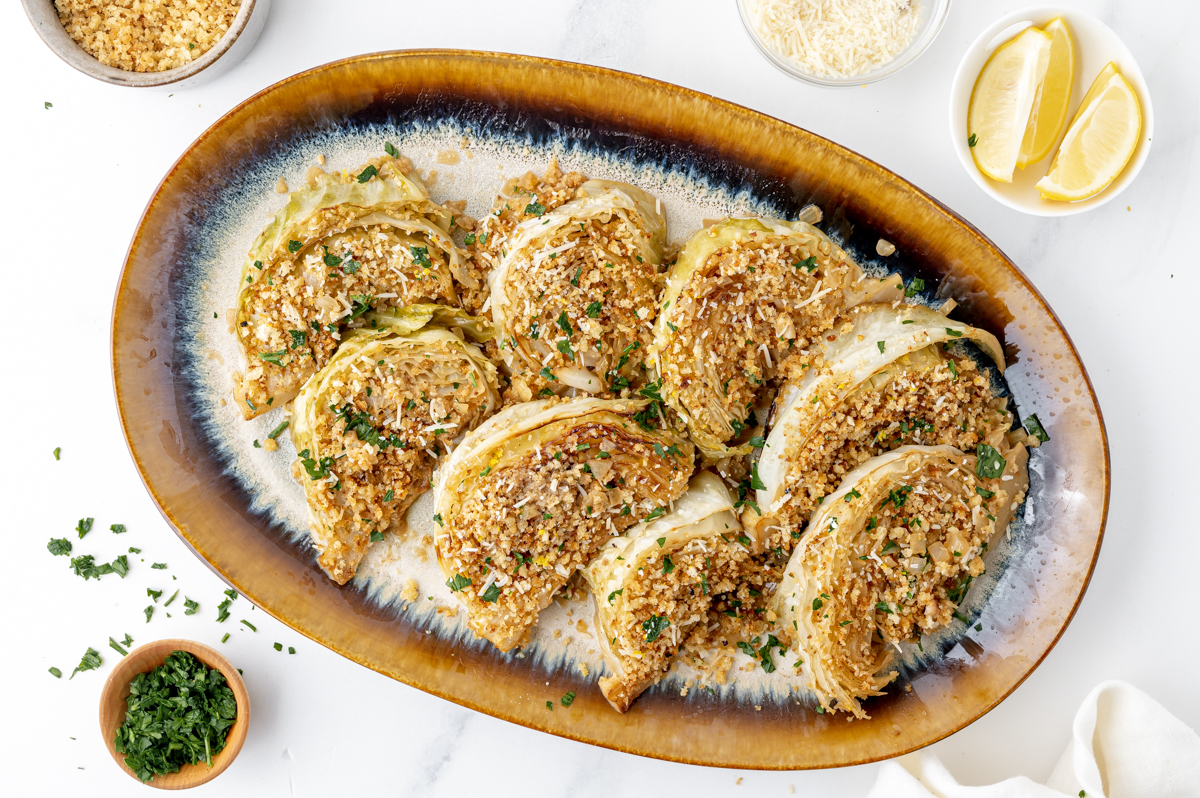
Ingredients for Making Braised Cabbage
The ingredient list looks long, but I promise each one is worth it. A full list of ingredients with measurements for this recipe is available in the printable recipe card below.
- Green cabbage: Green cabbage has sturdy leaves that work well for browning and braising. Keep the pieces large so they retain some texture as they soften.
- Unsalted butter: Adds richness to the cabbage and onions. Unsalted butter gives you more control over the final seasoning. It also gives the breadcrumbs a buttery flavor as they toast.
- Extra virgin olive oil: Combines with the butter to coat the pan for browning. It also helps coat the panko evenly.
- Yellow onion: Softens into the braising liquid and adds sweetness.
- Fresh garlic: Adds savory flavor. Cook it briefly after the onions so it doesn’t burn.
- Coarse kosher salt: Seasons the cabbage and sauce. If substituting fine salt, start with less and adjust to taste.
- Ground black pepper: Adds a little warmth.
- Smoked paprika: Gives the cabbage and topping a smoky flavor without adding bacon.
- Chicken or vegetable broth: Provides the braising liquid. Low-sodium broth makes it easier to control the salt as the sauce reduces.
- Dijon mustard: Adds tang and savory depth.
- Apple cider vinegar: Balances the butter and the sweetness of the cabbage and onions.
- Honey: Rounds out the mustard and vinegar without turning the dish into a sweet side.
- Worcestershire sauce: Adds concentrated savory flavor. Use a vegetarian version if needed.
- Plain panko breadcrumbs: Their coarse texture makes a light, crunchy topping.
- Onion powder: Adds savory flavor without extra moisture.
- Parmesan cheese: Adds a salty, nutty finish. Stir it in after the breadcrumbs have cooled slightly.
- Flat-leaf parsley: Adds freshness and color just before serving.
- Lemon zest, optional: Brightens the finished topping without adding more liquid.
How to Make Braised Cabbage
Just follow these simple steps to a flavorful and delicious cabbage recipe!
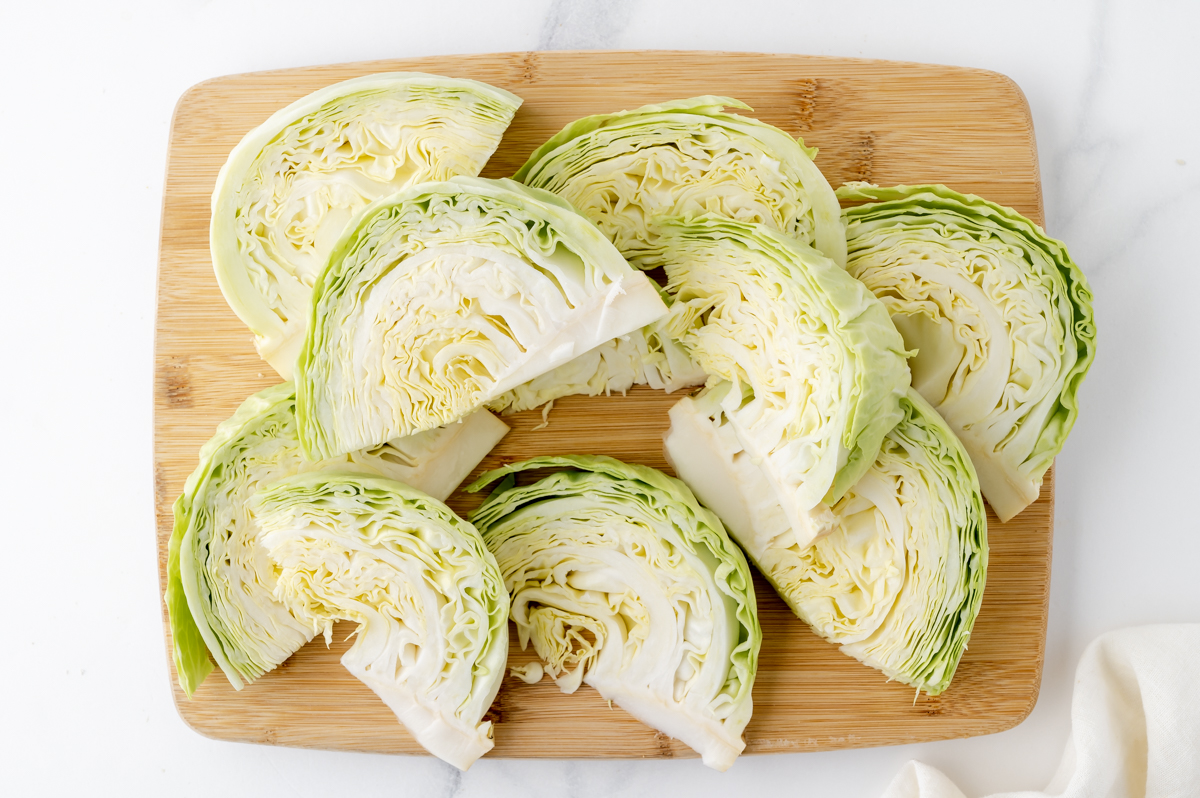
- Prepare the cabbage. Remove any damaged outer leaves and quarter the cabbage. Remove the tough core and cut the quarters into roughly 1½-inch pieces. For intact wedges instead, leave a thin strip of core attached to hold the leaves together.
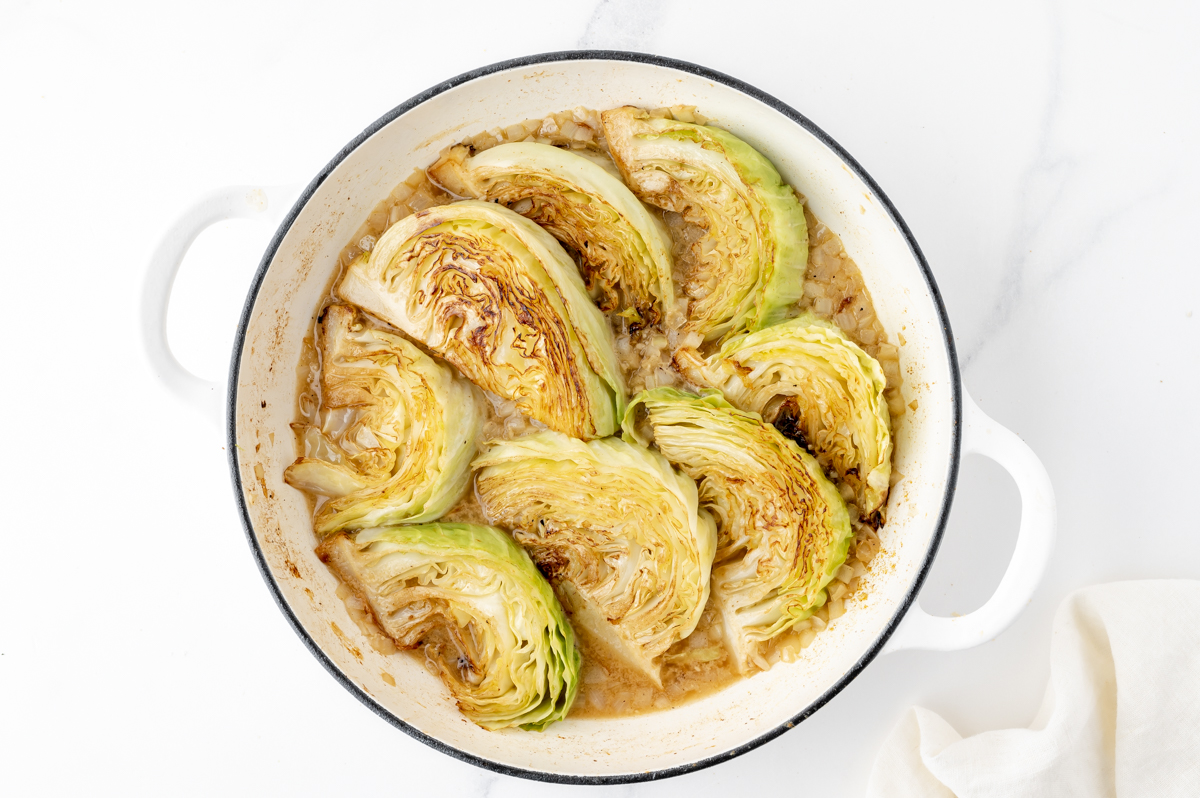
- Brown the cabbage. Heat the butter and olive oil in a large Dutch oven or deep skillet over medium-high heat. Add the cabbage in batches as needed, keeping the cut surfaces against the pan. Cook undisturbed for 3–4 minutes per side, until deeply golden, then transfer to a plate.
- Soften the onion. Reduce the heat to medium. Add the sliced onion and cook for 4–5 minutes, until softened. Stir in the minced garlic, salt, pepper and smoked paprika; cook for 30 seconds.
- Build the braising liquid. Stir in the broth, Dijon mustard, apple cider vinegar, Worcestershire sauce and honey. Scrape up the browned bits from the bottom of the pan.
- Cover and braise. Return the cabbage to the pan and spoon some liquid over it. Cover, reduce the heat to medium-low and simmer gently for 18–25 minutes. The cabbage should cut easily with a fork while retaining some structure. Larger wedges may need additional time.
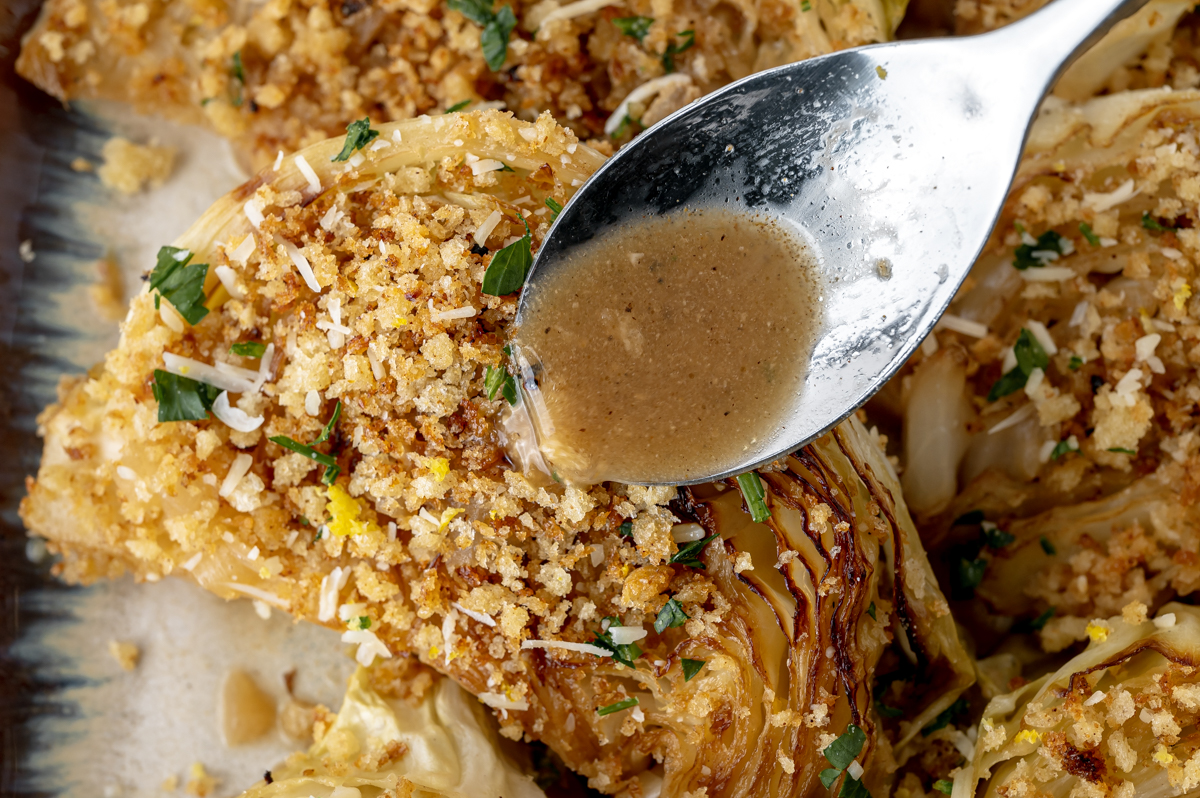
- Reduce the sauce. Uncover and simmer for another 3–5 minutes, until the liquid reduces slightly. Taste and adjust the salt, pepper or vinegar.
- Toast the breadcrumbs. While the cabbage braises, melt the topping butter with the olive oil in a separate skillet over medium heat. Add the grated garlic and cook for about 20 seconds. Stir in the panko, smoked paprika, onion powder and salt. Cook, stirring frequently, for 3–5 minutes, until golden and crisp.
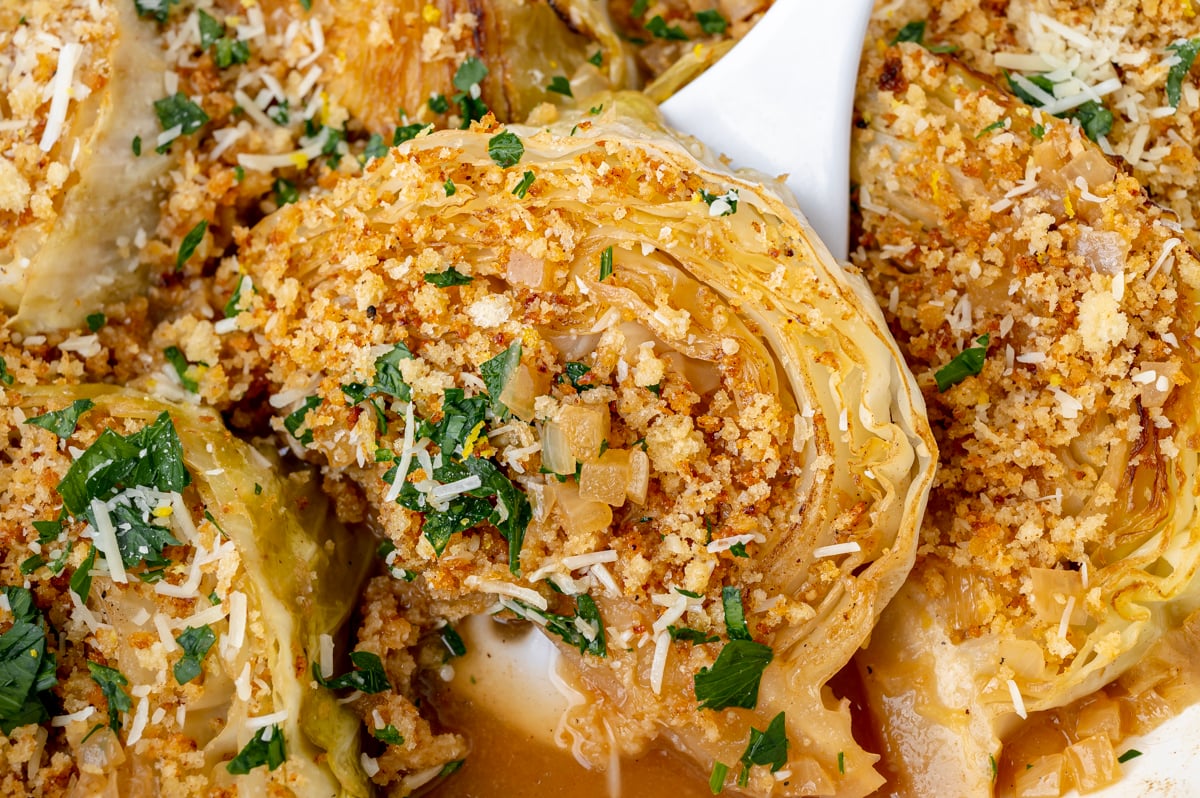
- Finish and serve. Remove the breadcrumbs from the heat and let them cool for about 5 minutes. Stir in the Parmesan and optional lemon zest. Transfer the cabbage to a platter, spoon some reduced braising liquid over it and scatter with the breadcrumbs and parsley. Serve immediately.
Chef Tips
- Dry the cabbage before browning. If you rinse it, pat the cut surfaces dry so excess moisture doesn’t interfere with the sear.
- Give it room. Brown in batches if necessary. A crowded pan traps moisture and makes it harder to develop golden edges.
- Watch the butter. You want browned cabbage, not blackened butter or burnt pan drippings. Lower the heat if the fat starts smoking.
- Keep the simmer gentle. Once covered, the liquid should bubble lightly. A hard boil can break the cabbage apart before it cooks evenly.
- Check the pan during braising. If the liquid gets low before the cabbage is tender, add a small splash of broth or water.
- Use tenderness as your guide. Start checking at 18 minutes. Cut size, cabbage density and your preferred texture all affect cooking time.
- Reduce the sauce carefully. It should be flavorful and slightly concentrated, not thick like gravy. If the cabbage is ready but the pan is still watery, lift it out and reduce the liquid separately.
- Add the topping last. Breadcrumbs lose their crunch as they sit in the sauce. Sprinkle them on immediately before serving.
Easy Variations for Braised Cabbage Recipe
Once you know how the base recipe works, it’s easy to steer it in a new direction. Here are a few of my favorite ways to change it up.
- Add a little heat. Stir in red pepper flakes with the garlic. Warming them in the fat wakes up their flavor and spreads the heat through the whole pan, not just the bites that land on a flake. For a smokier heat, swap the smoked paprika for chipotle chile powder. A few dashes of hot sauce in the braising liquid also works, and its vinegar plays nicely with the cider vinegar already in the pan.
- Make it with bacon. The smoked paprika is here so you get smoky flavor without bacon. Nobody is stopping you, though. Cook chopped bacon in the Dutch oven first, then lift it out and leave the fat behind. Use that fat in place of some of the butter and oil to brown the cabbage. Bacon fat carries its smoky, salty flavor into every leaf. Scatter the crispy bacon over the top with the breadcrumbs. Since bacon is salty, taste before adding the full amount of salt.
- Add apple. Slice a tart apple, like Granny Smith, and cook it with the onion. Its sweetness and gentle acid are a natural match for cabbage, especially when pork is on the plate.
- Try caraway. Add caraway seeds with the garlic. Caraway and cabbage are an old pairing, and the seeds add a warm, slightly peppery flavor.
- Make it vegetarian. Use vegetable broth and a vegetarian Worcestershire sauce. Regular Worcestershire contains anchovies, which surprises a lot of people.
- Make it gluten-free. Use gluten-free panko. Check the labels on your broth and Worcestershire sauce, too, since some brands contain gluten.
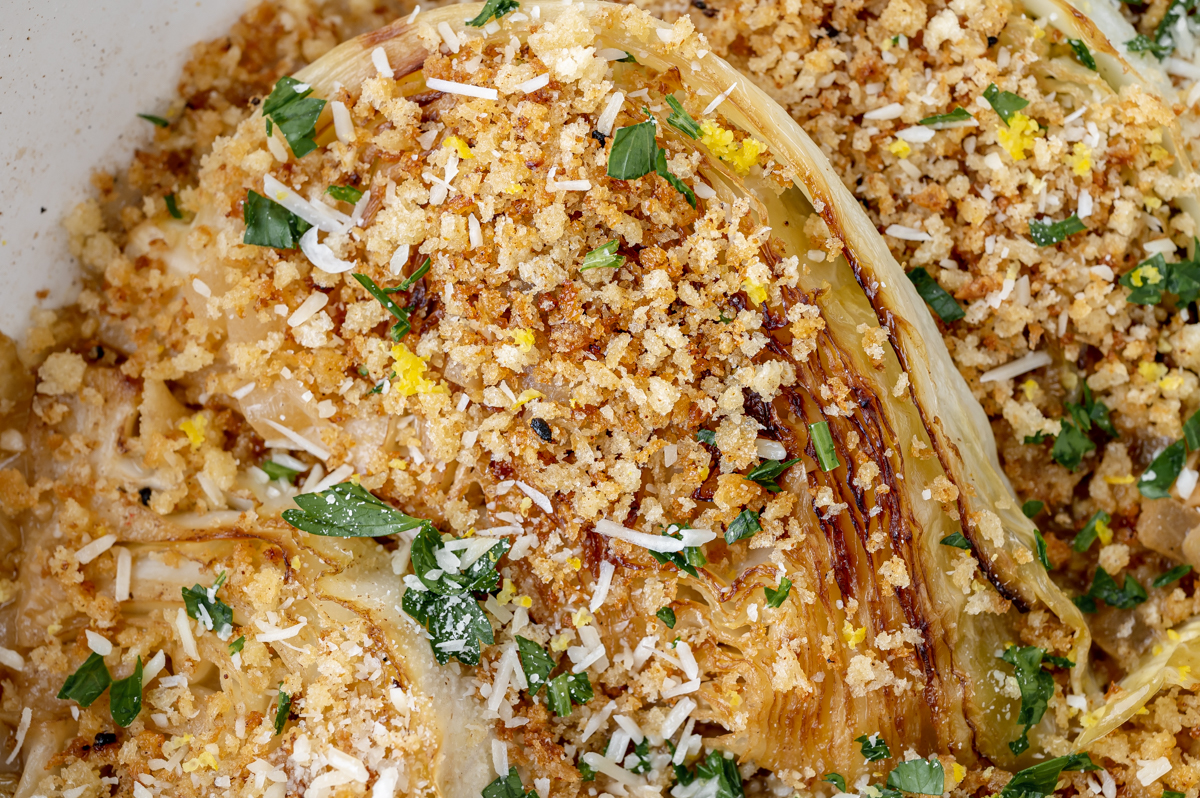
What to Serve with Braised Cabbage
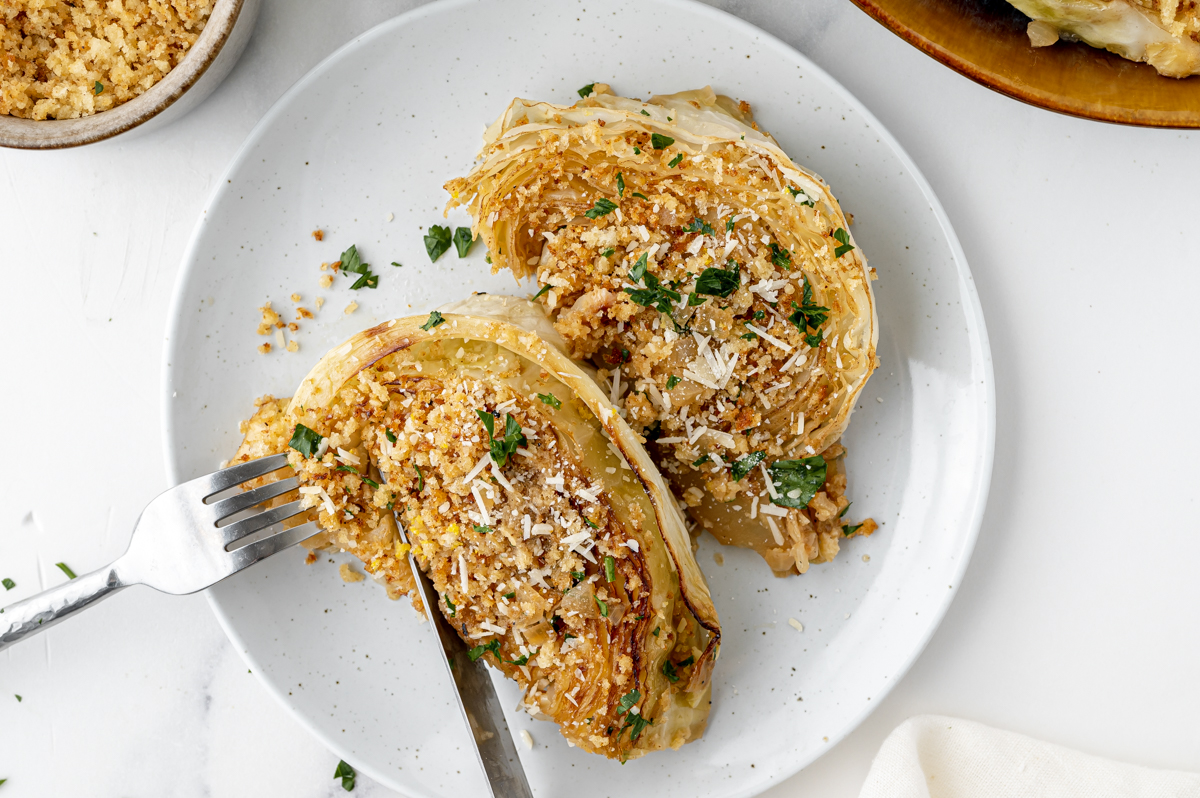
This cabbage is especially good alongside pork tenderloin, pan-seared pork chops, roast chicken, sausages or baked ham. Add mashed potatoes to catch the extra Dijon broth.
For a vegetable-forward meal, serve it over white beans or cooked lentils with some of the sauce spooned over the top. Add the breadcrumbs just before eating.
Storage and Freezing
Storage: Refrigerate leftovers promptly in shallow, airtight containers and use within 3–4 days. Keep any unused breadcrumb topping separate and refrigerated. Refrigerate within 2 hours of cooking, or within 1 hour when temperatures are above 90°F.
Reheating: Warm the cabbage in a covered skillet with a splash of broth until it reaches 165°F throughout. Gently re-crisp refrigerated breadcrumbs in a separate skillet and add them after reheating.
Freezing: You can freeze the cabbage without the topping, but expect a softer texture after thawing. Thaw in the refrigerator, reheat thoroughly and make fresh breadcrumbs for serving.
FAQs
Green cabbage is the best starting point for this recipe because its sturdy leaves hold up to both searing and simmering. Savoy cabbage can also work, but its more delicate leaves may soften sooner, so begin checking early.
Keep the pieces large, use a gentle simmer and check for doneness before the full cooking time is up. Stop cooking when a fork slides in easily but the cabbage still holds its shape.
The pan may be crowded, the cabbage may be wet or the pan may need more time to heat. Pat the cabbage dry, work in batches and let the cut surfaces sit against the pan without constantly moving them.
Cabbage releases moisture as it cooks, and a covered pan holds that moisture in. Uncover the pan for the final simmer. If the cabbage is already tender, remove it while you reduce the liquid so it doesn’t overcook.
Red cabbage can be braised, but it will change the dish’s color and may need a different cooking time. For the most predictable results with these instructions, use green cabbage.
More Delicious Cabbage Recipes
When it comes to side dishes, cabbage is one of the most versatile ingredients! Here are some of my favorite recipes that use it!


Braised Cabbage Recipe
Equipment
Ingredients
For the Braised Cabbage:
- 1 head green cabbage , about 2 to 2 1/2 pounds
- 2 tablespoons unsalted butter
- 1 tablespoon extra virgin olive oil
- 1 yellow onion , thinly sliced
- 3 cloves fresh garlic , minced
- 1 teaspoon coarse kosher salt
- 1/2 teaspoon ground black pepper
- 1/2 teaspoon smoked paprika
- 1 cup low-sodium chicken broth or vegetable broth
- 1 tablespoon Dijon mustard
- 1 tablespoon apple cider vinegar
- 1 tablespoon honey
- 1 teaspoon Worcestershire sauce
For the Crunchy Breadcrumb Topping:
- 2 tablespoons unsalted butter
- 1 tablespoon extra virgin olive oil
- 1 clove fresh garlic , grated
- 1 cup plain panko breadcrumbs
- 1/2 teaspoon smoked paprika
- 1/4 teaspoon onion powder
- 1/4 teaspoon coarse kosher salt
- 2 tablespoons Parmesan cheese , freshly and finely grated
- 1 teaspoon lemon zest , freshly grated and optional
- 1 tablespoon flat parsley , minced
Instructions
Braise Cabbage:
- Remove any damaged outer leaves from the 1 head green cabbage. Cut the cabbage into quarters, remove the tough core and slice each quarter into thick wedges or roughly 1 1/2-inch pieces. Keep the pieces large because they will soften considerably while braising.
- Heat the 2 tablespoons unsalted butter and 1 tablespoon extra virgin olive oil in a large Dutch oven or deep skillet over medium-high heat. Working in batches if necessary, add the cabbage and let it cook undisturbed for 3 to 4 minutes per side, until the edges are deeply golden. Transfer to a plate.
- Reduce the heat to medium. Add the sliced 1 yellow onion and cook for 4 to 5 minutes, until softened. Add the minced 3 cloves fresh garlic, 1 teaspoon coarse kosher salt, 1/2 teaspoon ground black pepper and 1/2 teaspoon smoked paprika. Cook for 30 seconds.
- Stir in the 1 cup low-sodium chicken broth or vegetable broth, 1 tablespoon Dijon mustard, 1 tablespoon apple cider vinegar, 1 tablespoon honey and 1 teaspoon Worcestershire sauce. Scrape the bottom of the pan to loosen any browned bits.
- Return the cabbage to the pan. Spoon some of the liquid over the top, cover and reduce the heat to medium-low. Simmer for 18 to 25 minutes, depending on how tender you like your cabbage. The cabbage should be tender enough to cut easily with a fork but not so soft that it loses all of its structure.
- Remove the lid and simmer for another 3 to 5 minutes, until the braising liquid reduces slightly and coats the cabbage. Taste and adjust the salt, pepper or vinegar as needed.
Seasoned Breadcrumbs:
- While the cabbage braises, melt the 2 tablespoons unsalted butter with the 1 tablespoon extra virgin olive oil in a skillet over medium heat. Add the grated 1 clove fresh garlic and cook for about 20 seconds.
- Stir in the 1 cup plain panko breadcrumbs, 1/2 teaspoon smoked paprika, 1/4 teaspoon onion powder and 1/4 teaspoon coarse kosher salt. Cook, stirring frequently, for 3 to 5 minutes, until the breadcrumbs are golden and crisp.
- Remove the breadcrumbs from the heat, cooling for about 5 minutes.
- When slightly cooled, stir in the freshly grated 2 tablespoons Parmesan cheese and 1 teaspoon lemon zest.
Serve:
- Transfer the braised cabbage to a serving platter, spoon some of the reduced braising liquid over the top and generously scatter with the crispy seasoned breadcrumbs and chopped 1 tablespoon flat parsley.
- If you've tried this recipe, come back and let us know how it was in the comments or star ratings.
Notes
Nutrition