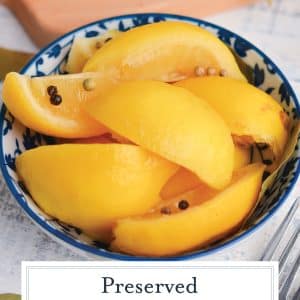

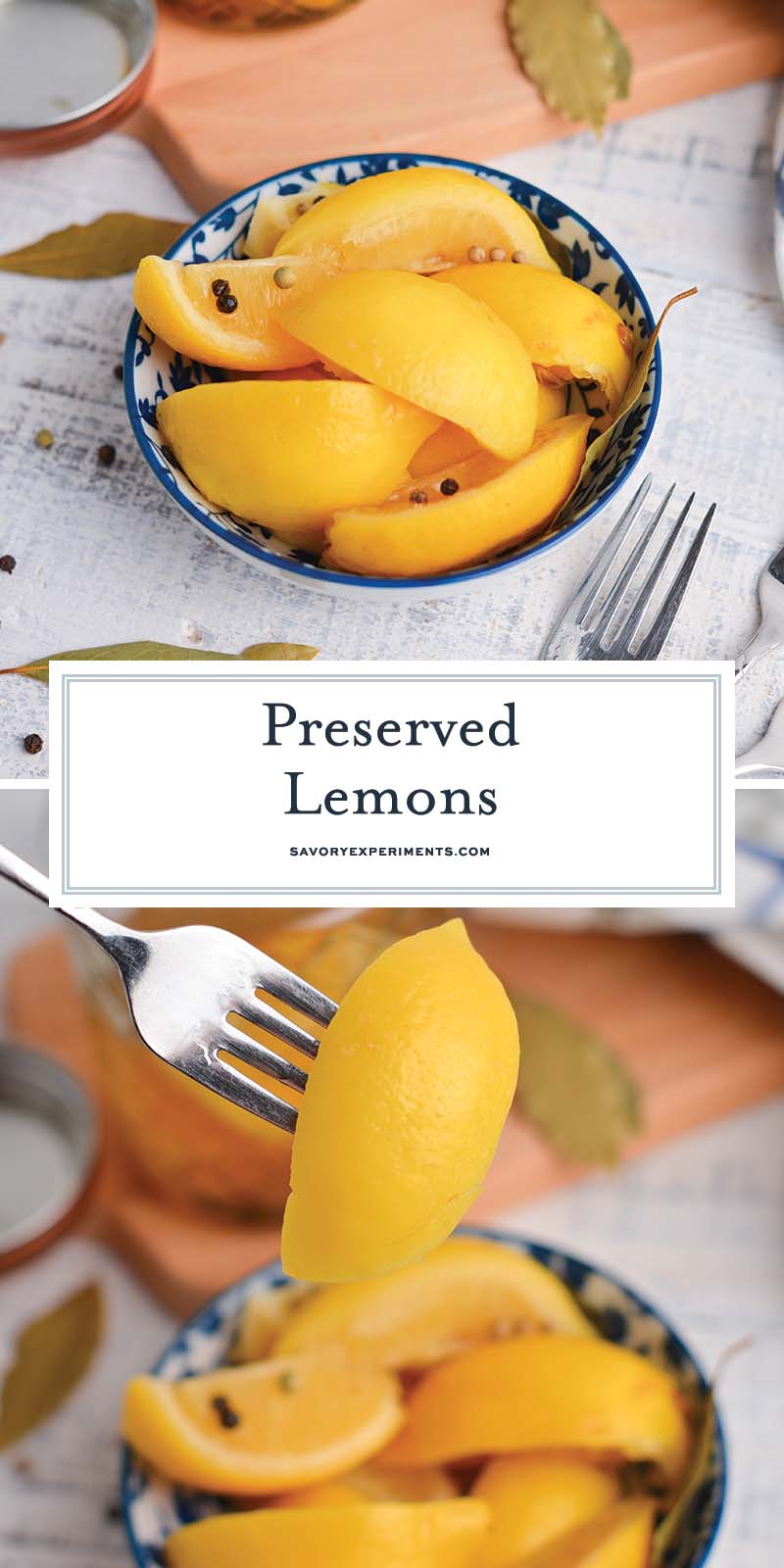
This preserved lemons recipe shows you how to make homemade salt-preserved lemons using a traditional method with simple ingredients. Over time, the lemons soften and ferment, developing a bright, tangy flavor that transforms savory dishes.
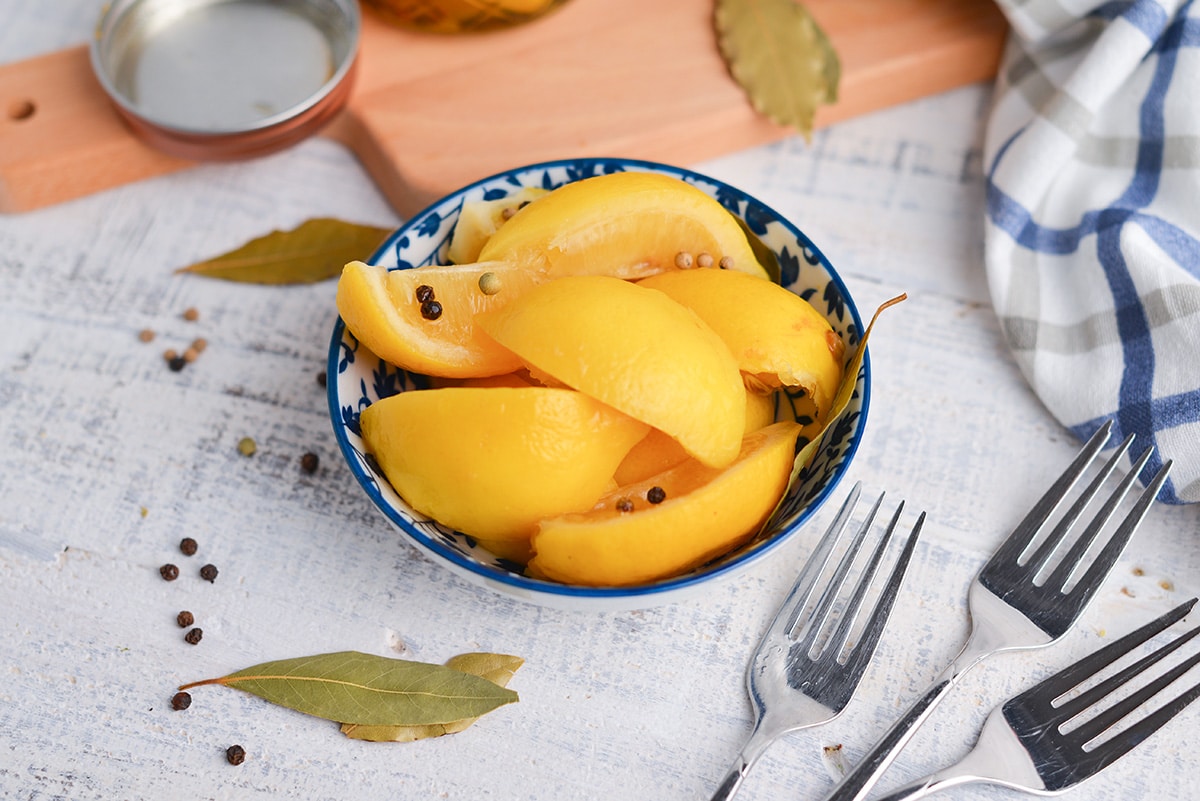
What Are Preserved Lemons
Preserving lemons is a centuries-old technique developed in Morocco. The process was created in order to store the lemons for long periods of time after their harvesting season had passed.
While it became a staple in North African cuisine, the tradition eventually spread and the ingredient became popular in Indian, Mediterranean, Asian, and Middle Eastern cuisine.
All that you’ll need in order to make these lemons is a clean tool for scrubbing, a sharp knife for slicing, and a clean large mason jar for storing.
Chef Tips
Use organic lemons. You’re eating the peel- don’t make it a chemistry experiment. You can find unwaxed, go for it- but this is hard in the states.
Skip iodized table salt. Use kosher, pickling, or sea salt for clean flavor (and less weird bitterness).
Roll lemons before cutting. Softens them and helps them release juice faster.
Peel is the prize. The pulp gets very salty; the peel turns silky and intensely lemony.
Keep everything submerged. If lemons poke above liquid, that’s where funk likes to party.
Lid tip: if using a metal lid, add parchment/wax paper barrier to reduce corrosion.
Taste checkpoint: start using at 3–4 weeks, but best flavor at ~6 weeks.
What You’ll Need
All you need is a handful of simple ingredients to preserve lemons. A full list of ingredients with measurements for this recipe is available in the printable recipe card below.
- Water- Water isn’t generally an ingredient we highlight, but for this recipe I do specifically use a distilled water to make sure it doesn’t have anything that could possibly grow in the jar during the fermentation process.
- Fresh lemons – This is the key ingredient, of course! You can use any kind of lemons (regular lemons found in most grocery stores like Lisbon lemons or Eurekas, Meyer lemons, etc.) but choose ones that are heavy (for their size) — ideally, the lemon rinds are thin, too.
- Coarse Kosher salt – Salt helps to enhance the flavor and aroma of the lemons. A salty brine is key to the preservation process. You can use any kind of salt that you like — we prefer to use Diamond Crystal- see the note below on types and weights.
- Sugar – Sugar is also crucial for preserving lemons and, similar to salt, brings out the flavor of the fruit.
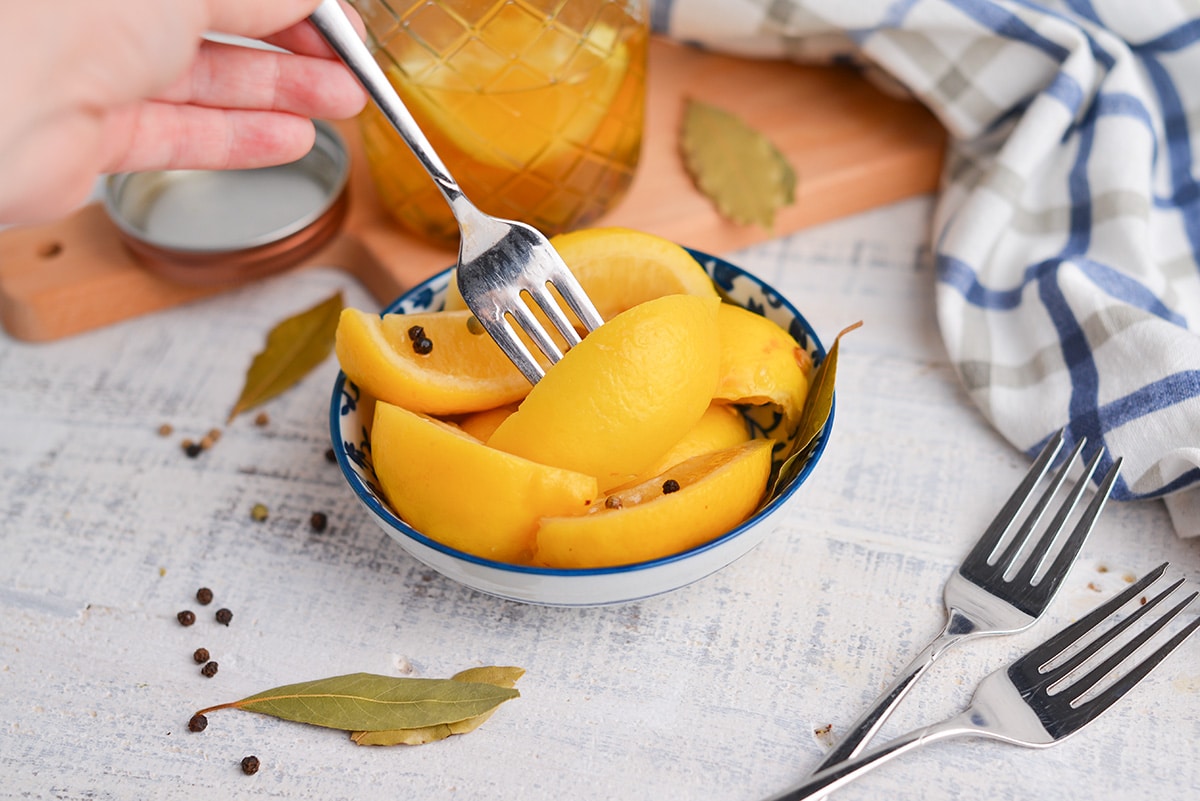
- Whole black peppercorns – The flavor of the pepper complements the lemons.
- Bay leaves – Bay leaves impart an herbal undertone.
Herbs & Spices to Add
If you want to add even more flavor to your lemons, try using fresh herbs like:
- Rosemary
- Thyme
- Oregano
- Parsley
- Cilantro
- Mint
Or, incorporate additional spices like:
- Cinnamon
- Cloves
- Nutmeg
- Ginger
- Cumin
- Coriander seeds
- Chili powder
- Red pepper flakes
- Black pepper
Use of Water & Salt Ratios
Water isn’t here to “water down” preserved lemons- it’s here to guarantee full submersion fast, which is the #1 thing that keeps the lemons fermenting cleanly. In a classic salt-only pack, you rely on the lemons releasing enough juice to cover everything (and sometimes they’re stingy, especially if they’re a little older or thick-skinned).
Adding water creates a predictable brine environment so the salt can do its job evenly: pulling moisture from the fruit, discouraging spoilage microbes, and giving you a controlled preservation while the peels soften.
For the brine, a solid target is 10% salt by weight (that’s the sweet spot for preservation and flavor without being aggressively salty). That means 100 grams salt per 1,000 grams (1 liter) water. In kitchen terms, that’s roughly 1.8–2 tablespoons Diamond Crystal kosher salt per cup of water, or about 1 tablespoon Morton kosher salt per cup (Morton is denser, so you need less by volume).
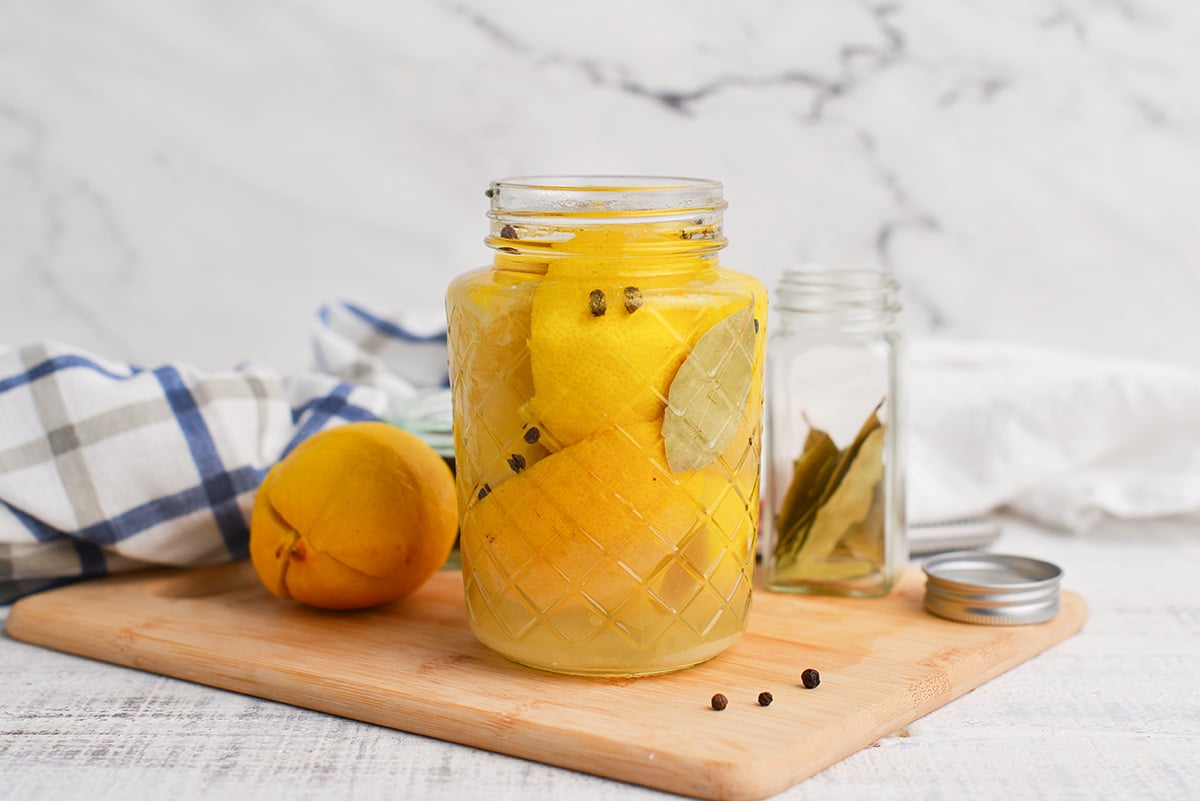
How to Preserve Lemons (Step-by-Step)
It only takes a few minutes of hands-on prep time to make these delicious lemons.
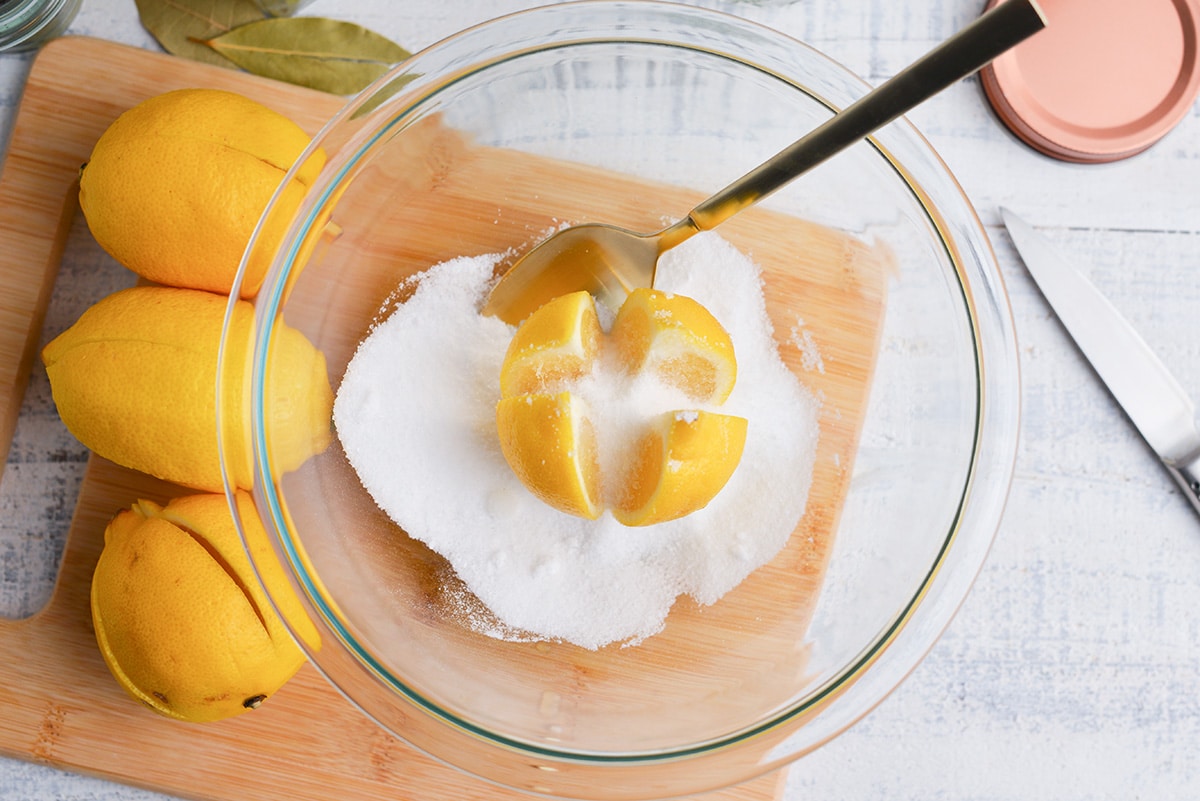
- Clean Lemons. After scrubbing and cleaning all of the lemons, slice each into quarters keeping the rind intact at the bottom.
- Prepare Lemon Brine. Pour the salt and sugar into a large bowl.
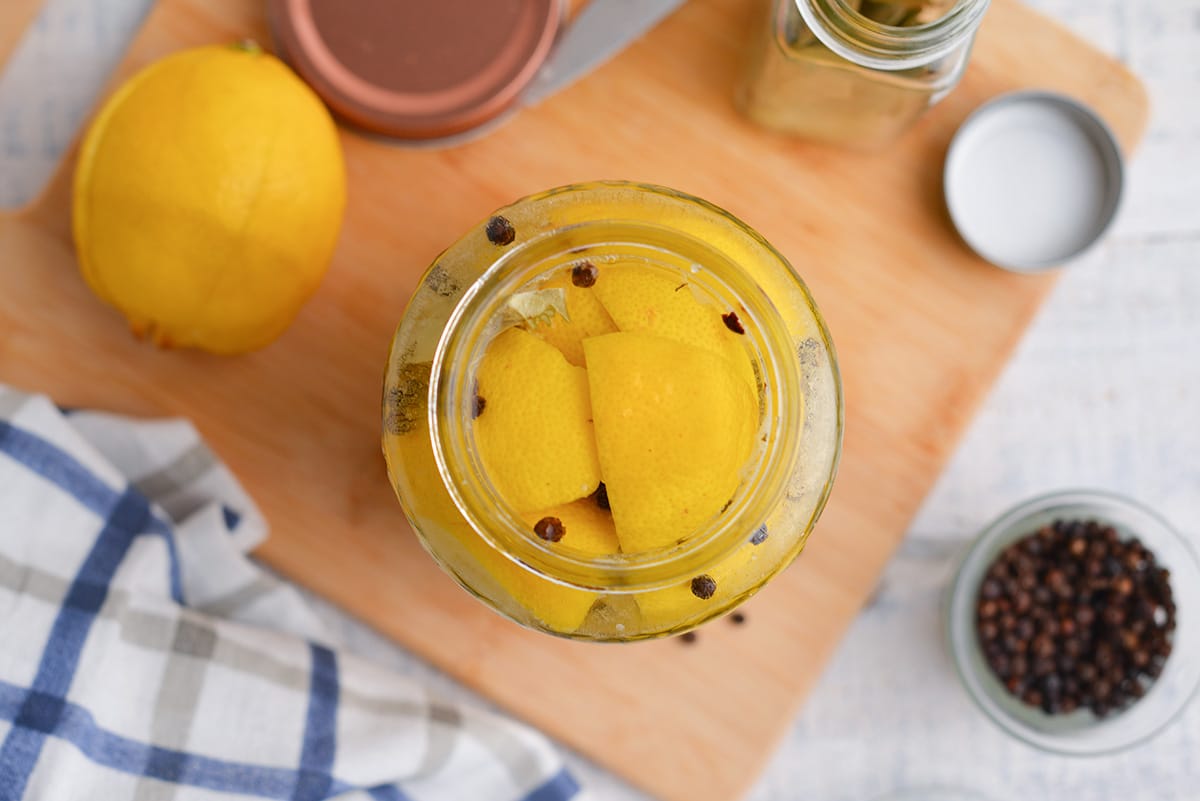
- Prepare Lemons. Add the lemons to the bowl and press the sugar mixture into the lemon flesh. Place the lemons into the clean jar, pressing them down so that they all fit.
- Make Brine. Pour in the peppercorns and remaining sugar and salt mixture. Add the bay leaf. Fill the jar with water, covering the lemons completely.
- Seal. Twist a tight-fitting lid securely on top of the jar and shake.
- Store. Store in the refrigerator or in a dry and cool place at room temperature. Flip the jar over a couple of times per week.
- Unseal. After nearly a month, the lemons will be ready to be used.
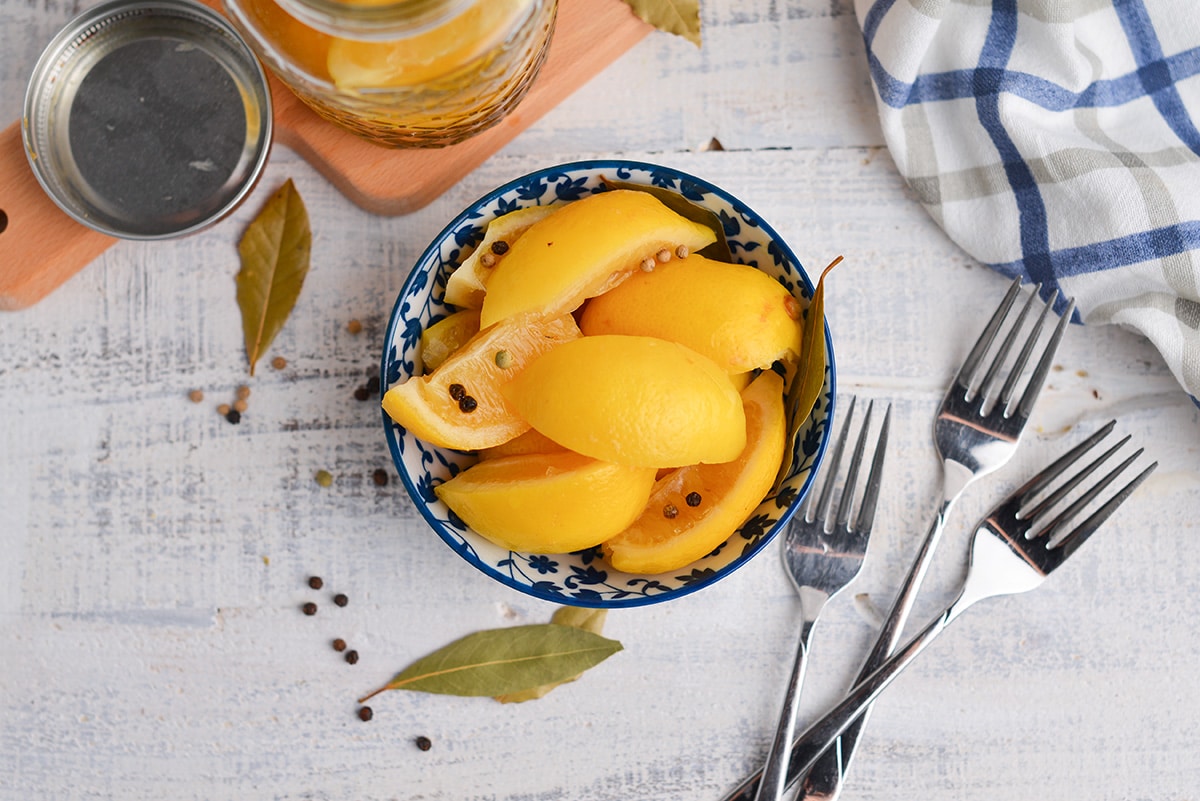
How to Use Preserved Lemons
North African cooking employs the use of preserved lemons in lots of different recipes from Moroccan chicken tagine to chutneys, marinades, and stews. Middle Eastern cooking incorporates the ingredient similarly in addition to adding it to traditional dishes like shakshuka and falafel.
There are many ways to use this fun and unique flavor, so make sure to experiment and let us know how you use them. You can use them in anything you’d add fresh lemon juice to. Here are some of my favorite sweet and savory dishes to use them in.
- Grain salads
- Pasta sauces
- Stirred into rice or couscous
- Salad dressings
- A Bloody Mary
- In yogurt
- In desserts
- Any recipe that calls for
lemon zest (use the preserved lemon peel) - Tahini-based sauces or hummus
- Lentil soup
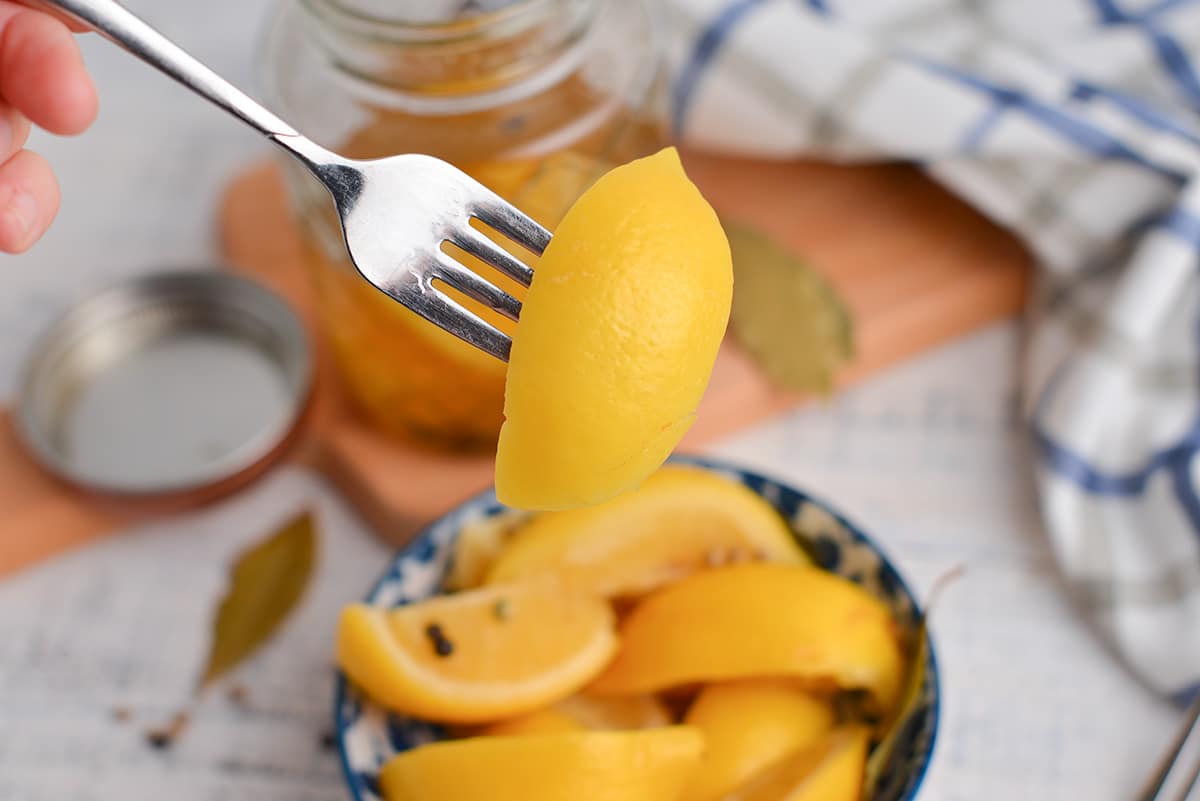
Common Questions About Preserved Lemons
Preserved lemons bring bright flavor to dishes and help to balance particularly creamy dishes.
Preserved lemons have a salty and tart flavor and add a concentrated lemon flavor to dishes.
Preserved lemons can be stored in the refrigerator for up to 1 year.
More Lemon-Based Recipes
I love anything lemon, especially during spring and summer. Here are a few of our favorite lemon recipes.

Preserved Lemon Recipe
Ingredients
- 6-8 lemons
- 1/2 cup Diamond Crystal coarse Kosher salt
- 1 tablespoon sugar
- 2 teaspoons whole black peppercorns
- 1-2 bay leaves
- distilled water
Instructions
- Choose a large, wide-mouthed glass jar and make sure it is clean.
- Scrub and clean the 6-8 lemons
- Cut each lemon into quarters, stopping just below the bottom, so they stay intact, but spread out like a star.
- Place the 1/2 cup Diamond Crystal coarse Kosher salt and 1 tablespoon sugar into a bowl and place the prepared lemons into the bowl, pressing the grainy mixture into the lemon flesh and grinding it in.
- Transfer the lemons to the prepared jar. You may have to smoosh them in for them to fit.
- Add the 2 teaspoons whole black peppercorns, 1-2 bay leaves and remaining salt and sugar mixture to the jar.
- Fill the jar the rest of the way with distilled water , enough to cover the top lemon.
- Seal with the lid and shake a few times.
- Place into the refrigerator or on a cool, dry counter. Flip upside down every 3-4 days.
- After 3-4 weeks, open the jar and add your preserved lemons to your favorite dish.
- If you’ve tried this recipe, come back and let us know how it was in the comments or star ratings.
Notes










Jessica,
These were absolutely amazing! We adore lemons and now we have a new way to eat them!
This post was so helpful! I’ve never done this before so thank you for all of the helpful information!
I had no idea it was so easy to make preserved lemons at home!! I have a ton of lemons from our lemon tree and this is a great way to store them!
I’ve never preserved lemons before but now I absolutely have to try it! What a unique blend of flavors. Especially excited to use these in some desserts and see how they turn out!
That is so awesome! I love lemons, and I love finding new ways to use them even more. I can’t wait to try this recipe!