If you’ve ever sworn off homemade pie crust because it cracked, shrank, or stressed you out, this recipe is for you. This is a forgiving, foolproof homemade pie crust designed for beginners, skeptics, and anyone who just wants a flaky crust without anxiety.
What You’ll Need
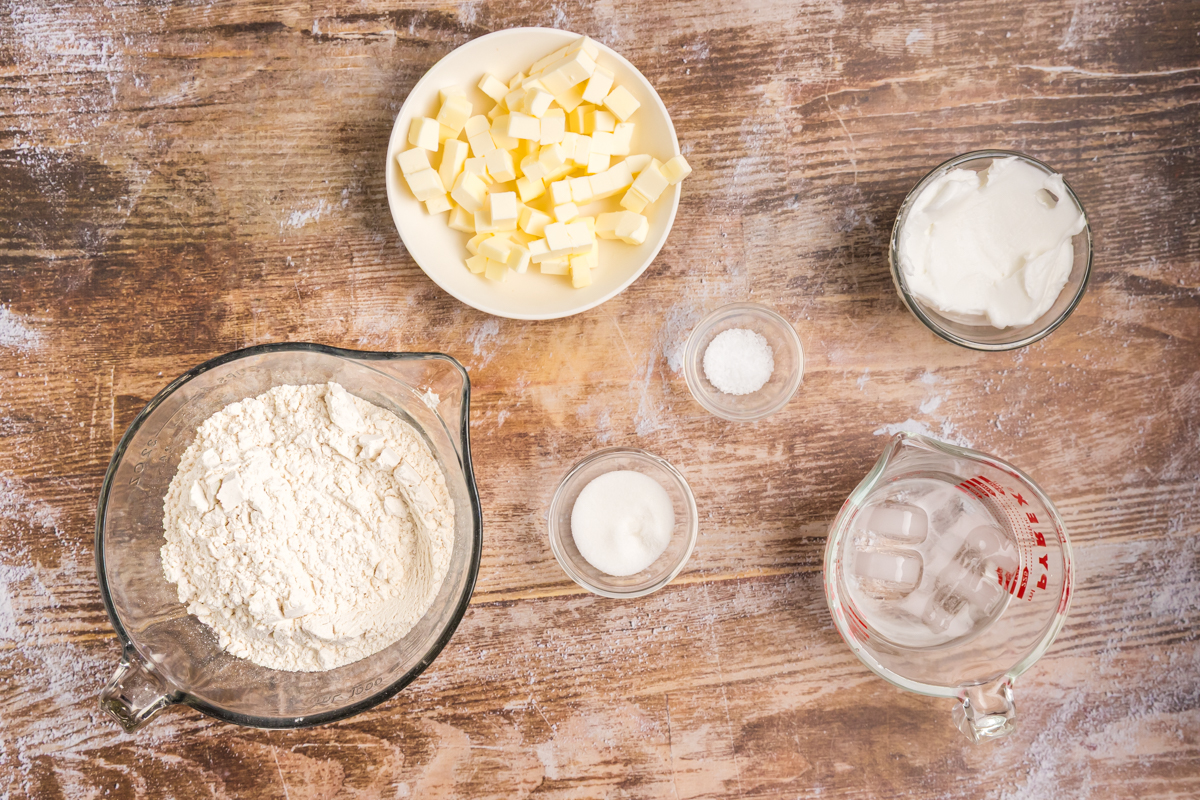
Homemade pie crust ingredients are all simple. A full list of ingredients with measurements for this recipe is available in the printable recipe card below.
- Vegetable shortening – The secret weapon for beginners. Shortening is pliable, forgiving, and helps prevent cracking. A balance of both shortening and butter gives the flaky texture we enjoy as well as flavor that we all desire.
- Flour
- Salt
- Sugar
- Butter
- Cold water
How to Make Homemade Pie Crust (Step-by-Step)
Making your own pie crust is probably easier than you think. Just follow these simple steps.
- Prep cold water. Prep the water by adding ice cubes and filling a measuring cup with water. Let it sit so the water gets good and cold.
- Whisk dry ingredients. In a large bowl add the flour, salt and sugar and whisk together.
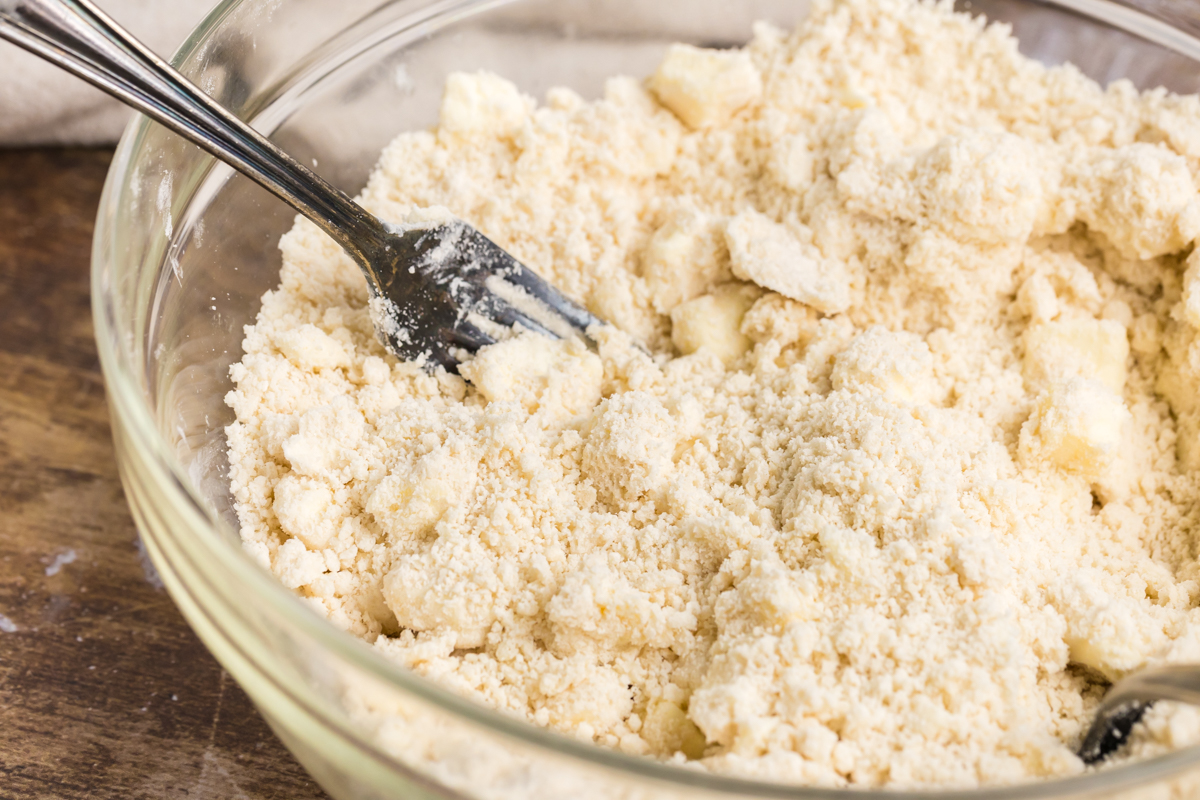
- Cut in the butter. Cut the butter and shortening into the flour mixture using a pastry cutter or fork. The mixture should look coarse.
- Slowly add water. Remove the ice from the cold water and measure ½ cup. Add 1-2 tablespoons at a time into the flour mixture and mix with a large fork.
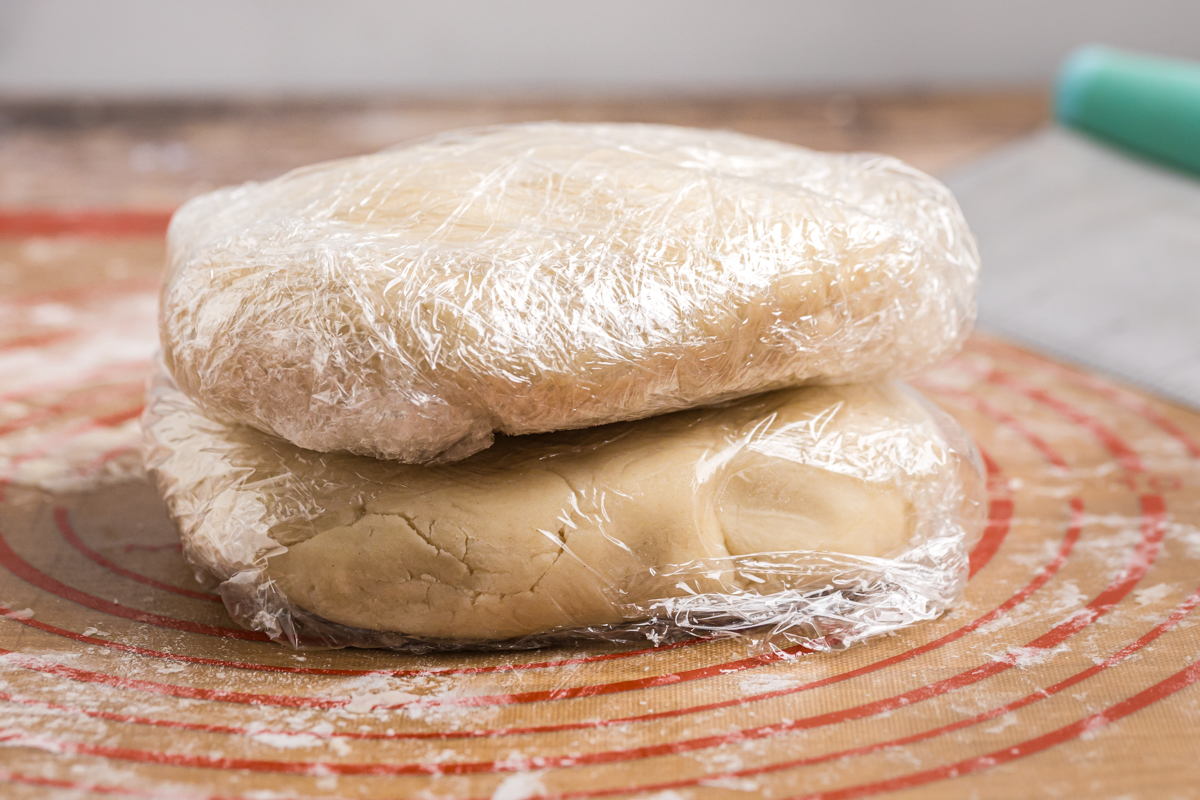
- Chill dough. Once dough is formed, shape into a ball and cut in half. Wrap each half in plastic wrap and place in the refrigerator for at least 1 hour. Ideally overnight if possible.
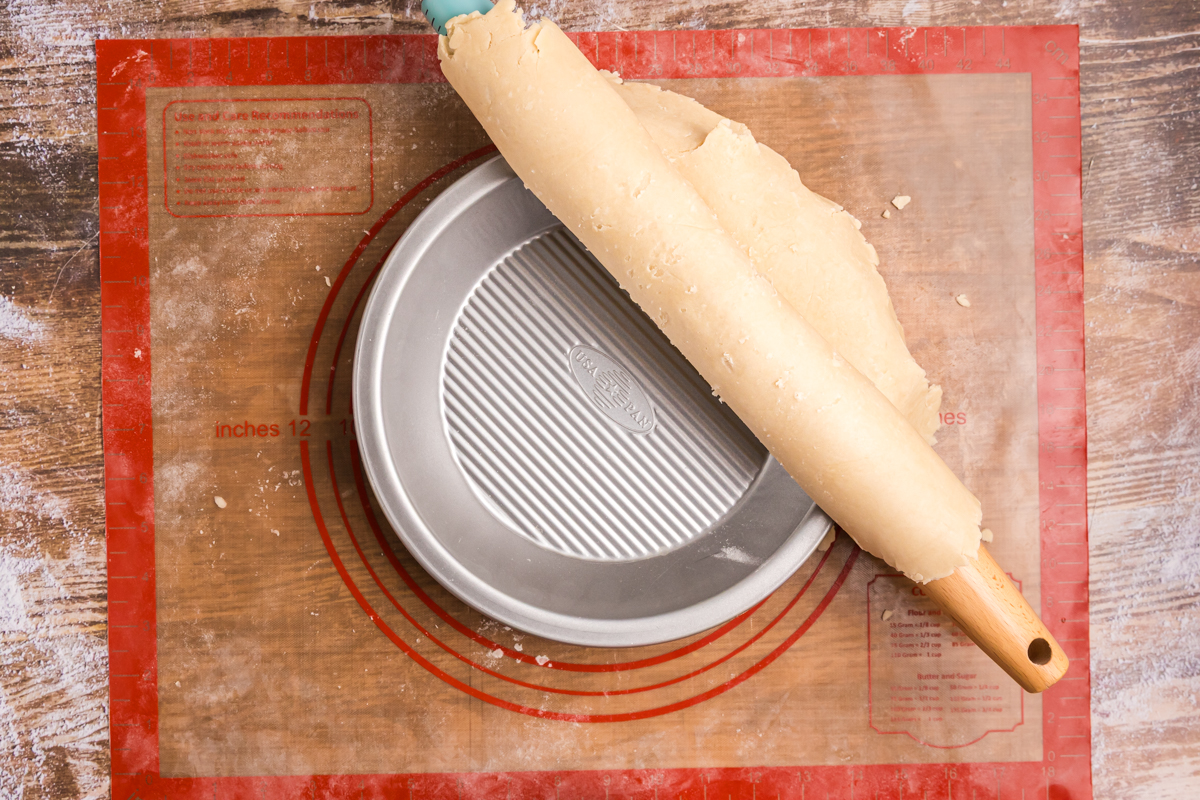
- Roll dough. Prepare a lightly floured surface and begin to roll dough from center in all directions to create a circle. Move dough on floured surface so it does not stick. Using a rolling pin to roll dough, move the dough to pie pan for baking.
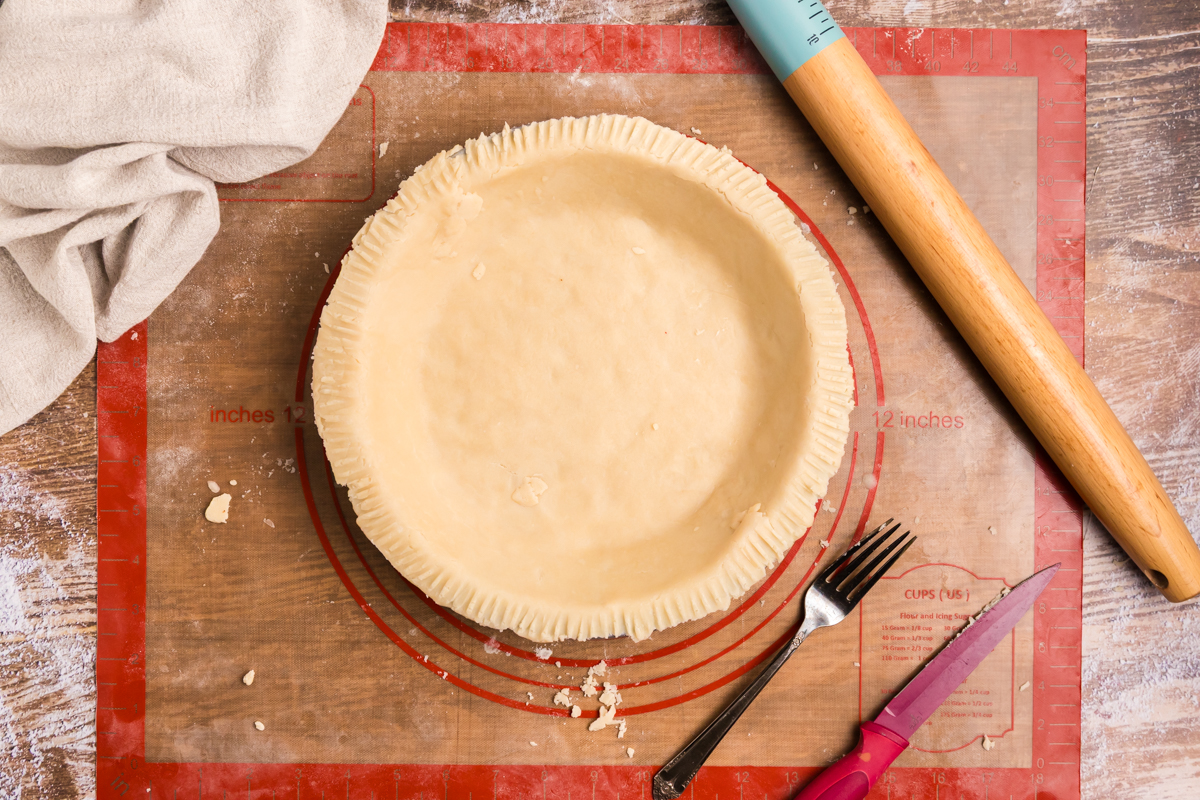
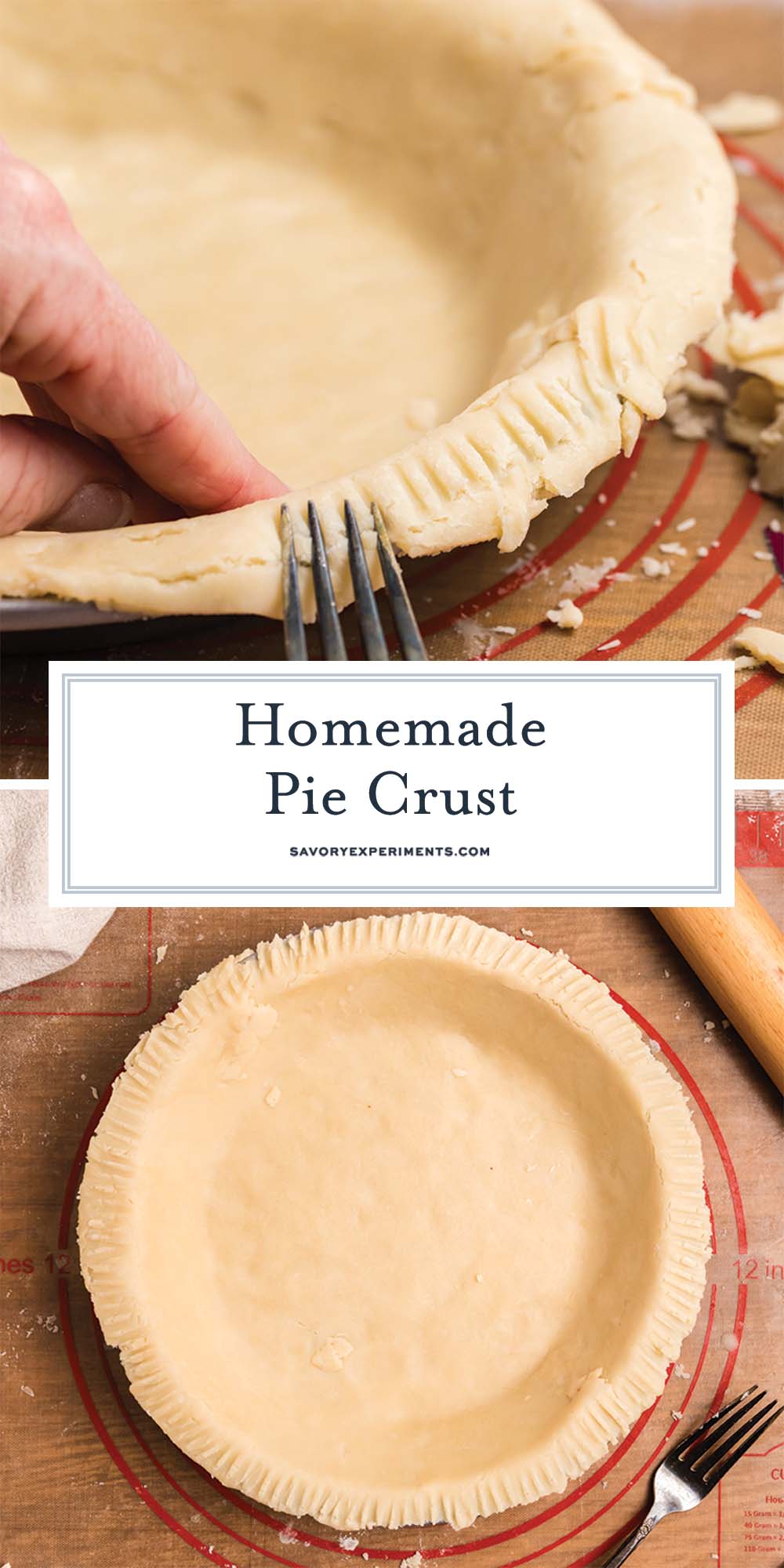
- Put dough on pie pan. Lay dough on pie pan and with your hands gently make sure the dough fills the bottom and rests on the sides. Pinching dough with your fingers to create a nice ribbon on the top edge.
- Bake according to pie instructions. Bake crust according to the pie recipe you are following.
Common Pie Crust Mistakes (And How to Fix Them!)
Don’t stress about your homemade pie crust! Here are a few common mistakes and how to fix them.
- Dough keeps cracking – This generally means your dough is too dry. Press the cracks together or add a few drops of water to fix this.
- Dough is tough after baking – This usually means you overmixed the dough or added too much water. Stop mixing as soon as the dough starts coming together.
- Crust shrinks in oven – Not resting the dough long enough can cause it to shrink. Make sure to chill before rolling and baking.
- Dough sticking to counter – Make sure to lift and rotate the dough as you roll it out. Use a light layer of flour when rolling.
Your Questions, Answered
Tough crust usually means too much water or overmixing. This recipe uses shortening and butter to keep the dough forgiving- even if you slightly overwork it.
You can, but the crust will be less forgiving. The butter-shortening combo gives you flakiness and flexibility, which is ideal for beginners.
Yes. The small amount of sugar adds balance but doesn’t make it sweet- perfect for fruit pies, custards, and savory pies alike.
Recipes that Use Pie Crust
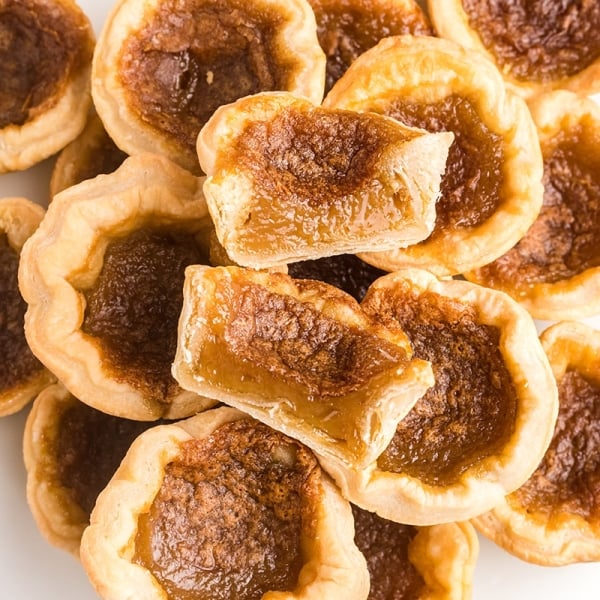
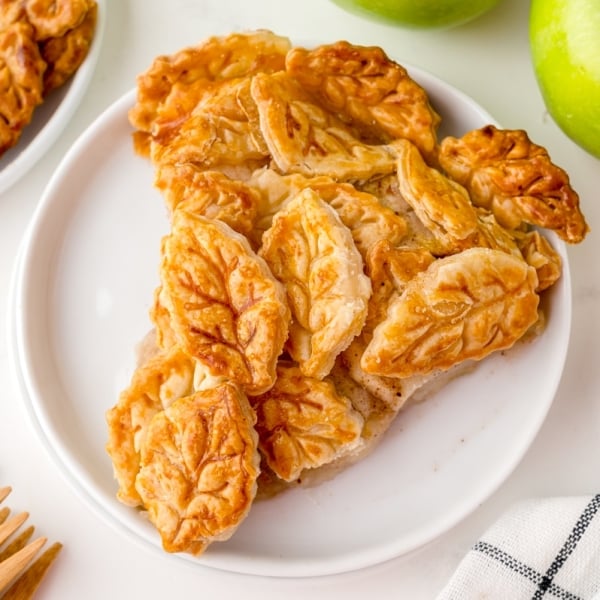
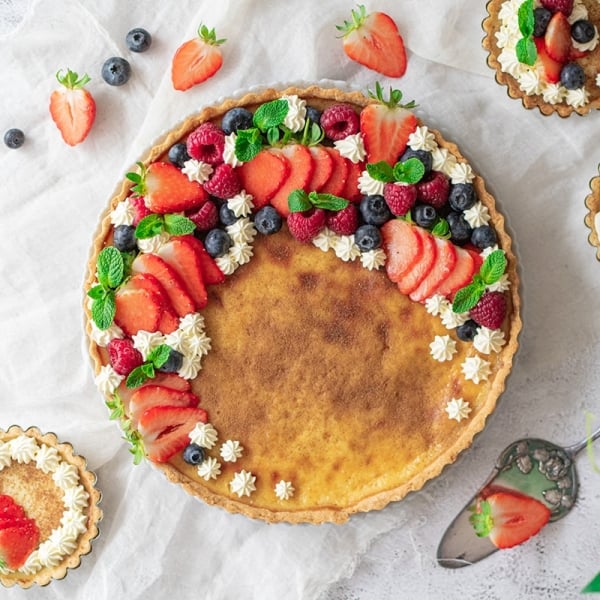
Whether sweet or savory, these are my favorite recipes that use pie crust.
Homemade Pie Crust Recipe
Equipment
Ingredients
- 2 1/2 cups all-purpose flour
- 1 teaspoon fine salt salt
- 1 tablespoon sugar
- 2/3 cup vegetable shortening
- 7 tablespoon unsalted butter
- 1/2 cup cold water
Instructions
- Prep the water by adding 3-4 ice cubes and filling a measuring cup with water. Let it sit so the water gets good and cold. In a large bowl add the flour, salt and sugar and whisk together.
- Cut the butter and shortening into the flour mixture using a pastry cutter or fork. The mixture should look coarse.
- Remove the ice from the cold water and measure ½ cup. Add 1-2 tablespoons at a time into the flour mixture and mix with a large fork.
- Once dough is formed, shape into a ball and cut in half. Wrap each half in plastic wrap and place in the refrigerator for at least 1 hour. Ideally overnight if possible.
- Prepare a lightly floured surface and begin to roll dough from center in all directions to create a circle. Move dough on floured surface so it does not stick.
- Using a rolling pin to roll dough, move the dough to pie pan for baking.
- Lay dough on pie pan and with your hands gently make sure the dough fills the bottom and rests on the sides. Pinching dough with your fingers to create a nice ribbon on the top edge.
- Bake crust according to the pie recipe you are following.
- If you've tried this recipe, come back and let us know how it was in the comments or ratings.
Notes
Nutrition










Is it ok to use coconut oil instead of vegetable shortening?
Hi Tracey- great question! You should be able to swap them 1:1 for no problem, but I have no personally tested it. If you do, come back and let us know how it worked out!
What an easy and delicious recipe! Looking forward to giving this a try with some key lime pie! Yum!
I never realised how easy to it was to make a pie crust! I’ll never buy storebought again after this 🙂
This looks so delicious and easy! I can’t wait to make a pie with this crust! So excited!
I always use store bought pastry, but this has made me want to try making my own.
I love that your recipe uses a combination of shortening and butter – it adds so much more flavor! Great recipe – it’s a keeper!